Developers are seeking public feedback again on a long-gestating and controversial plan to build a resort community in South Maui.
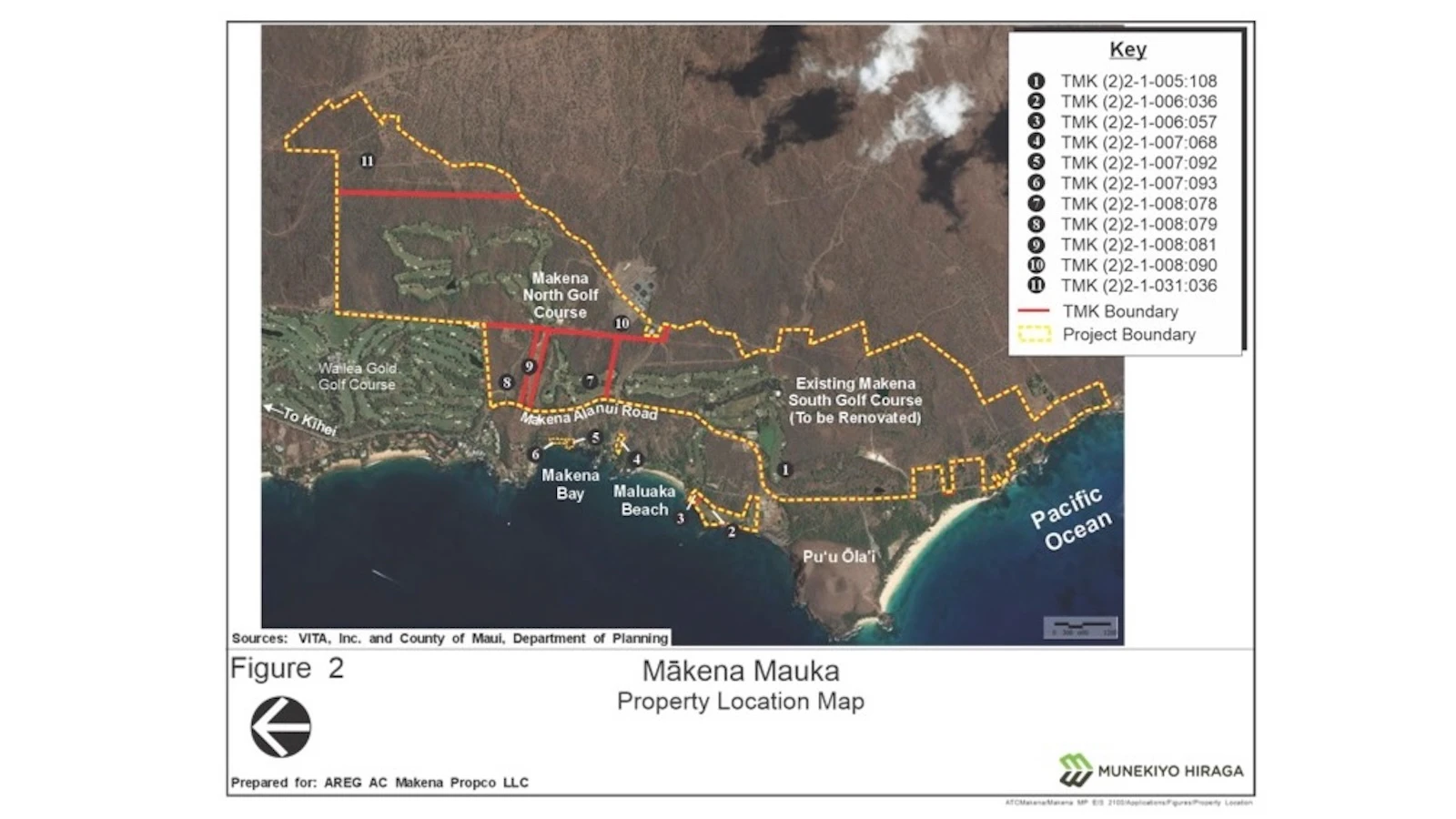
A draft environmental impact statement for Mākena Mauka, a proposed 652-unit community on more than 1,000 acres of land just west and north of the town of Mākena, was published Monday for public review and comment.
As explained in the EIS, the community — developed by AREG AC Mākena Propco LLC — would stretch from Mākena State Park to Wailea and would offer housing at market rates together with residential workforce housing in both single-family and multi-family units.
Of the 652 planned units — which itself is a reduction from the 900 units proposed in an earlier plan — 109 are planned to be residential workforce housing. The plan estimates that about 36 of those 109 units would be available for households making 80% or less of the Area Median Income.
The Hawai‘i Housing Finance and Development Corporation pegged the AMI at about $94,000 for a single-person household on Maui this year.
Another 36 of those affordable units would be available for those making between 81% and 100% AMI and the remainder for households earning up to 120% AMI.
The community would also include gathering spaces, hiking trails, walking and biking paths, and the like. It would also incorporate the use of the existing Mākena North and Mākena South golf courses — Mākena Golf and Beach Club owns the land of both courses and the land to be used for the development.
This has not been popular among residents of the rural area, who were intensely critical during a pair of public scoping meetings about the project in 2024. Many commenters during those meetings accused the developers of appealing to wealthy customers while pricing out Native Hawaiians.
“There isn’t a luxury home shortage on Maui,” read a comment by Kihei resident Jonathan Henbest. “There isn’t a need for a development of homes appealing to part time residents who contribute little more than property taxes to the local economy. We NEED housing for the full-time residents that are the very heartbeat of this island. Especially the multi-generational families that are quickly being forced off this island by high prices and lack of available housing.”
Other local concerns related to the project’s potential impacts on regional water sources, nearby traffic systems, endangered species, ocean access, scenic views and more. The plan details various plans to mitigate these factors, and ultimately predicts no long-term environmental impacts caused by the project.
For example, the development would primarily use a privately owned and operated water system to minimize the strain on local groundwater systems — save for the 109 affordable housing units, which would be on county water.
Traffic impacts, meanwhile, would largely be absorbed by road improvements planned for Honua‘ula, another proposed housing development nearby also referred to as Wailea 670.
While the draft EIS did not include any positive public remarks that came out of the 2024 scoping meetings, some residents testified in support of the project at a meeting of the Maui Planning Commission on Tuesday.
“Mākena Mauka stands apart from many developments because it demonstrates a genuine respect for the land, its history and the cultural significance that makes this area so special,” wrote Zachary Fahmie to the Commission. “Rather than approaching development purely from a commercial standpoint, the project reflects thoughtful planning, environmental sensitivity and a sincere acknowledgement of the generations who have called this land home.”
The proposal estimates that construction would take place over three 10-year phases beginning in 2028, with final completion not expected until 2058. The project is estimated to cost $4 billion over the 30-year timeline.
Members of the public who wish to submit comment on the project can do so here until Jan. 22.
For the latest news of Hawai‘i, sign up here for our free Daily Edition newsletter.