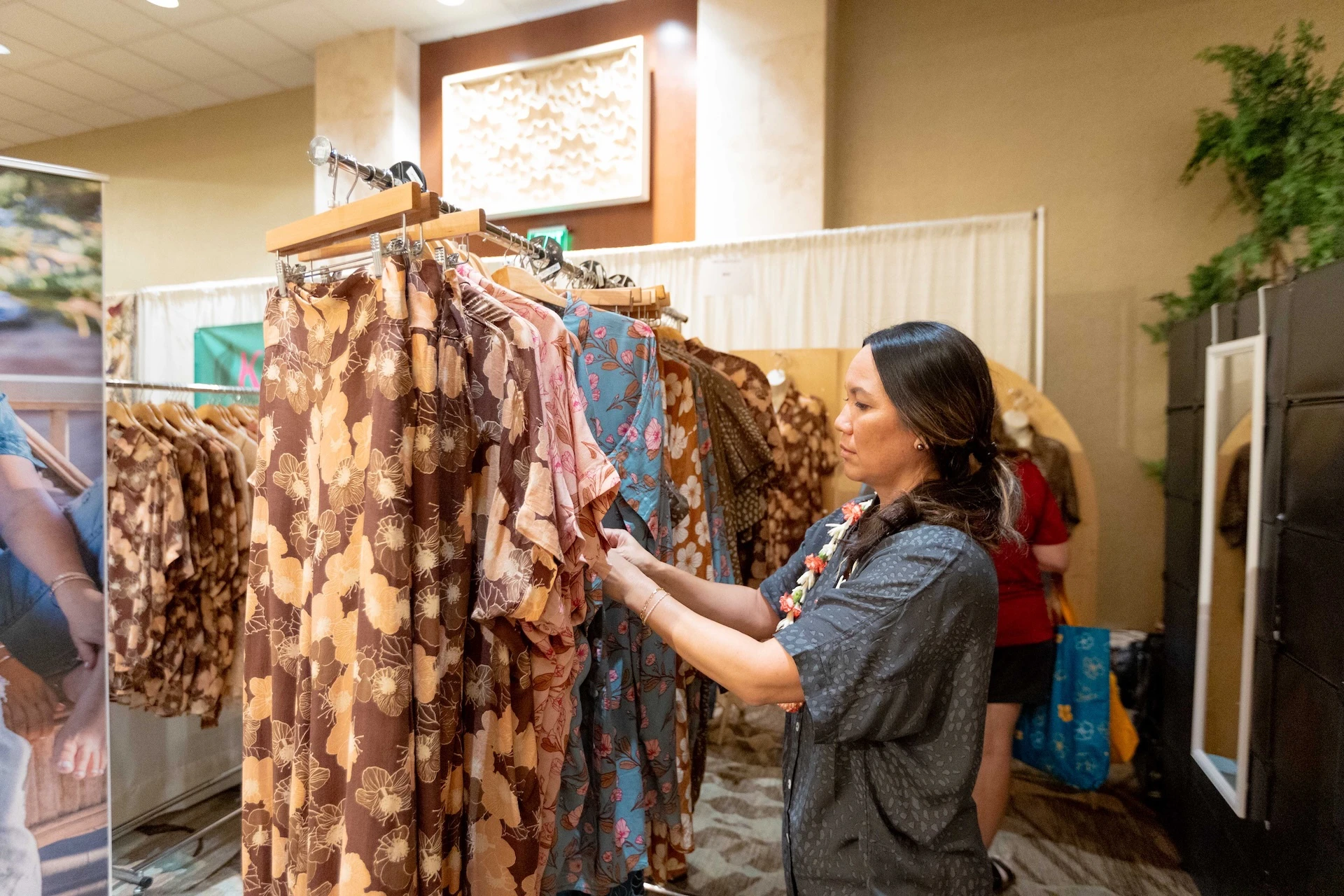
Born on Molokai and raised on Maui, Roselani Aiwohi says she never planned to be a fashion designer.
The Maui High School graduate thought about pursuing marine biology in college but instead returned home to give birth and raise her oldest daughter.
“I ended up going back to school to get my bachelor’s in business and eight years later, I went to get my master’s in teaching,” she told Aloha State Daily. “That’s how I started learning more about native plants and ecosystems.”
Between achieving those degrees, Aiwohi worked in escrow before helping her husband run his family business, Uncle Jesse’s Place, a mixed martial arts store, for a few years. She later became a substitute and full-time teacher for more than 12 years, seven years of which were spent at Baldwin High School teaching photography.
Her current venture, a Maui-based alohawear brand named Waiwaolani, “happened by accident,” according to Aiwohi, because she had met and remained in contact with a driver in Indonesia prior to the Covid-19 pandemic.
“We were still in touch through social media; the country had closed due to Covid, so tourists weren't coming in and they weren't able to drive or really make any money,” she recalled. “I sent a message and asked, ‘How's everybody doing? Just checking on you guys.’ And they said, ‘It's pretty bad out here. We can hardly buy any food.’ So, I reached out to my friends that were on the trip with me, and we wired them some money to help.”
The owner of the driving company, Budhi, asked if his wife could be hired to sew some items for Aiwohi. Her mind initially went to simple home goods like blankets. He advised her to draw out any article of clothing in her closet and send measurements. A few weeks later, when she received the samples in the mail, Aiwohi said, “It literally looked like something that I would buy from TJ Maxx or Macy’s.”
“I was shocked. I couldn’t believe she did this from a drawing that I made and just measured myself. … At that point was when the light bulbs kind of went off in my head: If I were to put a cute print on here, I bet other people would want this same thing. In a nutshell, that's how it got started.”
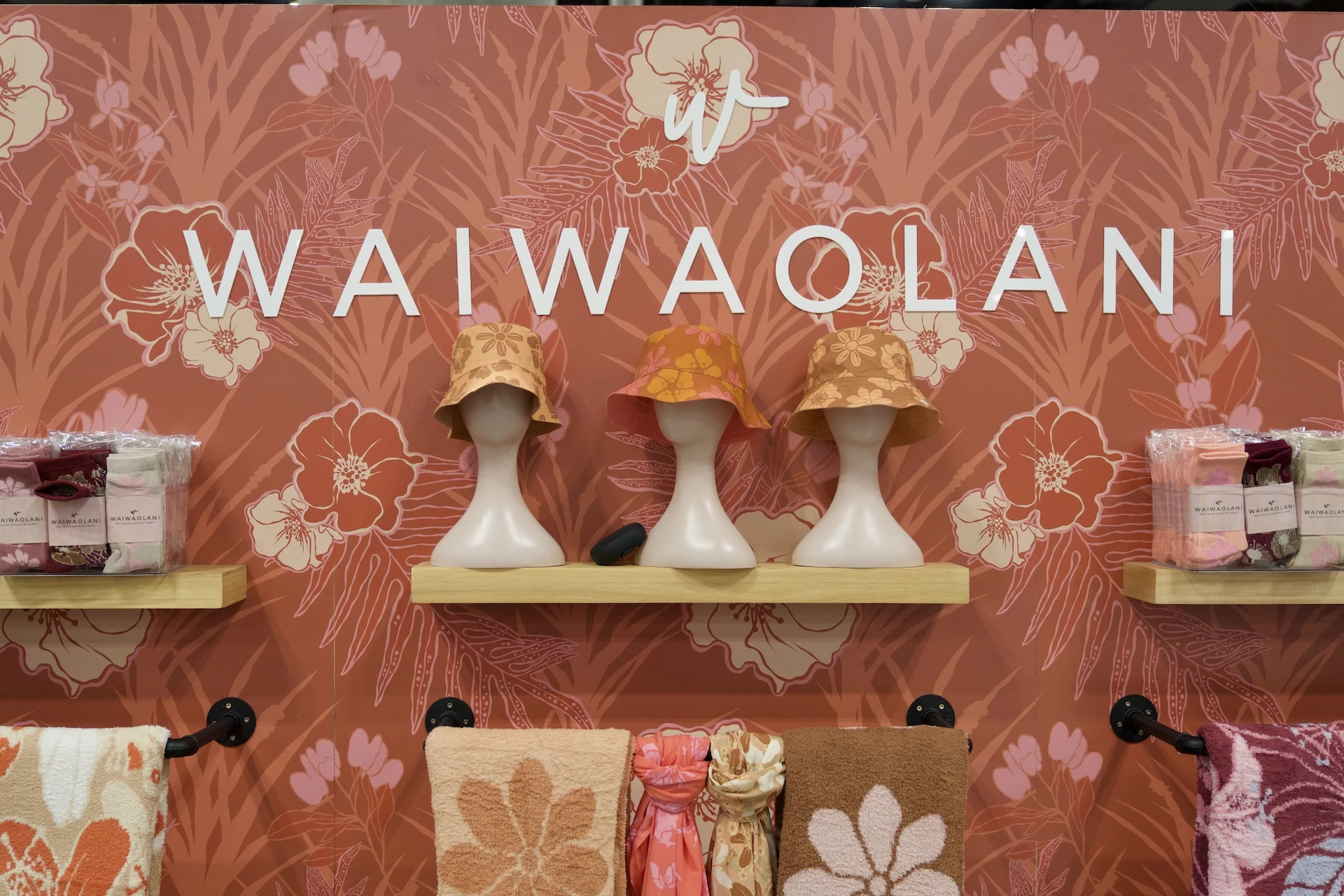
She built Waiwaolani in spring of 2021, with its first release dropped in 2021. The business continues to employ a team of seamstresses in Indonesia, as well as print its fabrics featuring native plants there. Budhi acts as the courier between the two.
“I don’t work with a manufacturing company – it’s small scale, we get about three boxes of inventory every so many weeks,” which fulfills online and pop-up sales. Waiwaolani has nearly 20 part- and full-time staff, she added.
ASD asked Aiwohi more about her artistic process, community initiatives and more.
What’s your creative process like? I am the ideator; sending the graphic designers mood boards, pictures of the plants and hand sketches that I do. With the prickly poppy, one of my very first prints, they just actually took my sketches and made it digital.
I have a list in my head of my favorite native plants from what I’ve seen or read and haven’t even gone through my list yet. I’m constantly educating myself, researching and learning new things. There can be different varieties of one plant, too, for example 'ōhi'a, and some of which are only found on a specific island in a specific place.
How do you incorporate that storytelling into your brand? My business has grown organically from the beginning. And I thought to myself, ‘If I put out a print, I want it to be a print that I can talk about and help educate people about,’ and so, sometimes that takes a while. … In terms of where, I run my own social media. Yes, to sell my product, but I’m more interested in using it for meaningful things.
What did you gain from business accelerator Mana Up's Cohort 9? It will benefit you how you want it to. Every week, you learn new things. Mana Up links you with the realtors, bankers, wealth specialists. The people who can help you sell yourself internationally. So, they have lots of connections.
I didn’t scale with all this money after I finished the program. But that program introduced me to people, these small businesses, who inspire me. I think for me, I came into Mana Up with a very different perspective because I'm a Native Hawaiian-owned business … Our Native Hawaiian population is not as relevant as they should be in certain areas like small business. I wish that there were more opportunities. I wish that there were more supporters. I think to myself, "How can I get my people here with me?"
We need to learn Hawaiian language and Hawaiʻi history to make sure that we stay grounded in what we do. But we also need to be business smart. We need to be money smart because then if not, we get left behind. I'm trying to be successful out here, so that I can help my people and provide for my kids, but at the same time, I'm not trying to appropriate my culture. If I'm going to talk about my culture, I need to practice my culture.
How is Waiwaolani active in the local community? I make sure I give back and schedule volunteer days that can teach others about native ecosystems. If we're not giving back and helping to conserve our native ecosystems, we're going to have less water. And years down the line, it is going to be a major problem. I think that's what I learned from a lot of these watershed organizations, they really try to teach the importance of keeping the native ecosystems intact, because at one point the entire Islands were covered in native ecosystems.
We’re going to announce a malama day. Watch for upcoming events and come out and support! The second annual Waiwaolani scholarships will also go to local high schoolers. More details about how the brand helps here.
How do you plan to grow your business? There’re different reasons for my growth, like for my employees and bills to pay, right? But I am also growing it so that I can continue to give back to the people and things that are important to me. Incorporating culture into what I sell and do is my responsibility.
We’ll be pushing out new collections and collabs. Soon, we’ll be starting our buyback program, where if people have Waiwaolani that they don't want or they don't wear anymore, hopefully I can buy them back and offer them to the community for those looking for a specific print or price point.
I’m taking college classes now in fashion tech, so hopefully in a couple of years, I can have my own line of handmade sewn collections, where 90% of it is done by me. That’s something else I’m working toward.
Other exciting things are in the works, but not yet ready to be announced. Aiwohi said a focus this year will be on family and traveling with them to sports tournaments. She has four kids and one grandchild.
For the latest news of Hawai‘i, sign up here for our free Daily Edition newsletter.
Kelsey Kukaua Medeiros can be reached at kelsey@alohastatedaily.com.