Hawai‘i coffee farmers are urging lawmakers to reinstate a subsidy to help fight a pair of devastating pests.
Coffee leaf rust (CLR) is a disease spread by fungi first detected in the state in 2020 that destroys, on average, about 15% of any coffee crop infected, according to the University of Hawai‘i.
The coffee berry borer (CBB) is an invasive beetle first found in Hawai‘i in 2010 that lays eggs in coffee berries, which can reduce crop yields by 35% or more, also according to UH.
Treating these pests, unfortunately, is expensive and time-consuming. Mark Petersen, president of the Kona Coffee Farmers Association, told Aloha State Daily that the most effective treatment for CLR is a pesticide called Priaxor, which is applied directly to coffee trees to both kill spores that cause the infection and temporarily prevent future infections.
“But that costs like $750 for two gallons,” Petersen said, adding that two gallons of product can be applied to about 15 trees and that treatments are only effective for 45 days. “And if you’re a small farmer looking at that price tag, that’s scary.”
Meanwhile, the CBB is thoroughly entrenched and ineradicable in the state. Controlling the pest requires constant field hygiene, Petersen said: assiduously ensuring that all berries are picked during the harvest, leaving no berries still on trees or fallen on the ground to attract the beetles. And despite this, Petersen said there is no way to avoid all beetle damage.
Petersen said the state Department of Agriculture and Biosecurity had a pair of subsidy programs that allowed farmers to be reimbursed for pesticide purchases, but those programs lapsed last year, leaving farmers to once again shoulder the costs themselves.
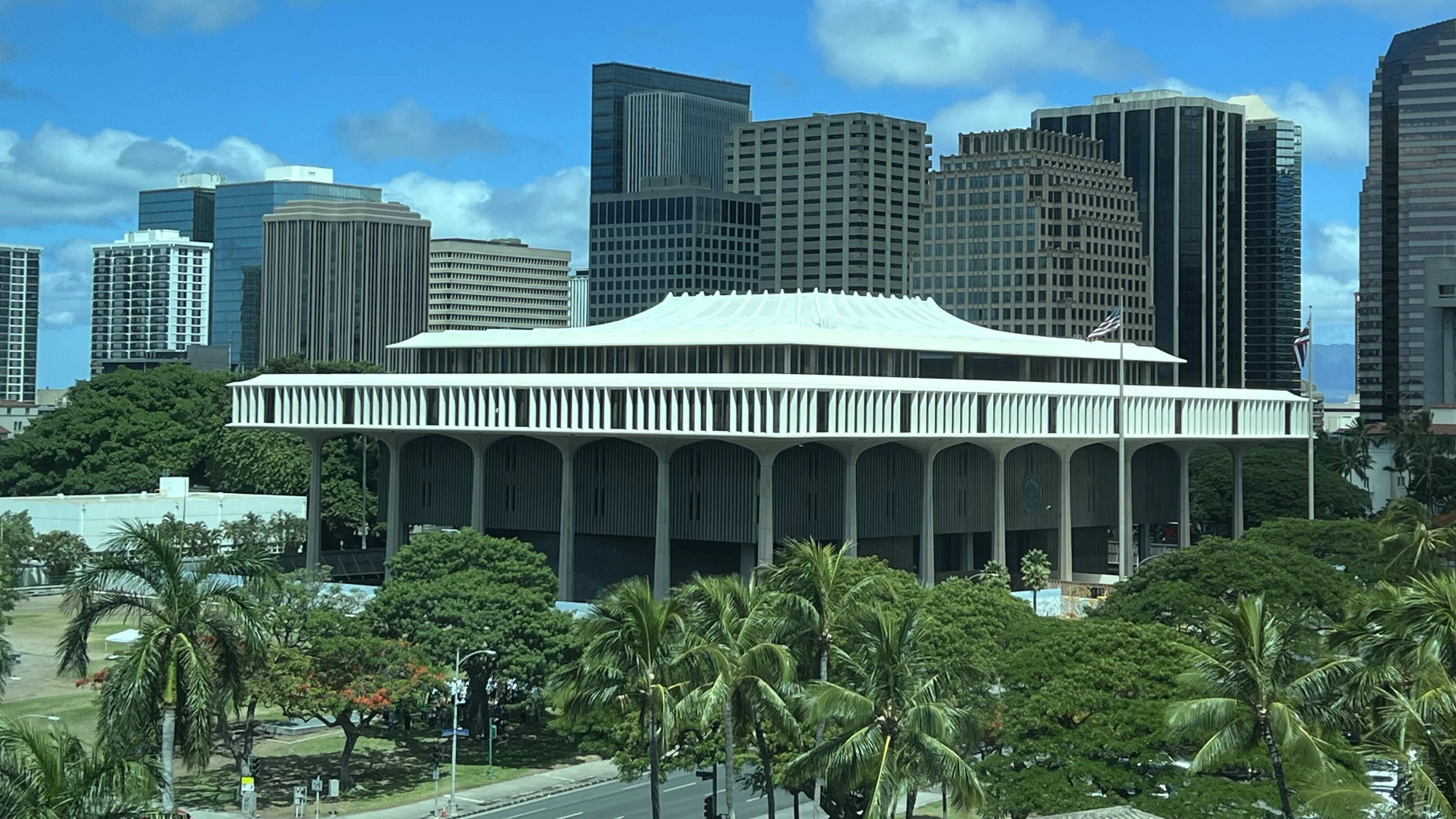
Consequently, Petersen and other coffee growers have urged the legislature to pass House Bill 2119, which would reinstate the subsidy programs for the next two years.
The measure would allow growers to submit proof of purchase of certain department-approved pesticides and be reimbursed for up to 75% of the costs.
There would be limits to the subsidies: farmers could only receive up to $600 per acre each year, and no more than $12,000 in total per year. On the other hand, CLR and CBB benefits would be separated, allowing farmers to potentially be reimbursed up to $1,200 per acre per year for countermeasures against both pests.
Petersen said the subsidies were vital for encouraging small growers to still participate in pest management, which allows for more effective regional control of the pests. He added that organic farmers, who choose not to use the chemical pesticides best suited for dealing with CLR or CBB, therefore still benefit when other growers in the area are able to use pesticides more effectively.
While nobody spoke against the bill at a Friday hearing of the House Committee on Agriculture discussing it, some coffee farmers recommended increasing the funds available to the program — the bill currently would allocate $300,000 in total for both subsidies for the 2026-2027 fiscal year.
The committee on Friday voted unanimously to recommend its passage with little debate, but proposed amendments that would strike the $300,000 allocation and leave it blank, with the total funding for the program to be determined at a future date.
The bill is still referred to two additional House committees and has not yet been scheduled for subsequent hearings.
For the latest news of Hawai‘i, sign up here for our free Daily Edition newsletter.