The circus artist launches into a bowl of water on stage and as she moves, so do the pieces of her costume, which flatten and extend.
Behind-the-scenes for this moment — and many others like it — is Luana Ouverney, head of wardrobe at Cirque du Soleil “ ‘Auana.” Her job is to make sure the costumes, designed by internationally recognized fashion designer Manaola Yap, look their best for each of the performances.
Ouverney is the bridge between Yap’s vision, the Cirque du Soleil team in Montreal, Canada, and the needs of the acrobats and athletes. Cirque du Soleil's headquarters in Canada is where every costume is custom-made for the artists.
“During the creative process of the show, the artist — they have a full look, which is approved by the creative team, as well as wardrobe,” Ouverney told Aloha State Daily. “We make sure that everything is not only up to the designer's desire, but also the needs of the artist, as well as their performance.”
Since “ ʻAuana” has two performances each night, five days a week, the Cirque du Soleil team tries to have at least a duplicate of each costume piece. The wardrobe department for “ʻAuana” consists of six people. Ouverney manages the department and oversees scheduling, purchasing and long-term planning.
“ ʻAuana” opened in December of 2024 and recently celebrated its one-year anniversary in the Outrigger Theater inside the Outrigger Waikīkī Beachcomber Hotel on Kalākaua Avenue. In 2025, the show brought in nearly 275,000 guests.
The show includes a cast of about 30 full-time performers. Ouverney and her team manage more than 270 costume elements, including clothing, shoes and accessories.
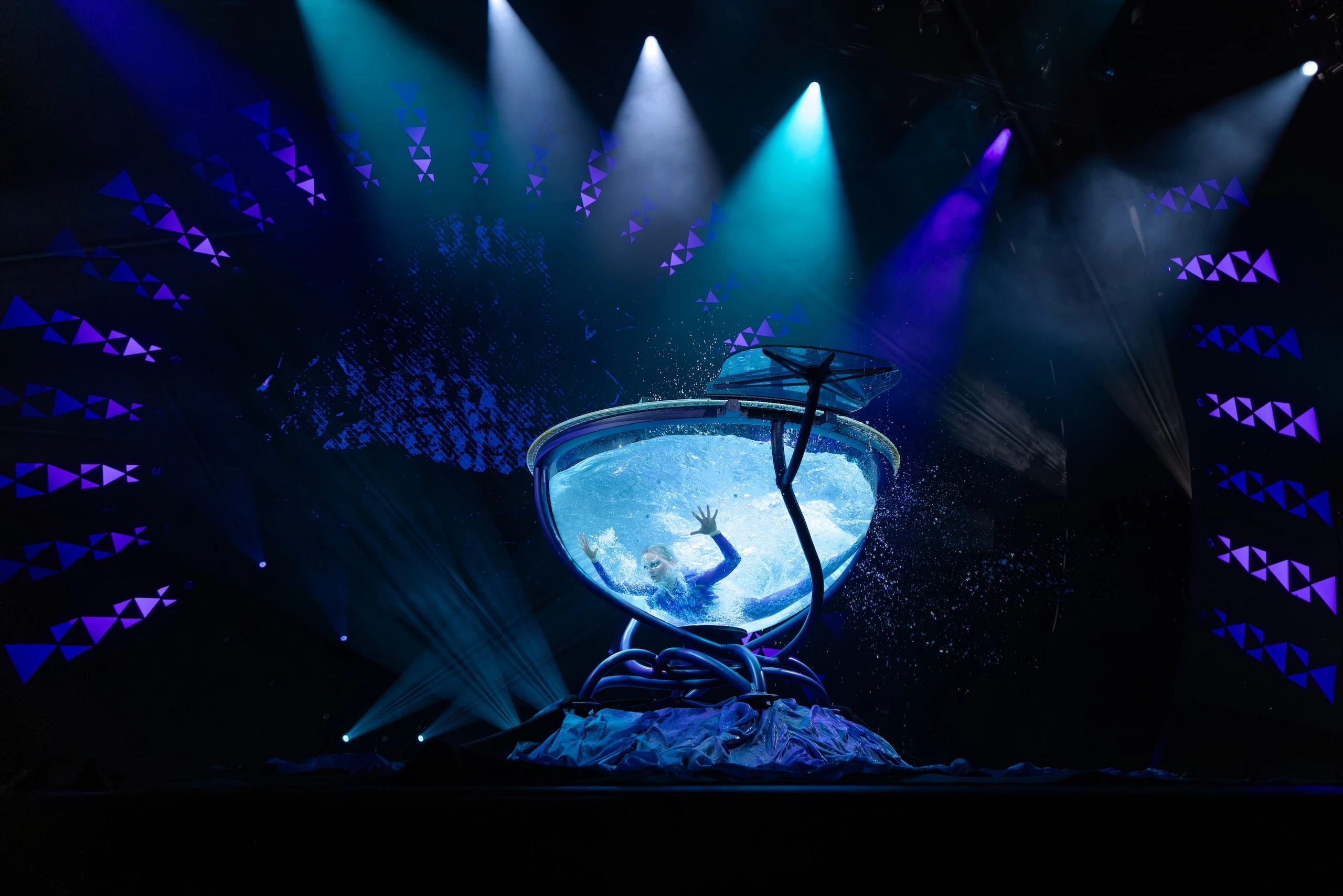
The water bowl scene features Mālama, a woman and powerful moʻo. (Cirque du Soleil 'Auana) 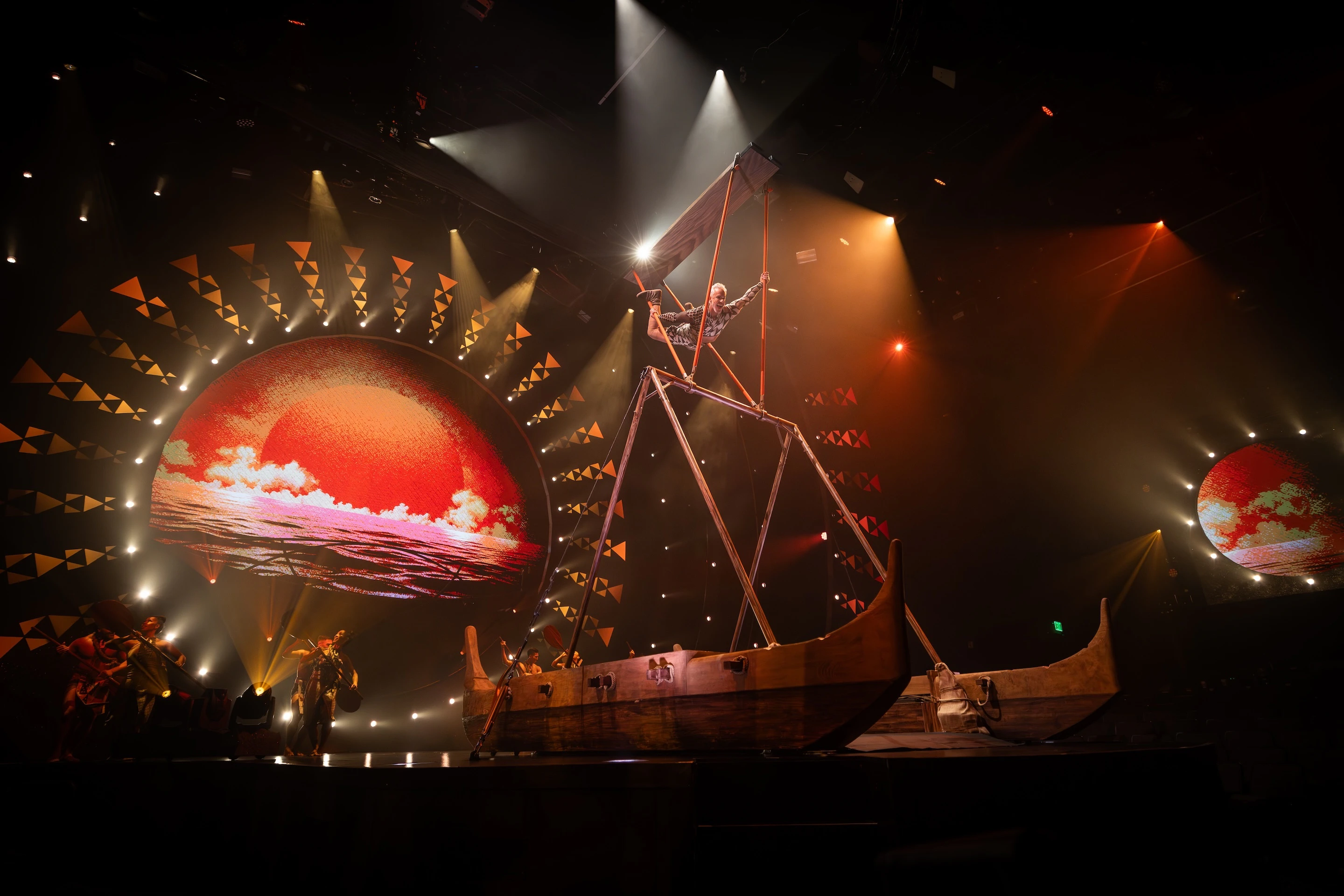
This scene features a swing and shares how early Pacific Islanders were navigators who used the stars, sun and ocean swells to find their way. (Cirque du Soleil 'Auana) 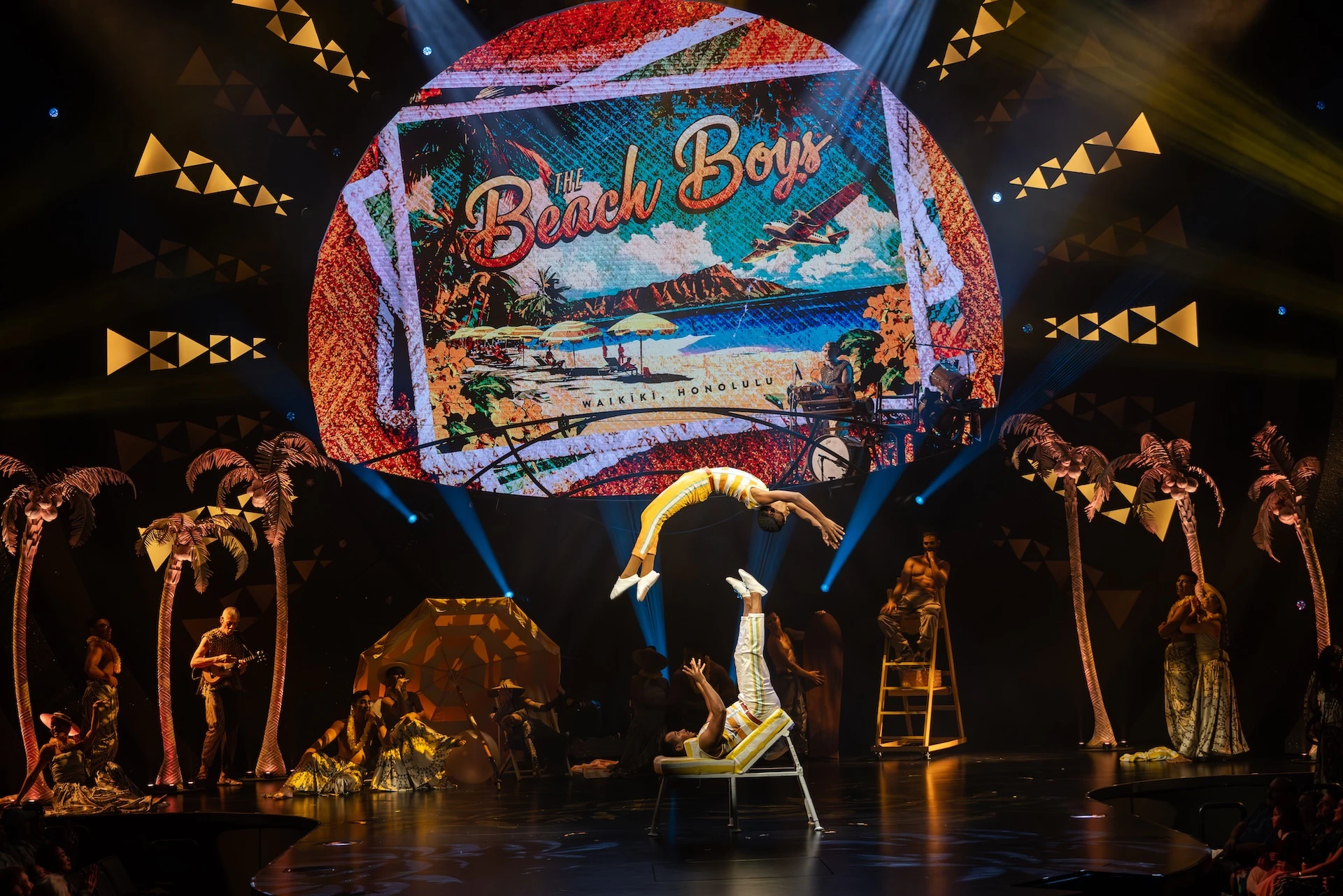
This section depicts the 1920s to the 1940s when Waikīkī was a quieter place, which just two hotels. (Cirque du Soleil 'Auana) 
Balance is the name of the game for this performer in a scene where the title, "Nalu," means both "wave" and "to concentrate." (Cirque du Soleil 'Auana)
“Once we are sure that that costume is going to work in the show, we start replicating,” she said. “So, each artist has multiples of the same look. For instance, double shirts and skirts, shoe accessories, etc.”
After each performance, costumes are washed. Shoes get painted. And things get repaired.

“There are some specific costumes that we already know where to look, where to repair, because it’s going to have a hole,” she said.
Some outfits might last a year. Others last between three and six months, she said.
“We are very particular about every detail, which is fabulous on stage,” she said. “Every night after each performance, we wash the costumes. But not only that, we go through all the shoes and accessories to make sure that they get sprayed and check to see what is the lifespan like.”
Ouverney has worked on touring productions of Cirque du Soleil, traveling to more than 50 countries as a costume design coordinator for the company. She wrote a book, “Eco-Savvy Traveler,” about her adventures.
“I always strive to work toward sustainability because it's something that I really believe in,” she said. “I’m a strong believer that we can do better with fashion.”
Ouverney also adjusts costumes to fit the artists’ needs. For instance, in the water bowl scene, Māmala, a shapeshifter who is a beautiful woman and a powerful moʻo, originally had an outfit with a collar. But, that design restricted the performer’s arms when she was doing handstands. The material also retained water, which added extra weight.
“Many extra pounds matters upside down, right?” she said with a laugh. “It was my responsibility to adjust the costume quickly and safely. So, we’re still keeping Manaola’s original design intact, and trying to balance esthetics and performance.”
Her team made some changes to the design.
“For that specific costume, we unfortunately had to remove part of the collar,” she said. “We changed the fabric, as well. But we did keep the same design overall.”
At a young age, Ouverney knew a career in textiles and fashion was for her. At just 6 years old, she remembers playing with roles of fabric at her grandfather’s factory. She later pursued a bachelor’s degree in fashion. When Cirque du Soleil came to town, she applied to be one of the company’s local staff members. Three years later, the company needed someone to travel on tour.
“I was like, ‘Oh, it doesn't sound like a bad idea to travel the world, getting paid and working to bring smiles to people's faces,’ ” she said. “l always say one of the reasons why I do what I do is to help people forget a little bit about their realities and their day-to-day life and come and watch such a beautiful performance.”
Ouverney took the position.
“I'm originally from Brazil, and ironically, my name has a Hawaiian meaning, which makes working here on ʻ ‘Auana’ even more special,” she said.
In Brazil, her name was inspired by the fact that she was born on a full moon.
“But in Hawai’i, it means a sense of happiness, leisure and contentment,” she said. “That's the meaning of my name.”
She traveled solo for most of her career, until she met her husband through a dating app. Ouverney took a sabbatical to live with him. After the pandemic, the show she had previously been working on headed to Brazil for its first stop on an international tour.
“And I couldn’t miss out,” she said. “Because it’s my own country.”
Ouverney returned to work with Cirque du Soleil and toured for several years with her husband and their toddler. Eventually, the family decided to seek a less nomadic lifestyle, and she took a job with “ ‘Auana.”
“I'm very proud to be part of a production that is elevating Indigenous Hawaiian art and culture,” she said.
The people are her favorite part of the production, she added.
“My team — I really enjoy working with each of them,” Ouverney said. “And the show is just so beautiful and so special.”
Shows run Wednesday through Sunday. The performances are at 5:30 p.m. and 8 p.m. Kama‘āina get a 30 percent discount. Get tickets.
For the latest news of Hawai‘i, sign up here for our free Daily Edition newsletter.
Katie Helland can be reached at katie@alohastatedaily.com.