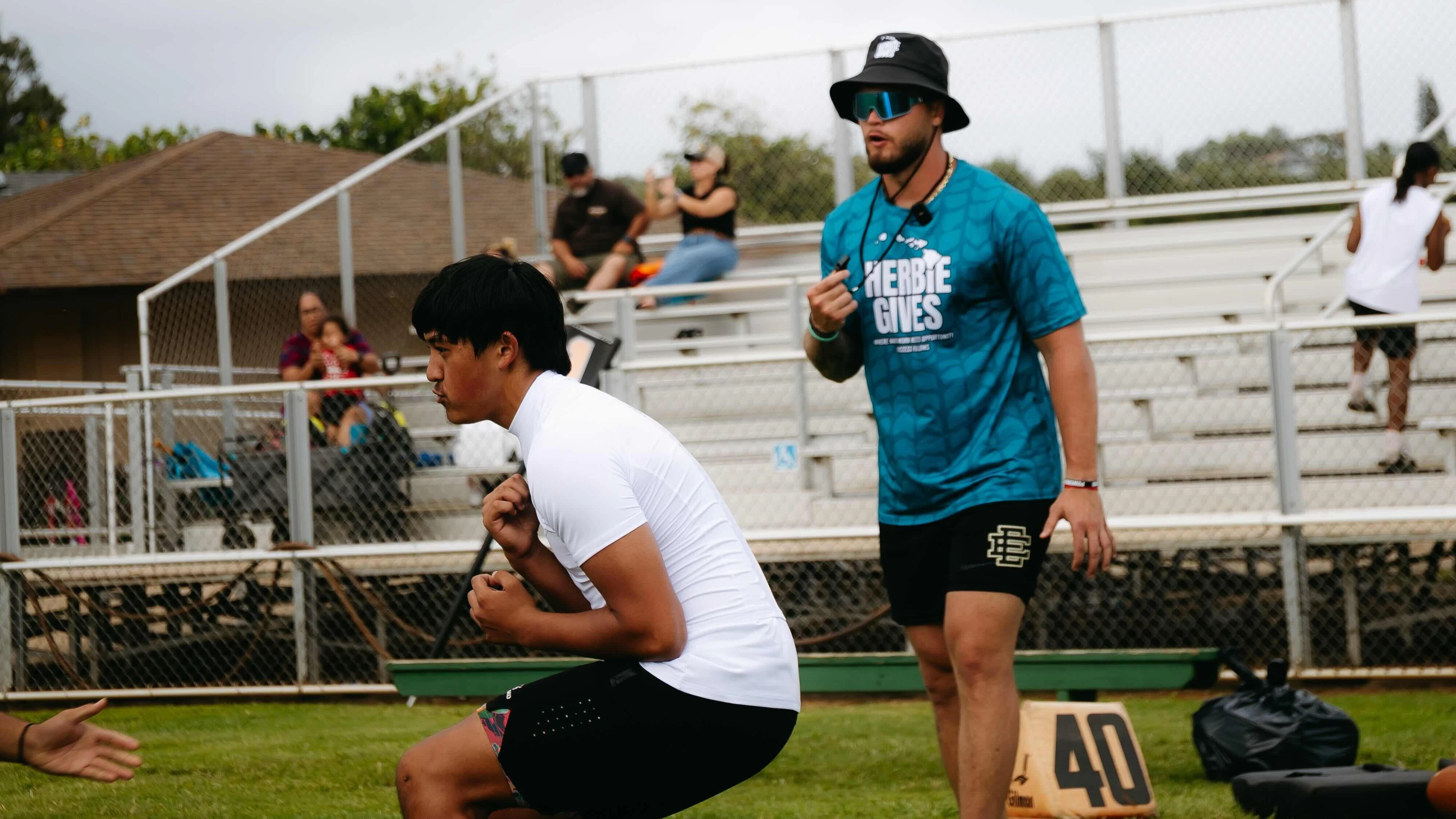
Nine University of Hawai‘i athletes and four head coaches took turns testifying for Hawai‘i House Bill 2384 at UH-Mānoa's Bachman Hall on Wednesday afternoon.
The main focus of House Bill 2384 consists of UH-Mānoa obtaining an unspecified amount of money towards its NIL fund from the Hawai‘i Legislature, though $5 million was the figure brought up in a joint hearing between the House and Senate at the Hawai‘i State Capitol on Nov. 12, 2025.
After University of Hawai‘i president Wendy Hensel and UH-Mānoa athletics director Matt Elliott spoke in front of the House of Representatives’ Committee on Higher Education, UH student-athletes took to the podium to speak at Bachman Hall, the vast majority with prepared statements.
Hawai‘i women's basketball players Jovi Lefotu and Ritorya Tamilo, women's volleyball players Victoria Leyva, Cha'lei Reed and Tali Hakas, football players Dean Briski and Micah Alejado, and baseball players Elijah Ickes and Ben Zeigler-Namoa all spoke about their experiences in representing the school, expressing a shared gratitude towards the community support they all get across the state.
In support of HB 2384, Ickes discussed how he grew close with multiple teammates who went on to depart UH in order to take NIL deals with other schools. Ickes, who was selected in the 19th round of the 2023 MLB Draft as a senior at Kamehameha and is again considered a prospect in 2026, likely could have followed suit if NIL earnings were his top priority.
Meanwhile, Briski, a native of Pago Pago, American Samoa, spoke about how other schools tried to entice him to the enter the NCAA transfer portal with large NIL offers. He ultimately couldn't bring himself to do it.
"A lot of programs rely on money transfers or highly related recruits, and with years of experience. For us, that's never been the case," said Briski, who started 11 games at right tackle as a junior for the Rainbow Warriors in 2025. "Players come and go, but the family unity, loyalty and culture built here, our cultures instill something deeper in those who choose to stay. This island is very special. It brings people together, and it is filled with with love.
"I've had opportunities from Power Four schools offering large amounts of money, but I've chosen to stay because of what has been built here, a team rooted in faith, not just faith in each other, in our community, but faith in God. Hawai‘i is an expensive place to live when other schools offer money that can change the lives of not just players, but their families who live back home. It becomes incredibly hard to say no, because at that point, it's no longer just about you. ... Possibilities for Hawai‘i football can become truly special. I believe this program is only scratching the surface, and with the right backing, what Hawai‘i can achieve will be something great, not just on the field, but for the people, the culture and the future generations to come."
Additionally, women's basketball head coach Laura Beeman, women's volleyball head coach Robyn Ah Mow, and football head coach Timmy Chang also spoke. Ah Mow got choked up and had to briefly recollect herself after explaining how without volleyball, she would have never had the opportunity to receive a college education.
Baseball head coach Rich Hill, football general manager Matt Chon and football player Jamih Otis were among those supporting in attendance.

Hawai‘i quarterback Micah Alejado. (Aloha State Daily Staff) 
Hawai‘i women's basketball standout Ritorya Tamilo. (Aloha State Daily Staff) 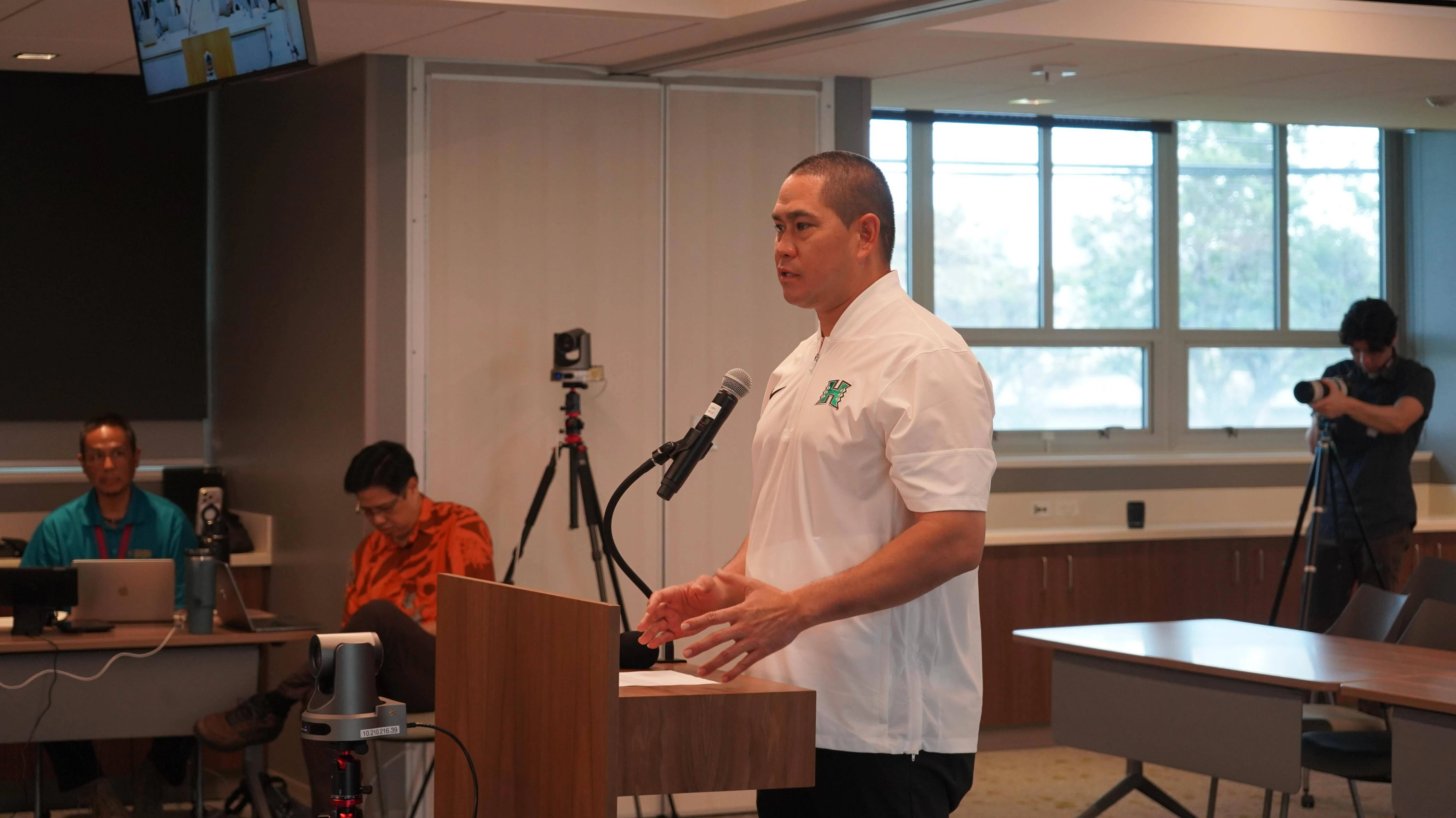
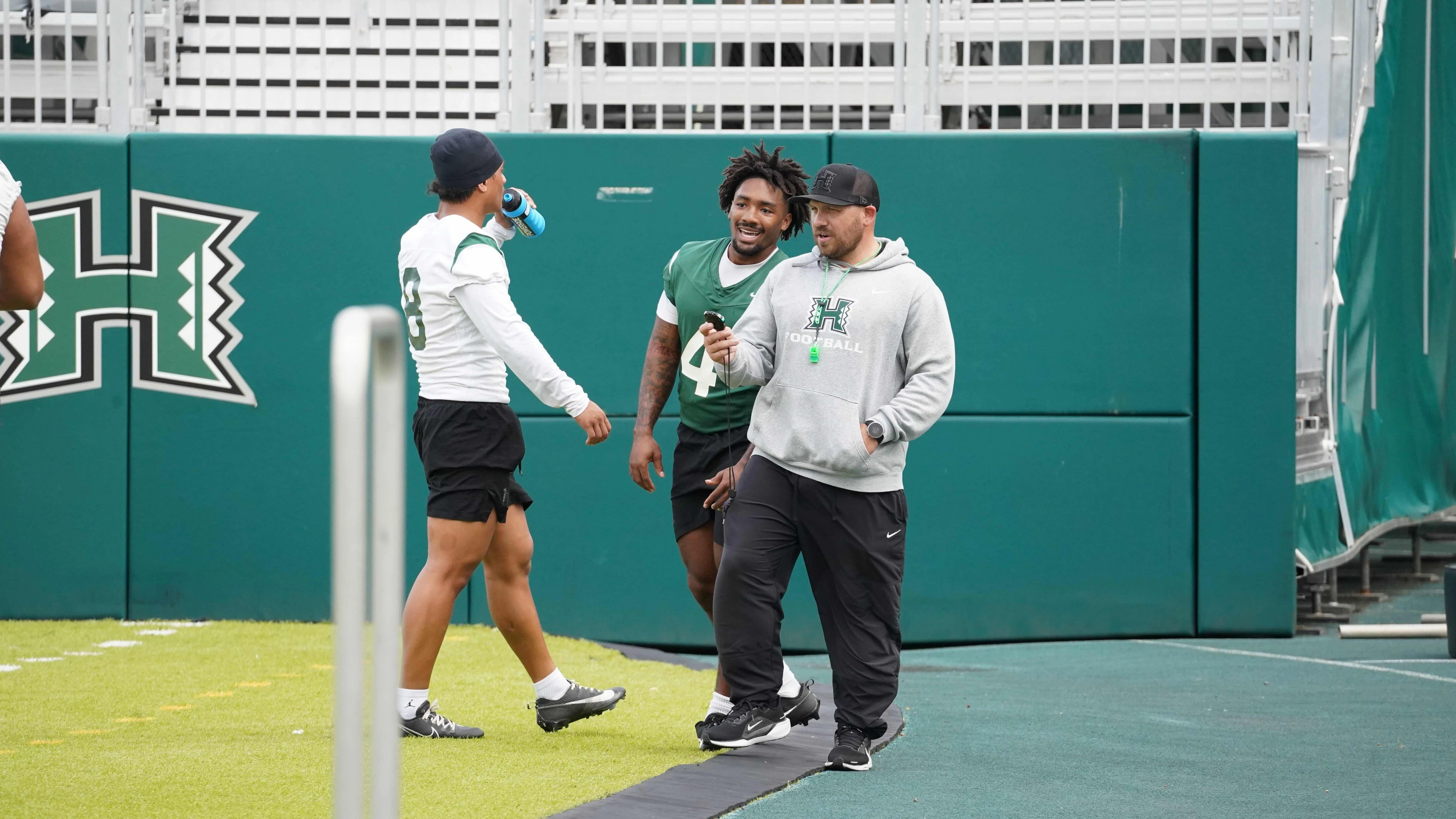
Hawai‘i head football coach Timmy Chang. (Aloha State Daily Staff) 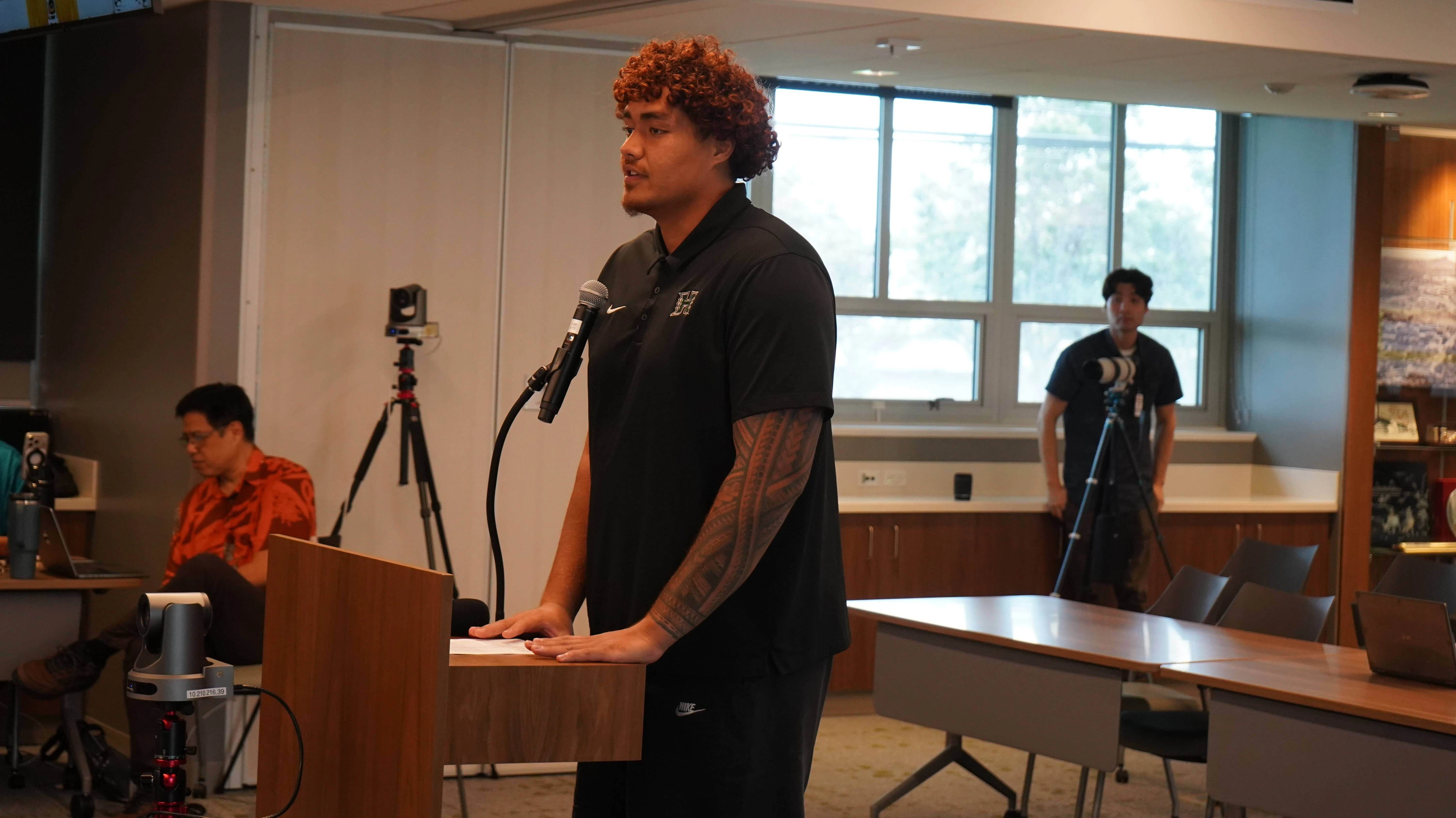
Hawai‘i offensive lineman Dean Briski. (Aloha State Daily Staff) 
Hawai‘i women's volleyball outside hitter Chalei Reed. (Aloha State Daily Staff) 
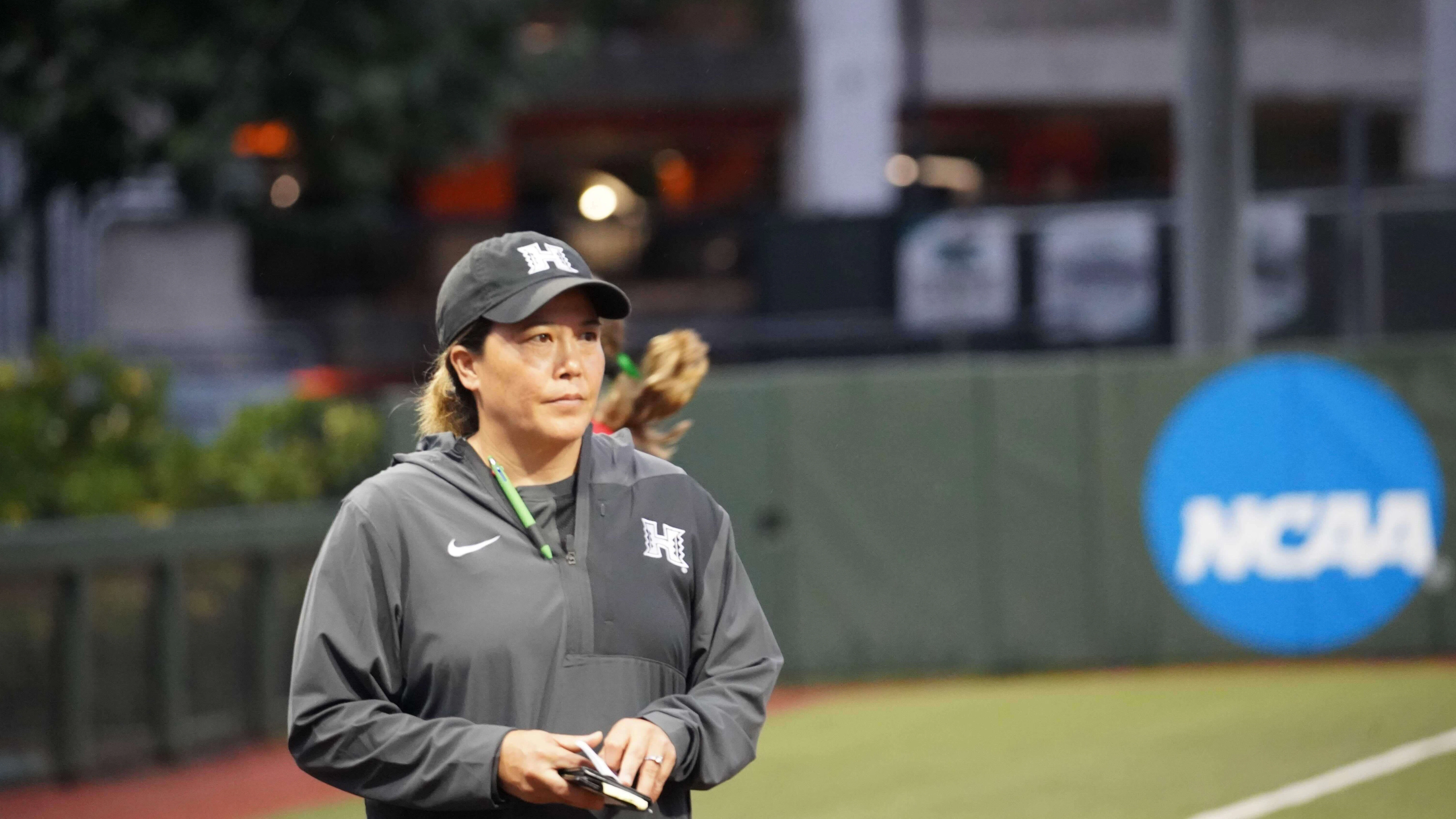
Hawai‘i women's basketball coach Laura Beeman. (Aloha State Daily Staff) 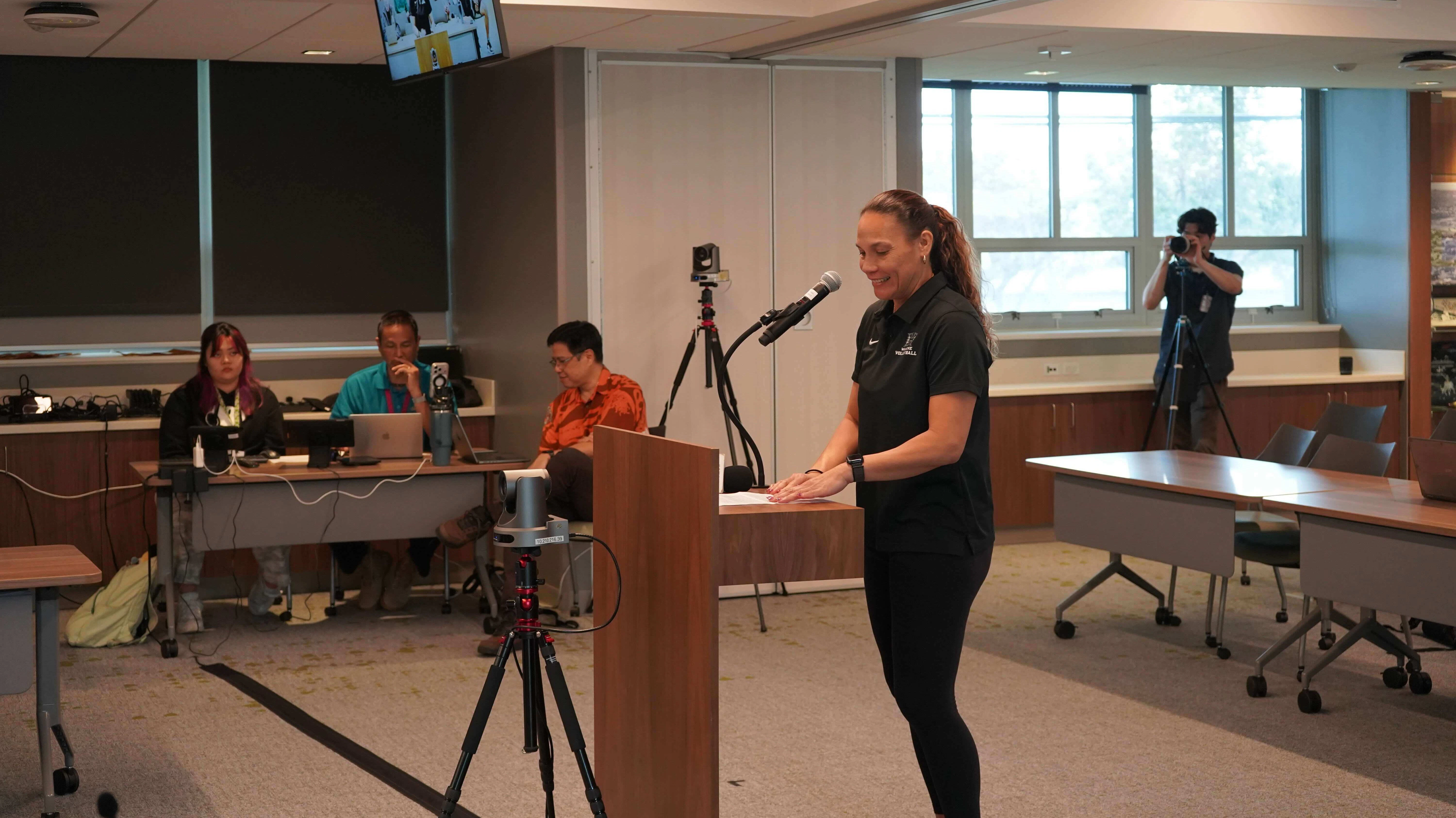
Hawai‘i women's volleyball head coach Robyn Ah Mow. (Aloha State Daily Staff)
When asked about the department's fundraising efforts during Wednesday's hearing, Elliott said the school will continue to solicit funding from the private sector.
"The state funding allows us to have some certainty and stability around an NIL program so that we can make promises to these student-athletes that we know we will fulfill, and then we'll try to raise on top of them, as well. So, (the $5 million) is just a really good kick-start," Elliott said.
Following the testimonies, the committee voted unanimously in favor of the bill. It will then cross over from the House to the Senate in the coming months, which will be followed by another vote.
The money UH is asking for is with the intent for it to be activated for the 2026-2027 fiscal year, which starts on on July 1. As for the current 2025-2026 year, Elliott said the athletics department is still raising funds for its target of $3 million in NIL funding, though they're more than halfway towards their target.
"We are probably going to need to raise $3 million to cover the NIL promises that we have made this year, for the academic year that's happening right now, and we've raised over $1.6, probably closer to $1.7 now," Elliott said. The donations have come from private avenues, which includes boosters. "We're making progress, and right now I hope to hit that goal.
"We have asked for $5 million for next fiscal year, so that's for 26-27, and that is so that we can then be very secure in the promises that we make to our student athletes on the football team, the basketball team, the volleyball teams, the baseball teams, etc., because if we have that foundation, then we know, OK, that's who we can recruit and retain, and then we're going to still try to fundraise on top of that."
After the hearing and unanimous vote in favor of the bill, Elliott says he couldn't be more thankful for the athletes that chose to speak.
"I thought they were brilliant," he said. "I thought they did an incredible job representing this university, and we should be so proud of the program that's creating these opportunities for students to be here and do that. They're gonna be, I say all the time, these are our future leaders. No question. I believe that so strongly."
Upon accepting the job last summer, Elliott vowed to do what he could to keep Hawai‘i competitive in the ever-changing college landscape. The 2025-2026 academic year was the first in which schools could engage in direct revenue sharing with its student-athletes. Power Four schools are distributing $20.5 million to their student-athletes in addition to scholarships. In 2026-2027, that number will jump 4% to $21.3 million. Although that figure is currently out of the realm of a mid-major school like UH, Elliott and Hensel have visited with the House and Senate multiple times to in an attempt to secure what it can.
"It's unique to this place, I think, in terms of how the legislature engages with the athletics department," Elliott said. "But I still think that what we're talking about is an opportunity for alignment. Let's get everybody on board. Let's get everybody on the same page. We're not going to do that today, we're not going to do that tomorrow, but it will take time as people tell the stories of our student-athletes and we see the progress that we're making, I really believe more and more people will come along and think it is worthwhile.
"I think we just wanted to be very proactive and transparent about it, that this is what we believe is necessary for us to be successful. So why not just say it? Why not just put it out there, say to the state, "We want that support.' I don't want to be the school that in six months or in a year, facing our budget, and we're like, 'Oh, we're $7 million in debt.' Why are you $7 million in debt? Well, because we didn't have an NIL plan. We didn't talk about where those resources are going to come from, and we tried to figure it out, and it just didn't work.
"So, I think our approach here is much more driven, very much by President Hensel. Let's set up opportunities to talk about this and talk about it early and often. I don't want to be in a place where we have a budget deficit. I want to run a balanced budget, but do it in a way where we have enough funding to run NIL, as well. That's the idea behind it."
For the latest news of Hawai‘i, sign up here for our free Daily Edition newsletter.
Christian Shimabuku can be reached at christian@alohastatedaily.com.