Hundreds of pages of Portuguese immigration records from the late 1800s onward will be publicly available in digital form.
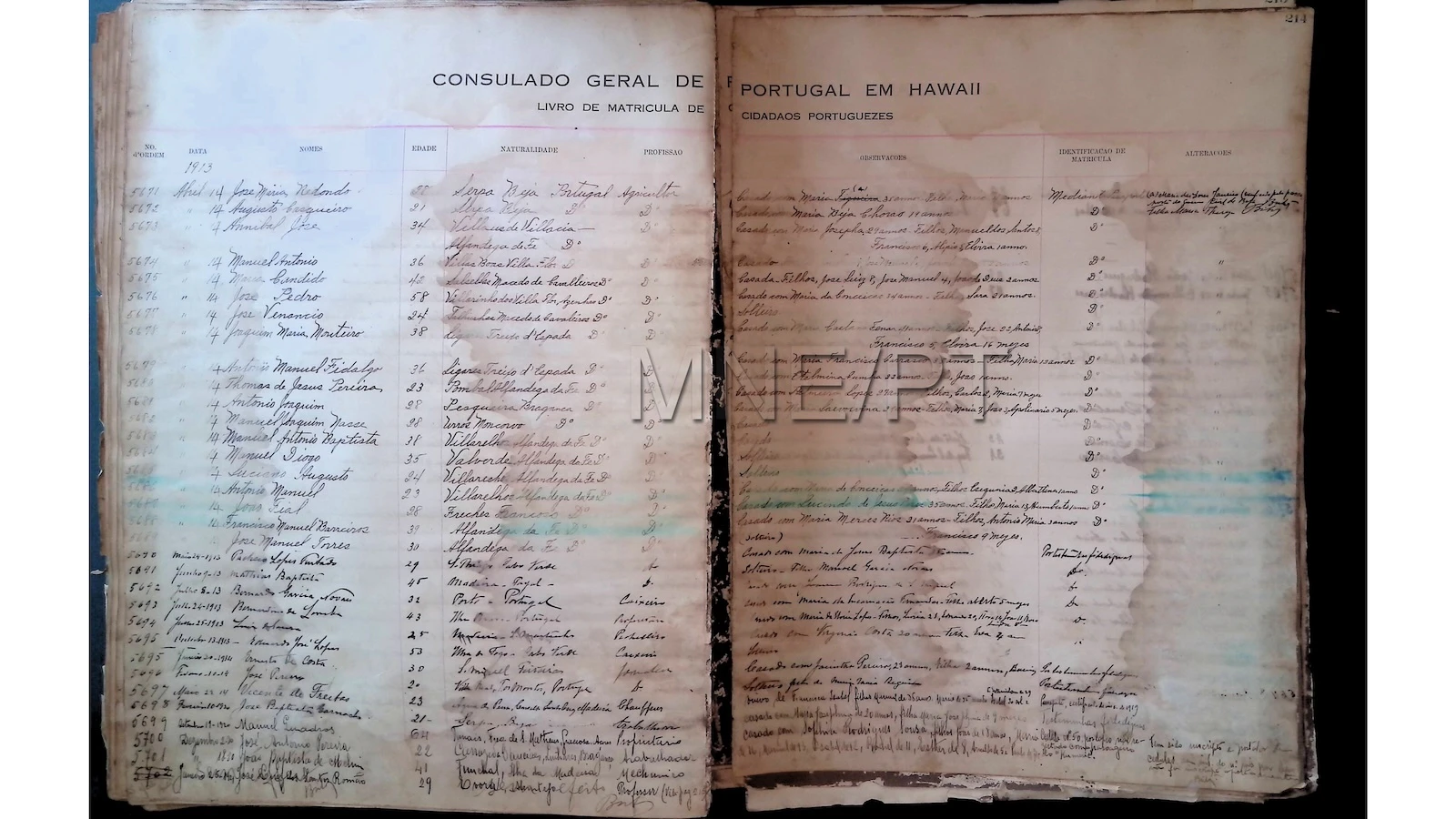
The Consulate General of Portugal in San Francisco has donated scanned copies of its consular records to the Hawai‘i State Archives, including arrival data of all Portuguese citizens in the state between 1878 and 1934.
Honolulu Councilman and Honorary Consul for Portugal Tyler Dos Santos-Tam told Aloha State Daily that his predecessor in the Consul role, John Henry Felix, died in 2025. Shortly afterward, Felix’s son reached out to Santos-Tam about several aged record books in his late father’s possession.
“They were these dusty old books, they had clearly been waterlogged at some point,” Santos-Tam said. “I asked the folks in Lisbon what we should do with them … and they said they would like them back.”
But, Santos-Tam said, Portuguese officials agreed to scan the records and donate them to the state, allowing Hawaiʻi residents with Portuguese ancestry to learn more about their family histories.
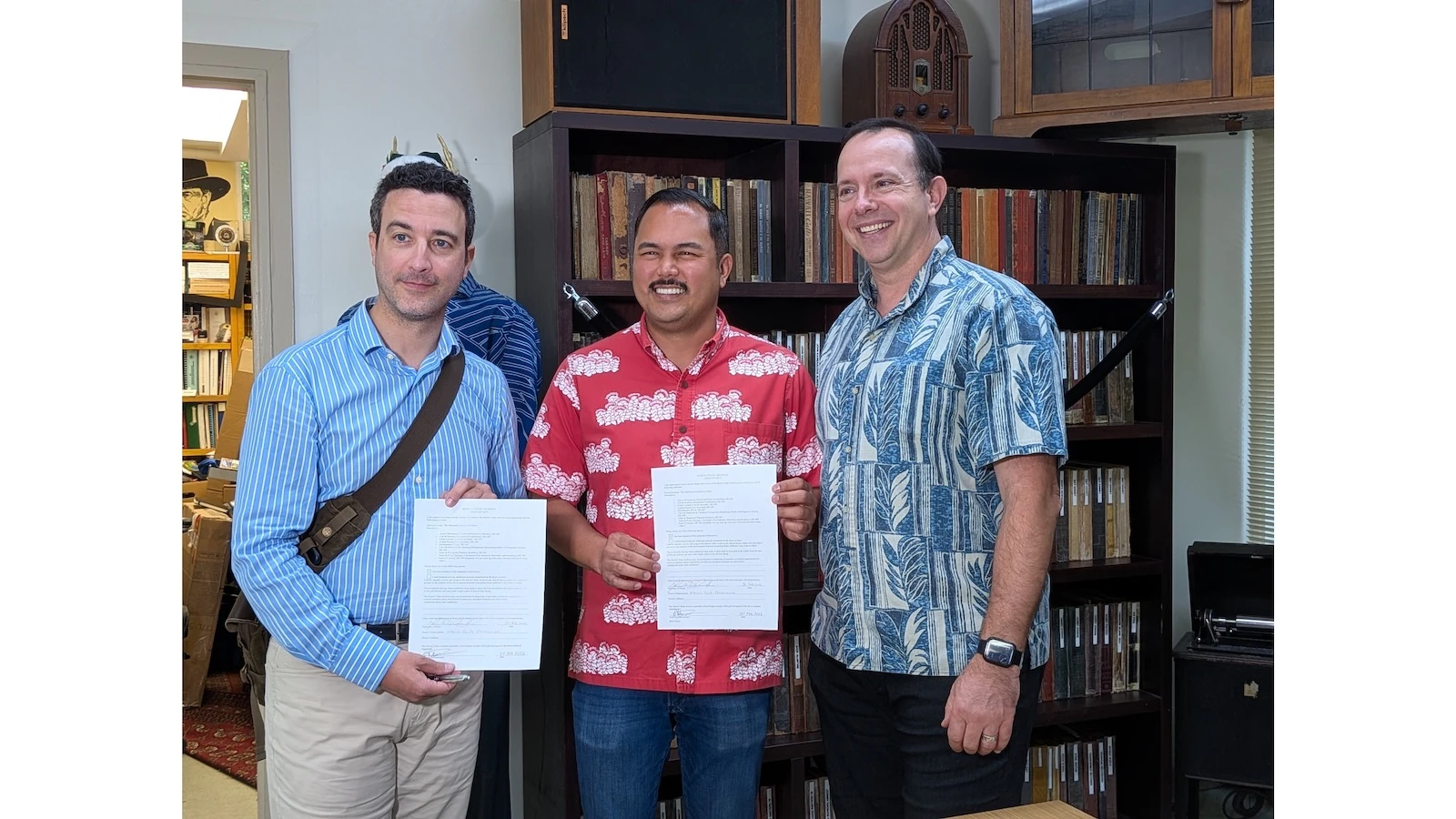
Filipe Ramalheira, Consul General for Portugal in San Francisco, visited the State Archives on Friday to sign the documents officially authorizing the transfer of the immigration data, which included a registration book of Portuguese citizens, passport booklets, tax accounts, deeds and powers of attorney and more.
Santos-Tam said his own great-great grandfather is included in the records, as are the three immigrants credited as the first makers of ʻukulele, José do Espírito Santo, Augusto Dias and Manuel Nunes.
The records differ from Portugal’s own departure records, Santos-Tam said: stowaways and children born en route wouldn’t have been recorded when leaving Europe.
Also included in the records are the names of specific villages and parishes in Portugal and its colonies from whence immigrants originated, their professions, their traveling companions, and, in some cases, surviving photographs.
“There might be some surprises in there, too,” Santos-Tam said. He explained that one of the ʻukelele makers was recorded in the logs as arriving unmarried, yet in the company of a woman with children, potentially hinting at some minor 19th-Century scandal.
Santos-Tam added that, previously unbeknownst to him, his great-great-grandfather’s niece (in other words, his cousin three times removed) traveled to Hawai‘i years later.
“So there might be a whole other set of Santos-Tams here,” Santos-Tam said. “We thought we were the only ones.”
The documents are not yet publicly available, but they will be published and freely viewable via the State Archives website. Santos-Tam said the Archives will work to make the documents searchable in the future, but for the time being, users will need to pore through the records page-by-page, so an eye for cursive handwriting and the Portuguese language is advised.
Meanwhile, users can also browse the State Archives for hundreds of thousands of other records the division recently digitized, including genealogical records and land holding data.
For the latest news of Hawai‘i, sign up here for our free Daily Edition newsletter.