Honolulu-based nonprofit Partners in Development Foundation has been intentional about stabilizing its early childhood workforce over time, according to COO Terry Nakamura.
He told Aloha State Daily that despite ongoing challenges, the organization has been “trying to increase the salary for entry-level positions.”
“Incrementally, we raised their pay from $15 to $16 and then to $17,” Nakamura explained. “So, it was a deliberate attempt to make it affordable for folks. And it does make a difference, it helps.”
So has offering stipends to workers.
With early childhood educators in mind, PIDF dispersed a grant, then called Early Childhood Workforce Stabilization and Compensation Assistance Award (ECWSCA), to employees in May of 2025 from Hawaiʻi P-20 Partnership for Education, which includes the Executive Office on Early Learning, the state Department of Education and the University of Hawaiʻi System.
The total amount awarded was $176,250 to 85 early childhood education staff via one-time stipends. The 56 full-time staff received $2,500 and the 29 part-time staff received $1,250.
“These stipends have been a huge benefit. For both the first and second rounds of this, it was a surprise. I was the one that primarily submitted our application, and we did it per program.”
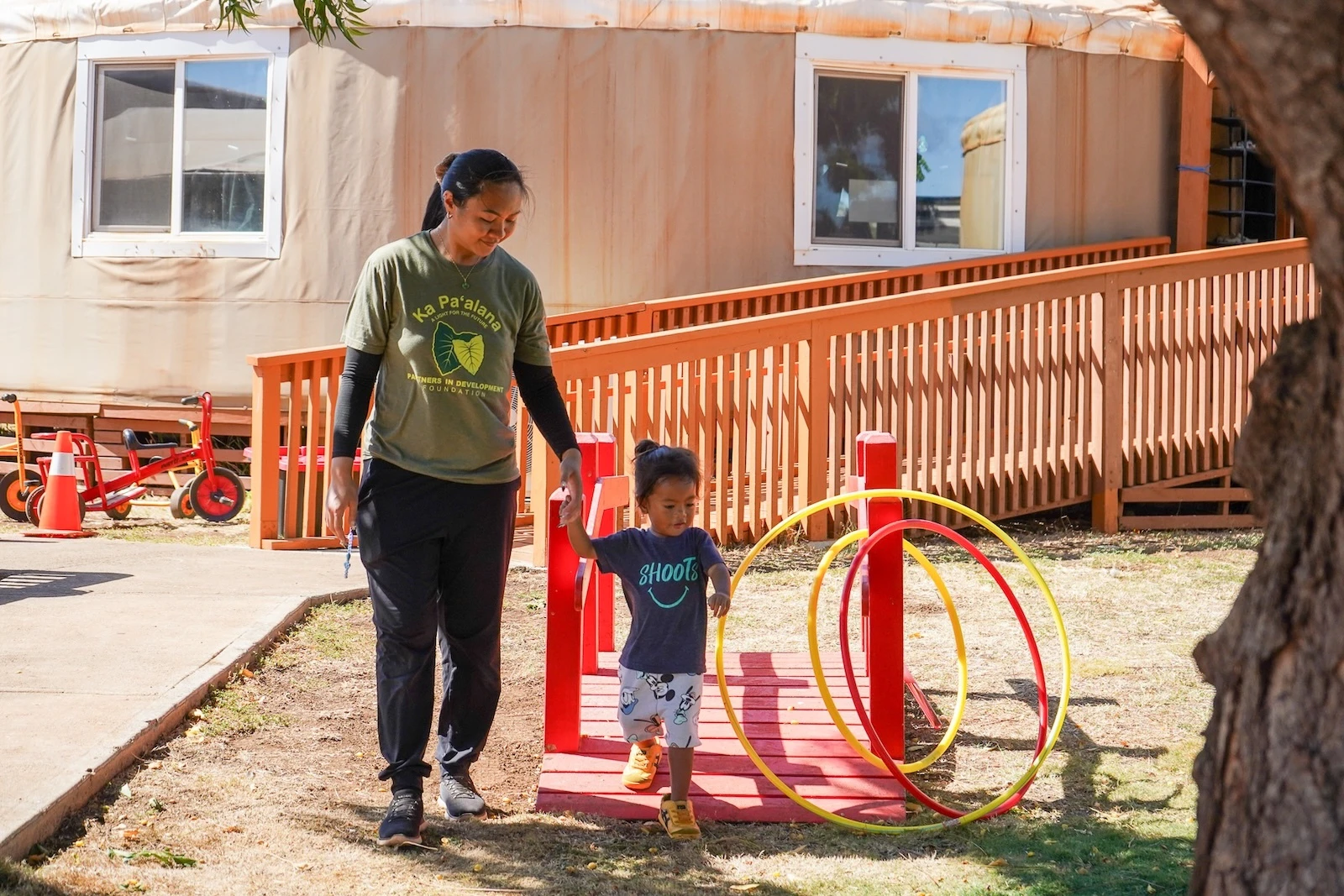
Of PIDF’s 10 free community programs offered statewide, three are dedicated to early childhood education: Ka Pa’alana Homeless Family Education, Nā Pono No Nā ʻOhana and Tūtū and Me.
Most recently, the organization was awarded a total of $153,750, which was used for stipends distributed to 62 early childhood education staff.
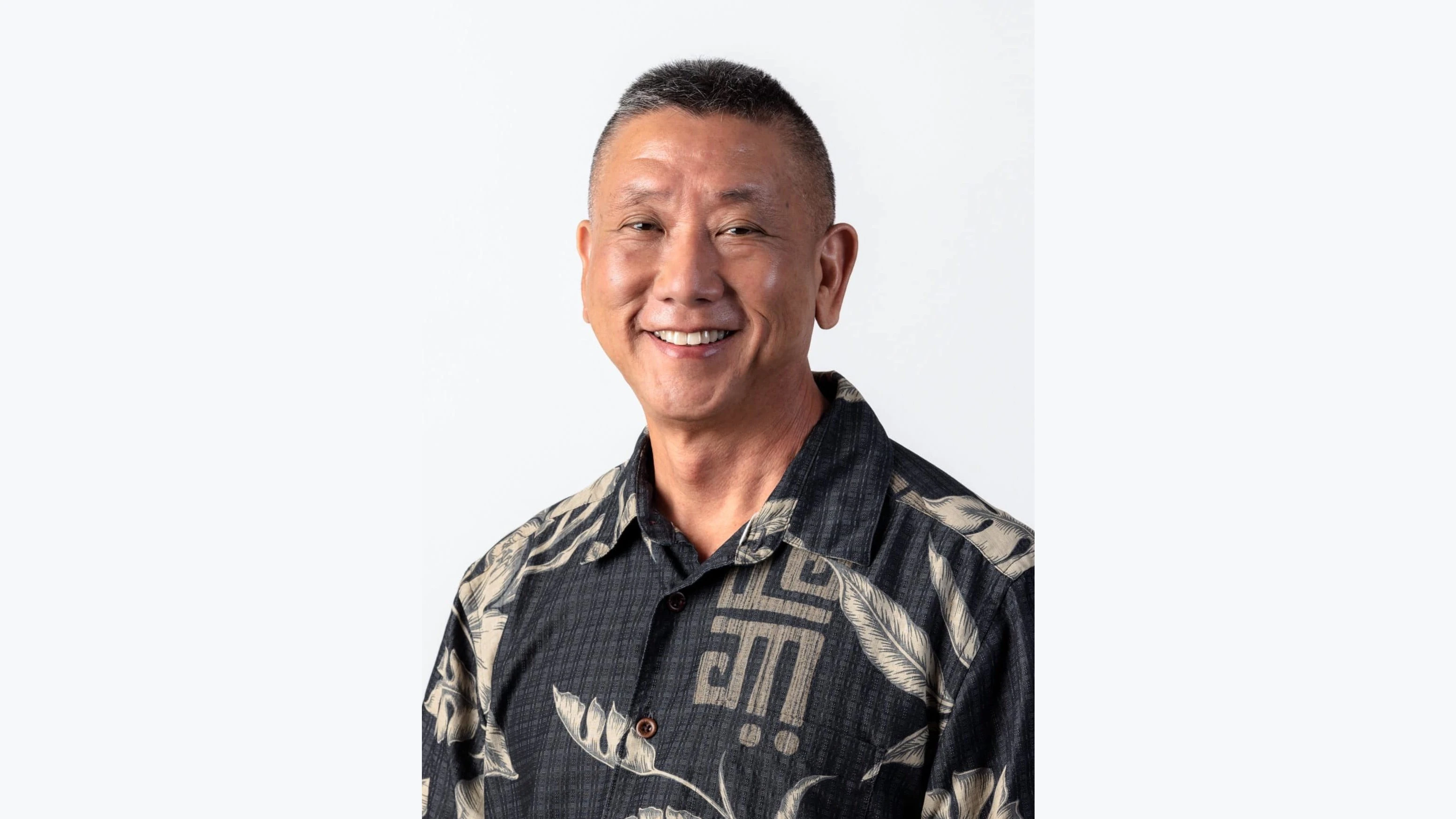
Nakamura said for both, the turnaround time was roughly two-to-three months. “If it’s offered [again], we will definitely apply but this is a special grant funded by the state to retain and encourage early childhood education workers to remain in the field. We don’t have any expectation of future awards like this.”
When asked how the staff responded, he said, “Our staff is dealing with stresses of finances and family in their personal lives. As human beings, they try to be professional and keep that at home, but that stress gets carried with them. To have this kind of relief, it has a huge impact on their well-being, mental and emotional health, which makes it easier to focus on the children and families.”
Across its three early childhood development programs, PIDF reaches about 1,700 children ages 0-5 years old and approximately 3,000 caregivers, he added.
Testimonies from staff
In response to the most recent stipend, one preschool teacher told PIDF, "I'm a single parent of three children, my youngest made me a grandma at 16 years old. My middle child is having a baby next month. I'm so grateful to have been blessed with this extra check, so I can help with what my grandchildren need.
“I feel seen. Being in this field we never enter for the pay, we enter to make a difference, so living paycheck to paycheck is just a part of my life, but to have the extra help is such a blessing."
Another added: "This Early Childhood Workforce award has placed calm in such an uncertain season of life. As a young Native Hawaiian, I am very passionate about the education and development of the children of Hawai'i. However, monetary assistance to do so can never be 100% guaranteed. … I am blessed to be part of a program that lifts up their staff and ensures their work is being recognized appropriately.
The award came at a crucial time for three teachers, “who are sisters, share a household with four other family members and serve as the primary providers for their family. Their income supports everyone in the home. With rising food costs, the award could not have come at a better time. The extra money will help them purchase groceries and essential household items with far less financial strain.”
Funding shift
Federal funding changes within the last year continue to affect PIDF, Nakamura told ASD.
“We’ve been preparing for big changes in our three programs, where generally, about three-quarters comes from federal. Right now, we have secured funds through the end of August but it’s uncertain after that,” he said. “We’re working really hard to diversify our funding and have been blessed to receive additional dollars. It’s been all hands-on deck the last 9 months, and we’ve been sharing with updates with staff, while still delivering our programs.”
According to ProPublica, PIDF’s total annual operating budget is just over $23 million, with approximately 92% of funding directed toward programs and the remainder for overhead, per 2024-2025 data. Nearly 70% of its operating revenue comes from federal grants.
“We had heard that the the Native Hawaiian Education Program was fully funded by Congress … But that’s not actually the case. The plan is for them to be transferred from the U.S. Department of Education to the Department of Interior, and the delays that might occur from that transition are very uncertain.
“We don’t know when NHEP will release a new grant competition. Leaders at NHEP don’t know what’s going to happen. For example, will the current NHEP staff be allowed to still be employed? That’s important because they’re the folks that know all these grant details. It would be difficult for new folks to learn/start up the process.”
He says state and local partnerships remain crucial to sustaining operations. Currently, PIDF is not hiring for new positions, though some spots are still available here and here.
‘An exciting journey’
Nakamura joined PIDF in 2007 to help start the Ka Pa’alana program.
“I truly felt a privilege and joy to walk alongside folks I serve and care about them, seeing the love they had for their kids and how I could support them. Simple things like reading a story, building language emotional bonding, providing basic things like food and diapers, providing social-emotional help with counselors,” he said. “What I found is, folks have been so open and generous. They taught me what aloha looks like.”
After 17 years there, he now serves in a more administrative role, supporting program directors in various areas such as funding/grants, accounting, contracts, reports, audits, insurance, personnel and human resources.
“I realize how necessary my role is now, along with our Executive Team and Board of Directors; I just never understood that we couldn’t do what we do at the program-level without admin support,” he said. “It’s a team effort. From the top down, it matters how we treat each other. If I lead with honor, respect and aloha, we can create a culture that eventually families feel.”
Looking ahead, Nakamura said despite “much change and uncertainty, there’s opportunity to grow as leaders, innovate and recreate programs” out of necessity.
“The mission doesn’t change, but how we do it needs to change. So, reimagining that and starting from scratch on some things has been an exciting journey.”
PIDF is led by President and CEO Shawn Kanaʻiaupuni. Jan Dill founded the organization in 1997.
For the latest news of Hawai‘i, sign up here for our free Daily Edition newsletter.
Kelsey Kukaua Medeiros can be reached at kelsey@alohastatedaily.com.