Just past the Wailua River on Kaua‘i is the area we now know as Waipouli. Today, visitors driving along Kūhiō Highway see familiar hotels, shops, and restaurants, but long before the first resort was built, this shoreline was very different. Early maps and historical reports refer to this area as Kololoku or Kaloloku Swamp.
When excavations were conducted in the Waipouli coastal zone, researchers uncovered layers of shells, midden (ancient refuse piles), charcoal, fire-cracked rocks, prehistoric artifacts, and even human burials beneath the sand and soil. The presence of these layers shows us that Waipouli was not an empty wilderness before modern development arrived. It was part of a lived and worked Hawaiian landscape, connected to the broader ahupua‘a system that stretched from the mountains to the sea. Families lived here, farmed here, and gathered resources from both land and ocean for generations.
By the early 20th century, drainage projects, road construction, and commercial agriculture gradually reshaped the marshy ground. As Hawai‘i became an international tourism destination, land use on outer islands like Kaua‘i began to shift. Hotels and restaurants began to pop up along the island coast, forever changing the landscape.
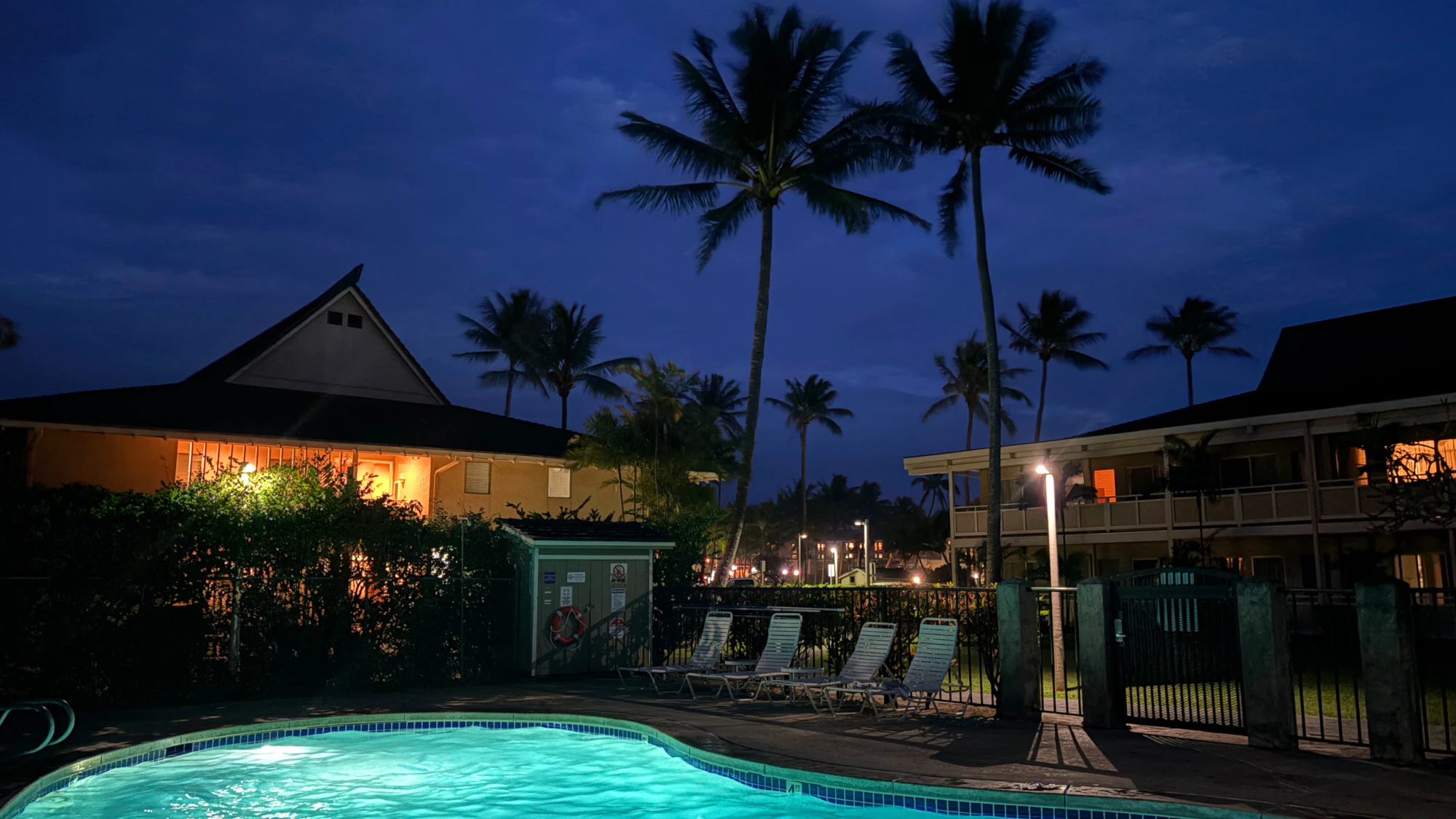
In 1972, the Plantation Hale condominium complex was constructed near the Waipouli shoreline. Designed as a low-rise resort property surrounded by tropical landscaping, Plantation Hale reflected the emerging visitor industry that would soon define much of the Kapa‘a coast.
As modern buildings rose above the former wetlands, the deeper history of the land remained beneath the surface. Visitors strolling the grounds or walking the nearby shoreline may see only the quiet beauty of coconut trees and ocean breezes, but hidden beneath the soil is a far older story. Of course, with a place that holds so many layers of history, it should come as no surprise that Waipouli has gathered more than just stories of land and people.
Over the years, residents, workers, and visitors in the Waipouli area, including those who have stayed at Plantation Hale, have occasionally shared strange experiences that are difficult to explain. Perhaps it is only the imagination stirred by the rustling palms and the sound of the ocean after dark. Or perhaps, as some quietly suggest, the past has a way of lingering in places where life once thrived. And it is here that the story takes an unexpected turn.
In the late 1990s, I was part of a traveling theater show that performed at venues across O‘ahu, Maui, Kaua‘i, Moloka‘i, and Hawai‘i Island. For our first Kaua‘i show, our troupe flew into Līhu‘e and was able to check in to Plantation Hale earlier than scheduled. Everyone was hungry and decided to drop off their things before going to find a place to sit and eat. I, on the other hand, decided to stay behind and take a short nap.
I was sharing the one-bedroom suite with another cast member and decided to let them stay in the room. It felt like too much work to pull out the bed from the small sofa, so I just grabbed a pillow and stretched out on top of it. I had just begun to drift off when I suddenly felt as if someone else was in the room.
Opening my eyes, I saw a dark-skinned Hawaiian man standing over me. He wore only a malo, and in his hands he held a large, gnarled piece of wood that looked like some kind of weapon. Before I could even jump up or move away, he vanished right in front of me. Instinct took over. I bolted out of the room and into the hallway.
As I rushed out, I nearly collided with a middle-aged Filipino woman pushing a large cleaning cart. She looked startled by my sudden appearance, but I quickly told her what I had just seen. She glanced at me, then at the room number on the door behind me.
“Oh,” she said casually, waving her hand as if brushing away a fly. “Not supposed to use this one, I tell you. I will tell the front desk to switch you to another room.”
Later, we learned that the room we had briefly occupied had a reputation. Staff quietly said it was haunted by spirits from Hawai‘i’s ancient past, who were known to appear to new occupants at all hours of the day and night. For that reason, it was the one room on the property that was never supposed to be rented.
As many times as I’ve been back, I’ve never stayed in that room again, and I don’t want to upset the staff by asking about it. I’m still curious, but I don’t think I’ll ever be able to sleep in there.