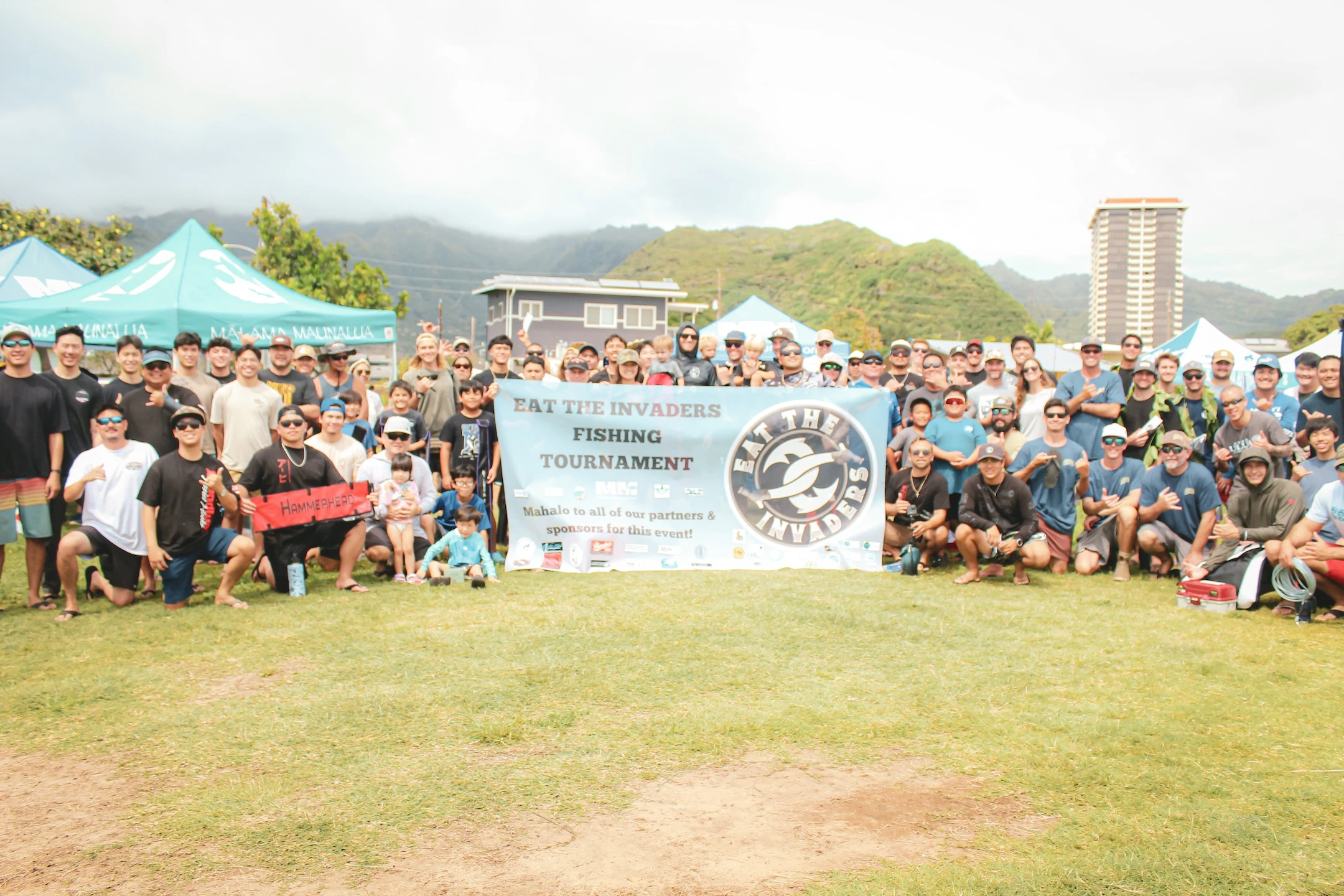
More than 50 teams of fishers removed 2,916 invasive fish from the reef as part of the Eat the Invaders Fishing Tournament, a contest coordinated by Mālama Maunalua. The event was designed to bring fishers from across Oʻahu to Maunalua Bay to see which team could collect the most of three kinds of invasive fish — taʻape, toʻau and roi — between Friday, Feb. 27, and Sunday, March 1.
Fishers donated a portion of their catch after weigh-in to Local Iʻa, which coordinated a community fish fry, and Chef Hui, which created ceviche tasting plates led by Chef Eric Oto. The community event held the last day of the tournament was free and open to the public.

The teams collected 2,609 taʻape, or common bluestripe snapper, shown above, as part of the Eat the Invaders Fishing Tournament held at Maunalua Bay. (Mālama Maunalua) 
The event included tasting plates of ceviche made with invasive fish caught at Maunalua Bay. (Mālama Maunalua) 
Fishers donated a portion of their catch after weigh-in to Local Iʻa, which coordinated a community fish fry, and Chef Hui, which led by Chef Eric Oto created ceviche tasting plates. (Mālama Maunalua)
“Eat the Invaders is about turning a real environmental challenge into an opportunity,” said Kawai Hong, the Fisheries Management Area coordinator at Mālama Maunalua, in a written statement. “By removing invasive fish and helping people understand that species like taʻape and toʻau are delicious, safe, and sustainable seafood, we can protect our reefs while strengthening local food systems.”
This is the first time the Eat the Invaders Fishing Tournament was held at Maunalua Bay, Hong told Aloha State Daily last week. The inaugural Eat the Invaders Tournament was held at Heʻeia Pier in July of 2025.
The teams collected 2,609 taʻape (common bluestripe snapper), 244 toʻau (blacktail snapper), and 63 roi (peacock grouper). These invasive species were introduced to Hawaiʻi in the 1950s and proliferated at rates that now threaten native reef ecosystems, the nonprofit shared. The largest single fish captured was a 5.1-pound roi captured by team Green Machine and Schuyler Cole. Prizes for the fishers included spear guns, new rods and reels, coolers, custom dive knives and more, he said.
Last year, Maunalua Bay was designated as a new Fisheries Management Area by the Board of Land and Natural Resources. This tournament is helping publicize the new rules for fishing in Maunalua Bay, which include no nighttime spearfishing and no taking of five species: ʻalakuma (7-11 crab), horned helmet, Triton’s trumpet, ula (spiny lobster) and ula pāpapa (slipper lobster), Hong told ASD last week.
The community event included booths where attendees could learn about groups doing restoration work in the region and participate in Gyotaku fish prints, led by the artist Naoki and tournament staff.
For the latest news of Hawai‘i, sign up here for our free Daily Edition newsletter.
BY THE NUMBERS: HOW MANY FISH WERE REMOVED IN THREE DAYS?
Taʻape (2,609 fish, 987.93 pounds)
Toʻau (244 fish, 155.07 pounds)
Roi (63 fish, 113.55 pounds)
Source: Mālama Maunalua
Katie Helland can be reached at katie@alohastatedaily.com.