During a recent floor session, two of our state representatives gave the people of Hawai‘i a masterclass in how not to legislate.
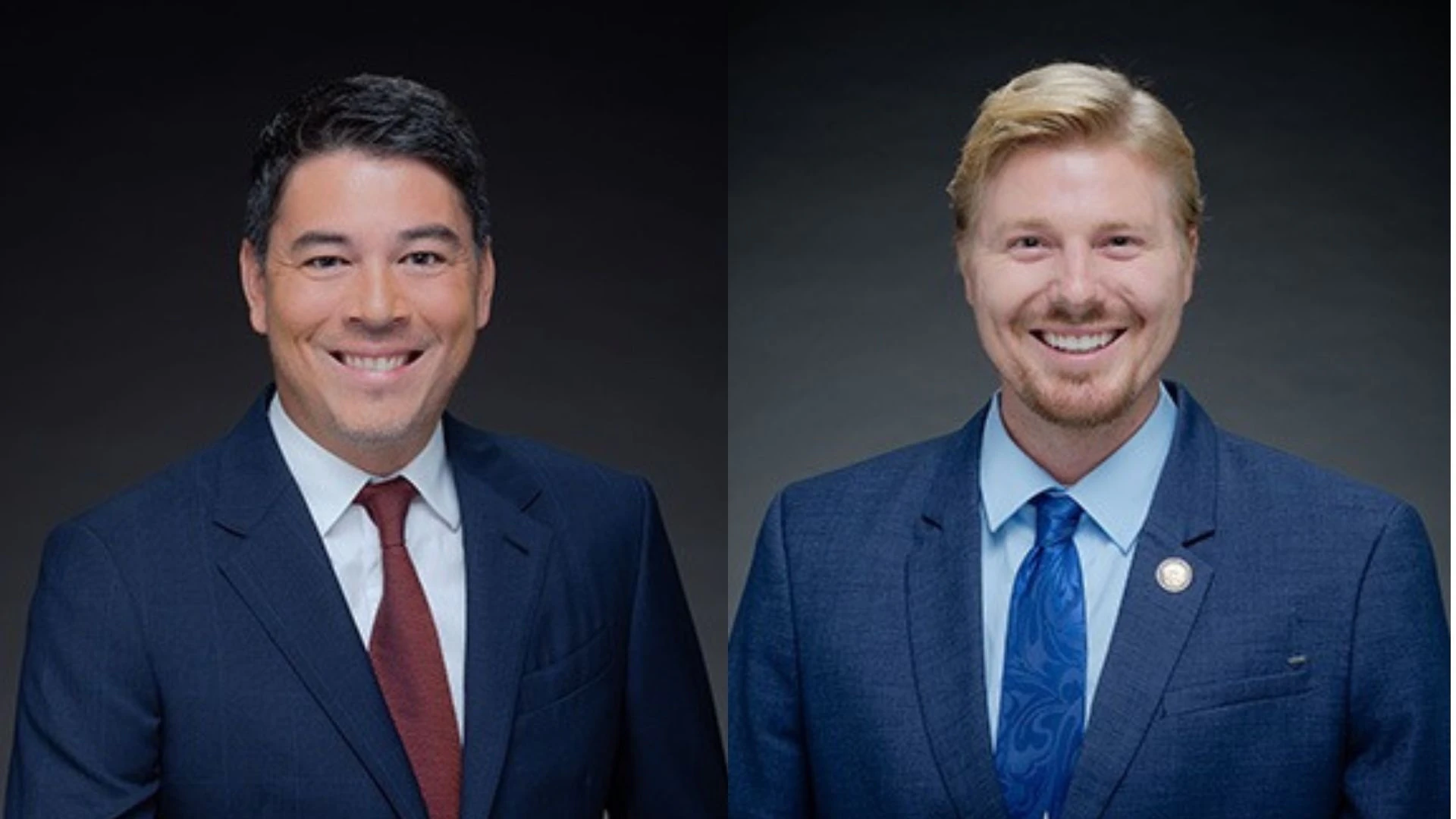
HB 1875 would expand legal protections for what the State of Hawai‘i defines as “gender-affirming health care.” Representative Elijah Pierick warned that the bill would let a 14-year-old get sex-change surgery without parental knowledge, then fly home to Tennessee. He described the procedures in language better suited to a middle school cafeteria than the House floor. House Majority Leader Sean Quinlan fired back. He called Pierick “the representative from Bethlehem” — a shot at his colleague’s Christian faith. He then offered a substantive rebuttal: the bill says nothing about minors.
Oscar Wilde once said a gentleman never insults anyone unintentionally. So take Quinlan at his word. He meant it. Now let’s talk about what it means.
Quinlan had the stronger hand and still chose to mock. His factual correction was legitimate. He could have stopped there and won the exchange cleanly. Instead he opened with a religious insult. When you’ve already won the point, the only reason to add the jab is to perform for your side.
And consider the hypocrisy. Would Quinlan refer to a Jewish colleague as “the representative from Jerusalem?” Would he call a Muslim lawmaker “the senator from Mecca?” He wouldn’t dare — and rightly so. It would be condemned as bigotry. So why does mocking Christianity get a free pass? Either religious mockery is acceptable in our legislature or it isn’t.
Quinlan might also consider who he represents. His District 47 covers Waialua, Hale‘iwa, Sunset Beach, Kahuku, Lā‘ie, Hau‘ula, and Punalu‘u. These are not progressive enclaves. These communities are deeply rooted in faith. When the House Majority Leader ridicules a colleague’s Christianity on the floor, he should think about how that lands back home. Representing a district doesn’t mean agreeing with every constituent. But it probably means not publicly mocking their deepest convictions.
But Quinlan wasn’t the only one who failed that day. Pierick’s description of surgery — crude, graphic, designed to shock — wasn’t an argument. It was a performance. Instead of engaging the actual text of the legislation, he handed his opponents a clip they can use to paint every critic of the bill as unserious. You don’t win policy debates by grossing people out.
And the bill deserved better discourse than either man gave it. HB 1875 expands protections originally created for reproductive health care (like birth control and abortion) to cover gender-affirming care. It shields providers and patients from out-of-state legal action, restricts disclosure of patient records, and prohibits insurers from penalizing providers. The definition of gender-affirming care covers everything from puberty blockers to surgery.
Quinlan said there’s nothing in this bill about minors. That’s technically true yet still misleading. Hawai‘i already permits gender-affirming care for minors — puberty blockers, hormones, and surgery with parental consent. The new bill shields all of it from out-of-state legal action, subpoenas, and records disclosure. A parent in a custody dispute could bring a child to Hawai‘i for surgery over the other parent’s objection, and this bill would block the objecting parent’s home state from doing much about it. Pierick saw that. His description of the procedures was crude and his specifics were wrong — no 14-year-old is getting surgery without a parent’s involvement. But the core concern about parental rights and interstate conflict was real, and Quinlan waved it away with a joke about Bethlehem.
We’ve watched national politics descend into a name-calling contest. Hawai‘i doesn’t have to follow that playbook. But we will if we shrug off exchanges like this one as just how politics works now. Every person in that chamber carries a dignity that wasn’t given by voters and can’t be taken by mockery. Every word spoken on that floor goes into the public record. Constituents read it. Someday a student doing a civics project will find it. Words spoken from positions of power reveal character. And character, once revealed, is hard to unsee.
There’s a word for someone who belittles people instead of debating them. The word is bully. We expect this from teenagers jockeying for status in a high school cafeteria, not from the House Majority Leader. At some point, Mr. Majority Leader, it’s time to grow up.
Since Quinlan brought up Bethlehem, maybe he should listen to its most famous resident. The man from Bethlehem once said that the mouth speaks what the heart is full of. A good man brings good things out of the good stored in his heart, and an evil man brings evil out of the evil stored in his.
The insult isn’t really the problem. It’s a symptom. Mockery, contempt, the instinct to belittle — these come from the heart. And the speech won’t change until the heart does.
The man from Bethlehem knew something about that kind of change too. And His door is still open — even for politicians.