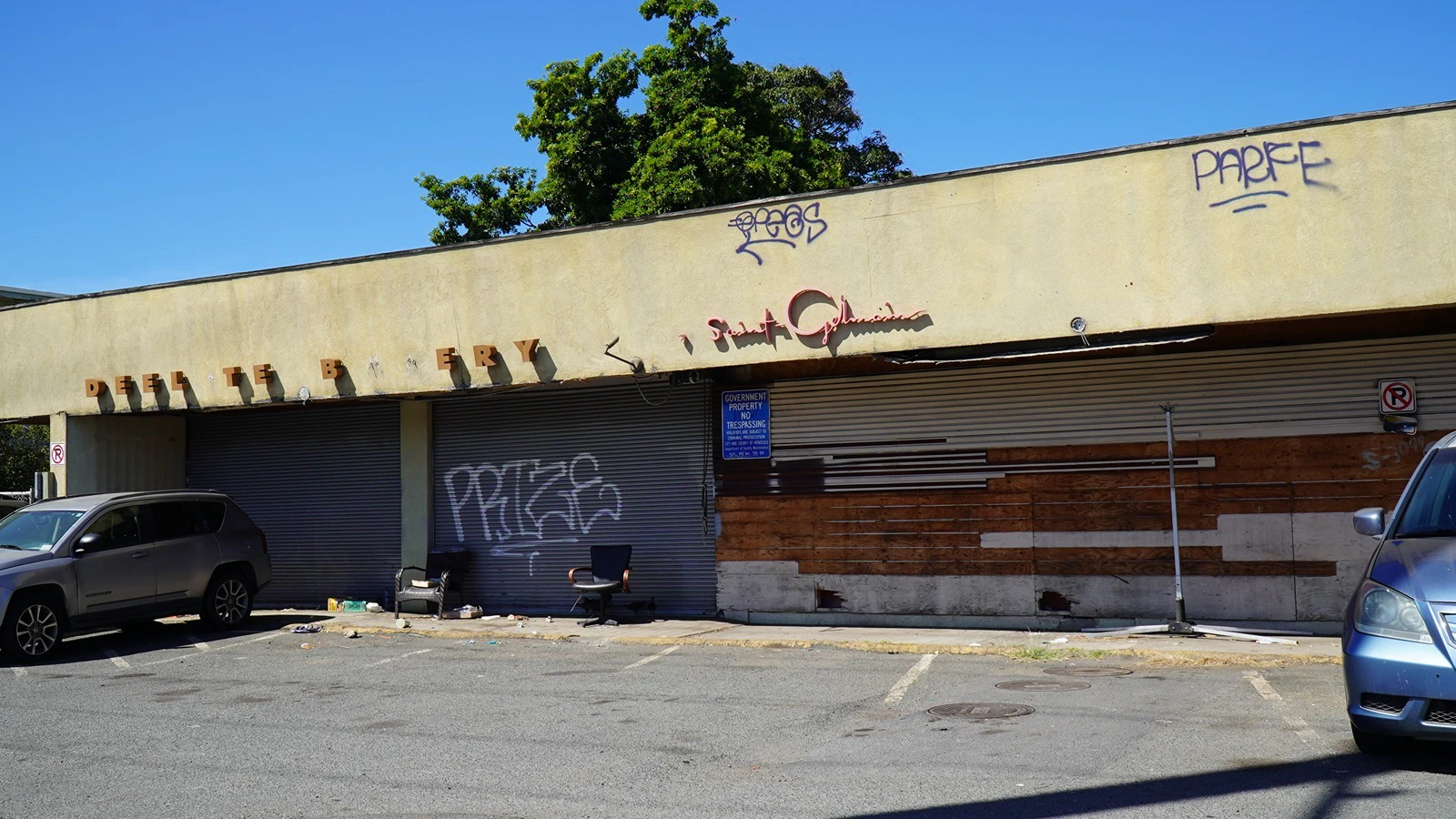
The City and County of Honolulu has taken another step towards creating affordable housing along the Skyline rail route, choosing EAH Housing as its "preferred negotiating partner" for the redevelopment of the former Dee Lite Bakery site in Kalihi.
Located across from the future Mokauea Skyline station, the city acquired the property at 1930 Dillingham Blvd. and 1907 Eluwene St. for about $8.4 million in 2019 "as part of a long-term effort to secure land for affordable housing near transit," a recent announcement noted.
Kevin Auger, director of the city's Department of Housing and Land Management, told Aloha State Daily in an emailed response to questions that the city and EAH, a nonprofit affordable housing development and management organization, will begin negotiating a development agreement and ground lease for the site.
It's during these discussions that the city and the developer will agree on project specifics, such as the total number of units; level of affordability; the target demographic, or area median income levels; unit sizes and bedroom counts; project amenities and more, which will then be presented to the Honolulu City Council for approval, he says.
The city noted in the announcement, though, that preliminary analysis shows that the site could support more than 150 affordable rental units.
"The developer will also prepare for the city's review an overall project schedule including community engagement, entitlements, environmental review, State Historic Preservation [Division] review, construction drawing and specifications, permitting, financial closing, groundbreaking, construction, lease-up and grand opening," Auger says. "All of this will be determined during negotiations, but it is too early in the process to provide details."
According to the announcement, the redevelopment site spans approximately 23,600 square feet and is located less than two miles from Downtown Honolulu, within walking distance of schools, Honolulu Community College and neighborhood businesses. It's designated a "priority location" under the Iwilei–Kapālama Transit-Oriented Development Plan, the city says.
"Kalihi is the kind of neighborhood where affordable housing is especially important because it sits within Honolulu’s urban core, where the city’s long-range plans direct a substantial share of future growth to established urban areas rather than outward expansion," Auger told ASD. "As housing costs rise, it becomes increasingly important to ensure established urban neighborhoods continue to have room for local working families."
Partnering with the development community to build housing on city-owned lands is one of the components of a strategic housing plan the city unveiled last year. You can find the plan here.
Auger says that using city-owned land and long-term ground leases addresses one of the city's biggest housing challenges: the scarcity and cost of developable land.
"By using land the city already controls, the city can lower a major barrier to development and retain a long-term public stake in the property to ensure affordability over time rather than giving up the land through a one-time sale," he says. "It also removes land cost from the development capital stack which significantly reduces overall project cost."
Ten solicitations have been issued for development and redevelopment of city-owned properties.
According to Auger, negotiations are underway with the selected preferred negotiating partners for six parcels:
1615 Ala Wai, Center Urban; 130 S. Beretania, Pacific Housing; 436 Ena Road, EAH; Iwilei Center, EAH; Kapolei Lots 2 to 5, Kobayashi Group; and Dee Lite Bakery, EAH.
Additionally, the announcements ofpreferred negotiating partners for properties in Royal Kunia and Mililani are "pending," he noted.
"We expect to begin submitting resolutions to City Council seeking approval of these transactions in late April," Auger says.
Also in the pipeline, three projects are under development on city-owned land: Kihapai Place, with development partner Tradewind Capital; Varona Village, a public-private partnership between the city, Savio Group and HawaiʻHabitat for Humanity; and Kaleimaʻo Village, which is being developed by Stanford Carr Development.
Find more information about the city's housing efforts here.
For the latest news of Hawai‘i, sign up here for our free Daily Edition newsletter.
Stephanie Salmons can be reached at stephanie@alohastatedaily.com.