This past January 17, marches unfolded across two island homelands, separated by thousands of miles, yet shaped over time by similar attempts by foreign powers to determine their futures.
In both places, these communities rejected the premise that their homelands could be treated as strategic assets rather than places of kinship, memory, culture, and political authority.
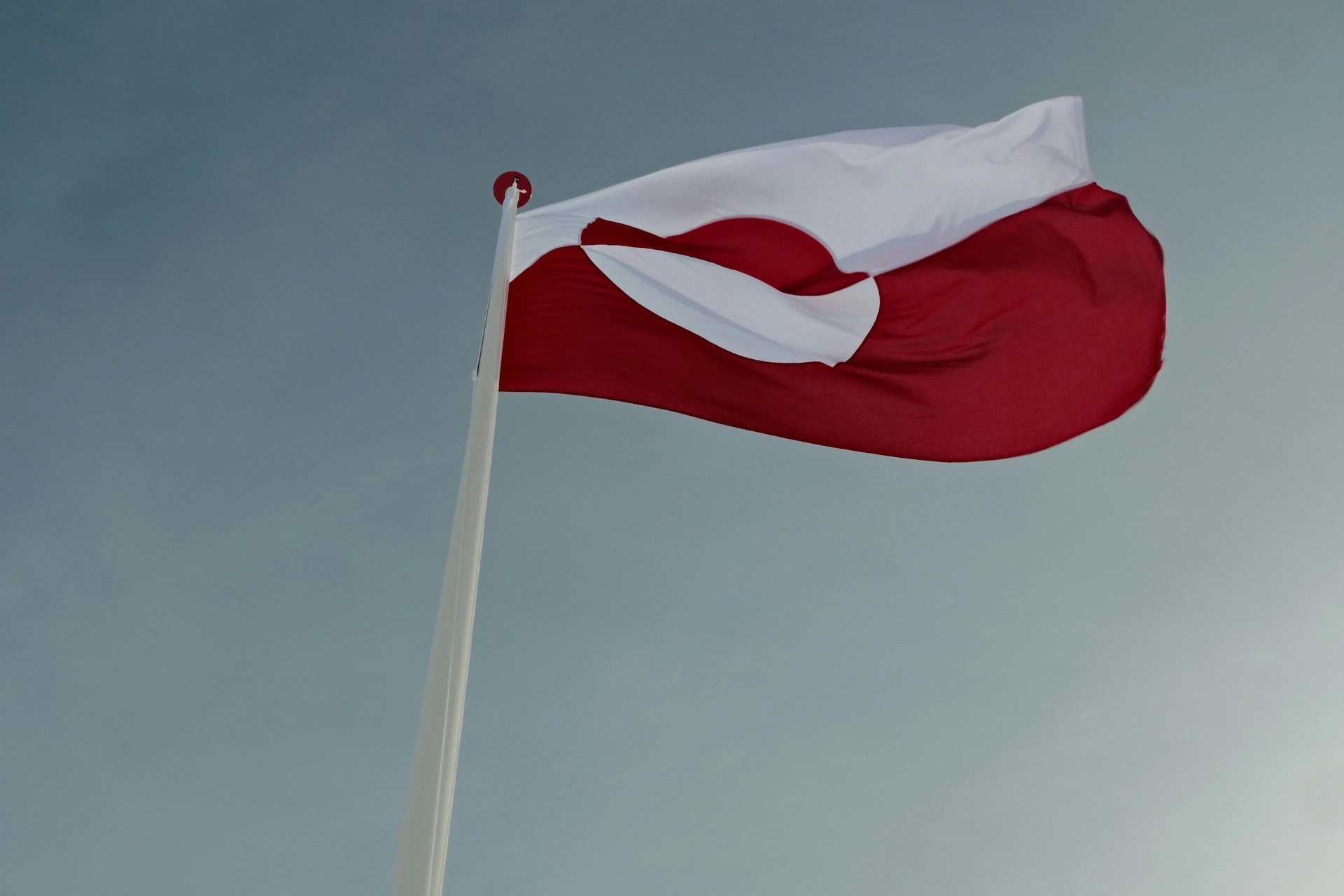
In Nuuk, the capital of Kalaallit Nunaat (Greenland), thousands gathered in what the Naalakkersuisut (the Greenlandic government) described as the largest protest in the country’s history. Participants carried the red and white Erfalasorput flag and chanted, “Kalaallit Nunaat, Kalaallit pigaat.” Translated, it means “Greenland belongs to Greenlanders.”
The demonstration followed renewed and aggressive annexation rhetoric from U.S. political leaders, framed through the lens of national security, Arctic competition and tariffs. Greenlandic officials have made it clear that they vehemently oppose annexation of their country to the United States.
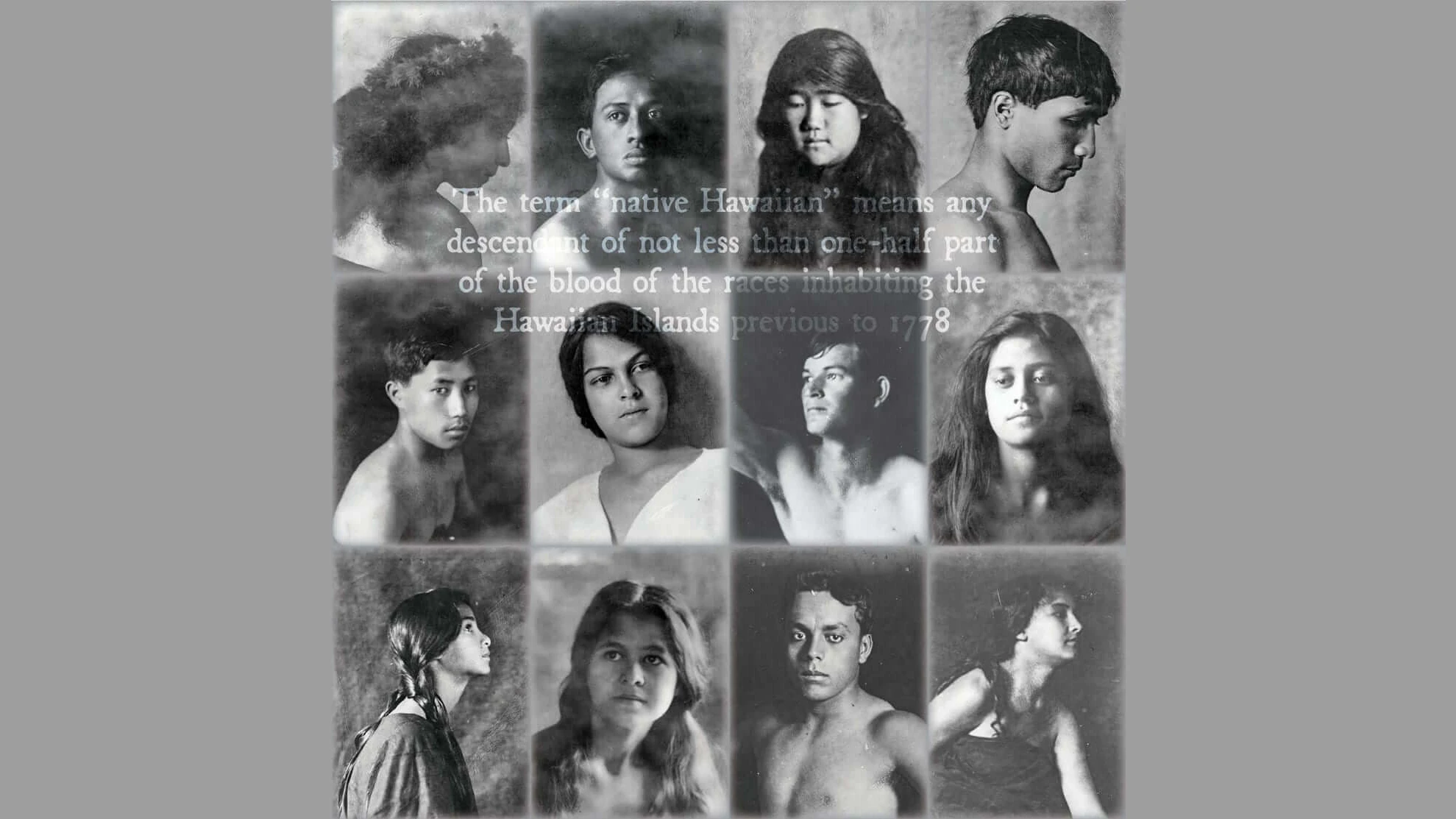
Meanwhile, in Honolulu, in a pair of back-to-back marches held on January 16 and 17, thousands of Kānaka Maoli marched from Maunaʻala to ʻIolani Palace to mark 133 years since the overthrow of the Hawaiian Kingdom on January 17, 1893.
The annual ʻOnipaʻa observance recalls the intersection of economic pressure, political maneuvering, and the enforcement of U.S. Marines that ended the constitutional government of Queen Liliʻuokalani.
Kalaallit Nunaat means “the land of the Kalaallit” and is the Indigenous name for Greenland. The Kalaallit are Inuit and they comprise about 90% of the population. The name reflects political and demographic reality. Kalaallit Nunaat is an Indigenous homeland with its own parliament, electorate, and language. Greenlandic Inuit is the sole official language of the country, and cultural revitalization efforts have been central to contemporary public life.
Danish colonization of Kalaallit Nunaat began in 1721. Trade, missionization, and administrative governance gradually reshaped Inuit society. In the 20th century, colonial policy emphasized modernization and integration.
In 1951, Danish authorities removed Inuit children from their families to be educated in Denmark in what later became known as the “Little Danes” project. Inuit women were also subjected to coercive birth control measures in what is now referred to as the “Spiral Case.” These initiatives were framed as “reform.” Their consequences included family separation and intergenerational harm that remain within living memory.
Since 1979, Kalaallit Nunaat has exercised home rule and expanded self-government while temporarily remaining within the Kingdom of Denmark. Across party lines, there is broad support for eventual independence. Debate centers on economic sustainability and institutional capacity, but independence is widely discussed as a matter of when, not if.
U.S. interest in Kalaallit Nunaat is not new. American officials discussed its annexation in the 19th century during the same period of territorial expansion that included the U.S. “purchase” of Alaska from Russia and its growing interest in Puʻuloa (Pearl Harbor).
Some proposals imagined exchanging Kalaallit Nunaat for Mindanao during the American colonial period in the Philippines. After World War II, the Truman administration formally offered Denmark one hundred million dollars in gold for the island. Denmark declined.
Kalaallit Nunaat’s geographic position between North America and Europe placed it within Cold War defense planning. That logic shaped the construction of Thule Air Base, now Pituffik Space Base, and the forced relocation of Inuit families in the early 1950s.
It also shaped the response to the 1968 crash of a U.S. bomber carrying nuclear weapons near Thule, which dispersed radioactive contamination around the settlement of Narssassuk. That episode remains a historical flashpoint.
Recent arguments in Washington, D.C., once again emphasize tariffs and Kalaallit Nunaat’s strategic value. For many in Hawaiʻi, the structure of those arguments is familiar.
In the late 19th century, U.S. tariff policy destabilized the Hawaiian Kingdom. The McKinley Tariff of 1890 altered Hawaiʻi’s economic position and strained the Reciprocity Treaty. Within three years, U.S. Marines landed in Honolulu.
By 1898, Hawaiʻi, and particularly Puʻuloa, was described as “indispensable” to American military supremacy in the Pacific. Comparable political rhetoric today characterizes Kalaallit Nunaat as essential to Arctic security and geopolitical competition for the U.S.
The prioritization of strategic value over local consent persists in Hawaiʻi today.
At the Pōhakuloa Training Area, the military controls 133,000 acres of conservation-zoned land which it uses for training. Pōhakuloa sits above an aquifer and lies within a landscape dense with ancestral trails, burials, and cultural sites, yet its cultural and ecological importance is treated as peripheral to its value for U.S. national defense.
Across the Pacific, similar thinking continues to shape policy in Guåhan (Guam), the Marshall Islands, and Okinawa, where Indigenous lands host substantial U.S. military infrastructure. U.S. expansion beyond the North American continent is framed as a military necessity and as an economic benefit to impacted communities. Their consent becomes secondary and any resistance is reframed as ingratitude.
For many Kānaka Maoli, the renewed discussion of the annexation of Kalaallit Nunaat – regardless of what its Indigenous population wants – generates a visceral reaction based on historical resonance.
The Kūʻē Petitions of 1897, signed by 95% of Native Hawaiians who were living at that time, remain documentary evidence that annexation did not reflect the will of the Hawaiian people. The annual ʻOnipaʻa March is a reminder of this continued resistance.
In Kalaallit Nunaat, protesters are stating their position with equal clarity. When they declare that Kalaallit Nunaat belongs to the Kalaallit, they are asserting political authority over their homeland in defiance of the rhetoric that attempts to diminish their land and sovereignty as nothing more than a foreign country’s strategic military asset.
This article is reprinted with permission from OHA's Ka Wai Ola newspaper: "Threats to Greenland recall the annexation of Hawaiʻi" by Adam Keawe Manalo-Camp, in its March 2026 issue, Vol. 43 No. 3. Read more at kawaiola.news.
For the latest news of Hawai‘i, sign up here for our free Daily Edition newsletter.