The new Aloha Stadium and its developer, Aloha Hālawa District Partners, have yet to sign a master development agreement, though both sides continue to push towards a 2029 completion date.
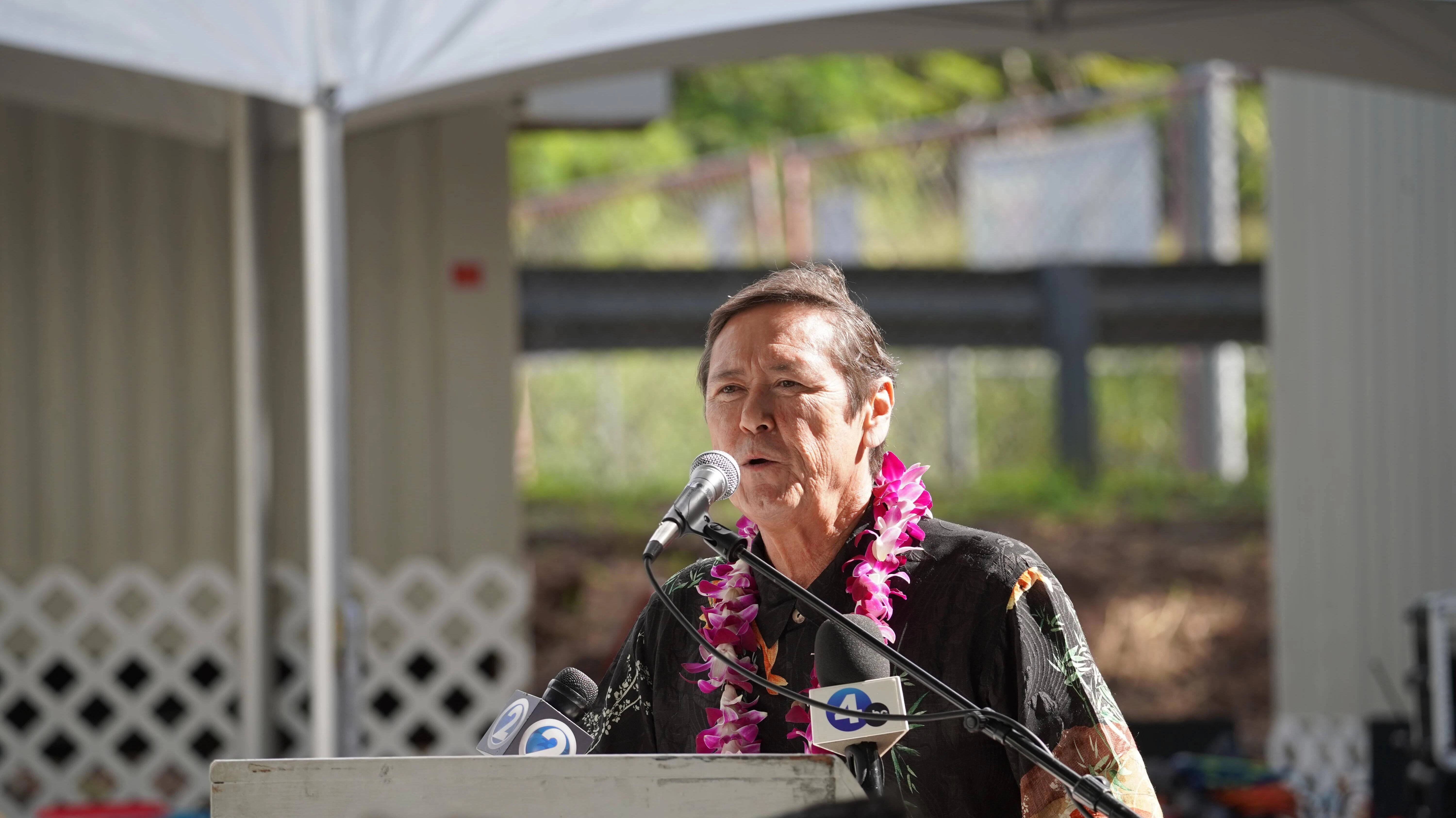
Both parties revealed new details about the stadium in recent weeks. In a legislative hearing on March 11, Aloha Hālawa District Partners managing member Stanford Carr said the stadium will feature individual seating with cupholders. While initial projections last summer tabbed the new stadium to have a seating capacity of 22,500, that number increased to 31,000. During the hearing, Carr said the seating has potential to eventually expand to as many as 40,000 seats.
During Thursday's morning's monthly Aloha Stadium Authority meeting, stadium interim manager Mike Yadao says the facility has continued with its active dismantling, though the Kona low storm earlier in the month provided some delays.
"This happens in all construction, it's not unusual," Yadao told Aloha State Daily following Thursday's meeting. "You just can't have a big excavator up when it's ready to that level, to that extent. But it doesn't delay any timelines. We'll be OK."
In a separate interview with Aloha State Daily earlier in the month, Carr said despite the challenges that come with building the stadium, he and his team of architects and engineers remain inspired to give Hawai‘i a stadium and entertainment district it can be proud of.
When it was time for the New Aloha Stadium and Entertainment District (NASED) to pick a developer for the $650-million project in late 2024, AHDP was the only team at the end that made itself available.
"One, we need it," Carr told Aloha State Daily when asked why he felt compelled to step up. "Two, it's complicated and very challenging. I'm just a little crazy, and I love challenges, and it takes the crazy ones to take something like this on."
Carr, a 1980 Maui High School graduate, first moved to O‘ahu to attend the University of Hawai‘i at Mānoa. He eventually started his own company at Stanford Carr Development, which has completed a total of 25 projects and counting on O‘ahu, Maui and the Big Island, ranging from commercial developments to affordable housing units. Aloha Stadium has always been an attractive endeavor to him.
"I feel for me, it's a culmination of my entire career and everything I've worked on and learned over my adult life," Carr said.
Since taking on the project, Carr and his team have traveled to various sporting venues on the Mainland at both the college and professional levels. Building the new stadium while taking down the old one has come with its challenges, particularly preexisting underground utilities, but Carr says being on the same Hālawa grounds has also allowed some room for creativity. For example, by preserving the cast-in-place property structures in the north and south end zones, Carr estimates AHDP is saving $90 million in demolition costs.
Carr's Aloha Stadium legacy will expand to his family. Multiple sons are on his team, including Dustin, 24, Stanford Carr Development's project manager.
"I think people just want to see progress," Dustin Carr says. "I think the more progress they see, the better of a light people will see the project. I think people will get more excited as we have more progress and more updates."
Plans for the stadium include for it to have a total of 28 suites, some of which will be near field level. It will also be the home of the Hawai‘i Sports Hall of Fame. The surrounding mixed-use district will have a range of dining options, cultural activities and 4,500 housing units.
The field itself will host amateur and professional sports teams across multiple sports, with the University of Hawai‘i football team its flagship tenant. But with considerations for other sports such as soccer and rugby in particular, Stanford Carr tells ASD that the plan is for the new Aloha Stadium to have natural grass as its playing surface. The old Aloha Stadium, from its opening in 1975, featured various iterations of artificial turf, starting with AstroTurf before transitioning to synthetic grass-like turf in 2003.
"We're going to go with natural grass because it's safer for the athletes, less injuries, and rugby will not play on artificial turf," Carr said. "And it will draw more professional sports."
Added Stanford Carr Development vice president of development Kaloa Robinson: "The key thing was that it was safer to play on. That's what I think really pushed it over the edge. ... We just have to get really comfortable with replacing (the surface) multiple times a year."
Count Yadao as one of the key proponents for natural grass at the new stadium.
"It super cool, because it keeps our athletes safer from injury," Yadao said. "Stanford has indicated a strong desire to make it all natural grass, and I think we can. There's no reason why you can't."
Yadao is also agreeable to AHDP's planned seating expansion, calling it "exciting as all get-out." Though it's quite the jump from the initial 22,500, he still believes the 2029 deadline can be met. As NASED and AHDP continue to work together and negotiate, they both vehemently agree that Hawai‘i is due for a new stadium.
"I think it's a symbiotic relationship, right? As the Stadium Authority communicates strength and stability, it then allows AHDP to have access to greater resources. And the more resources they get, the better stadium they can build," said Yadao of the $650 million stadium. "The issues that make construction difficult are not the increased capacity, but rather permitting and infrastructure build up. And I'm confident that with the mayor's cooperation, the county's cooperation, it can get done."
Said Robinson: "I think what I probably want the community to know is that there's a lot of analogs to the first moon landing insofar as there's just obstacle after obstacle to deliver the stadium in 2029. It's an extremely steep challenge to overcome, and the only way we're going to get there is if everybody helps out. There's basically every state agency and every city agency, the entire community, the ledge and the Honolulu City Council, all of them are going to have a role to play to make this thing work. Otherwise it's not going to happen."
Added Stanford Carr: "It's going to take a village to build a village."
For the latest news of Hawai‘i, sign up here for our free Daily Edition newsletter.
Christian Shimabuku can be reached at christian@alohastatedaily.com.