Situated on the traditional homelands of the Kalapuyan people, more than 2,400 miles away from Hawaiʻi, is a 3,500-square-foot puʻuhonua for poʻe Hawaiʻi and Pacific Islanders in Oregon – the AloHā Resource & Community Center (ARCC).
This dream of creating a community space came to fruition in 2022, when the leaders of Ka ʻAha Lāhui o ʻOlekona Hawaiian Civic Club (KALO HCC), an Oregon and Southwest Washington-serving nonprofit and member of the Association of Hawaiian Civic Clubs, recognized the need for a place where Kānaka ʻŌiwi, Pacific Islanders, and poʻe Hawaiʻi could gather, heal, and unapologetically express their shared values.
The name itself – AloHā – emphasizes the importance of pilina and the need for a physical puʻuhonua, where people can be he alo a he alo (face to face), grounded in Native Hawaiian values, and connected through the exchange of hā (breath).
The inoa piha (full name) of this puʻuhonua – AloHā Resource & Community Center – and its acronym, ARCC, reflects KALO HCC’s role as a bridge for community living away from Hawaiʻi, offering a place where people can still “feel Hawaiʻi,” no matter where they are.
Today, ARCC holds space for community connection and growth in many forms. The center houses a library of some 1,300 books – over 80% of which are Native Hawaiian and Pacific Islander-focused. In 2025 alone, community members donated over 300 books to share in the ARCC.
With the understanding that access to traditional and local Hawaiʻi foods are limited, ARCC opened a small community pantry where people can “shop” for non-perishables and available produce like kalo leaves free of charge.
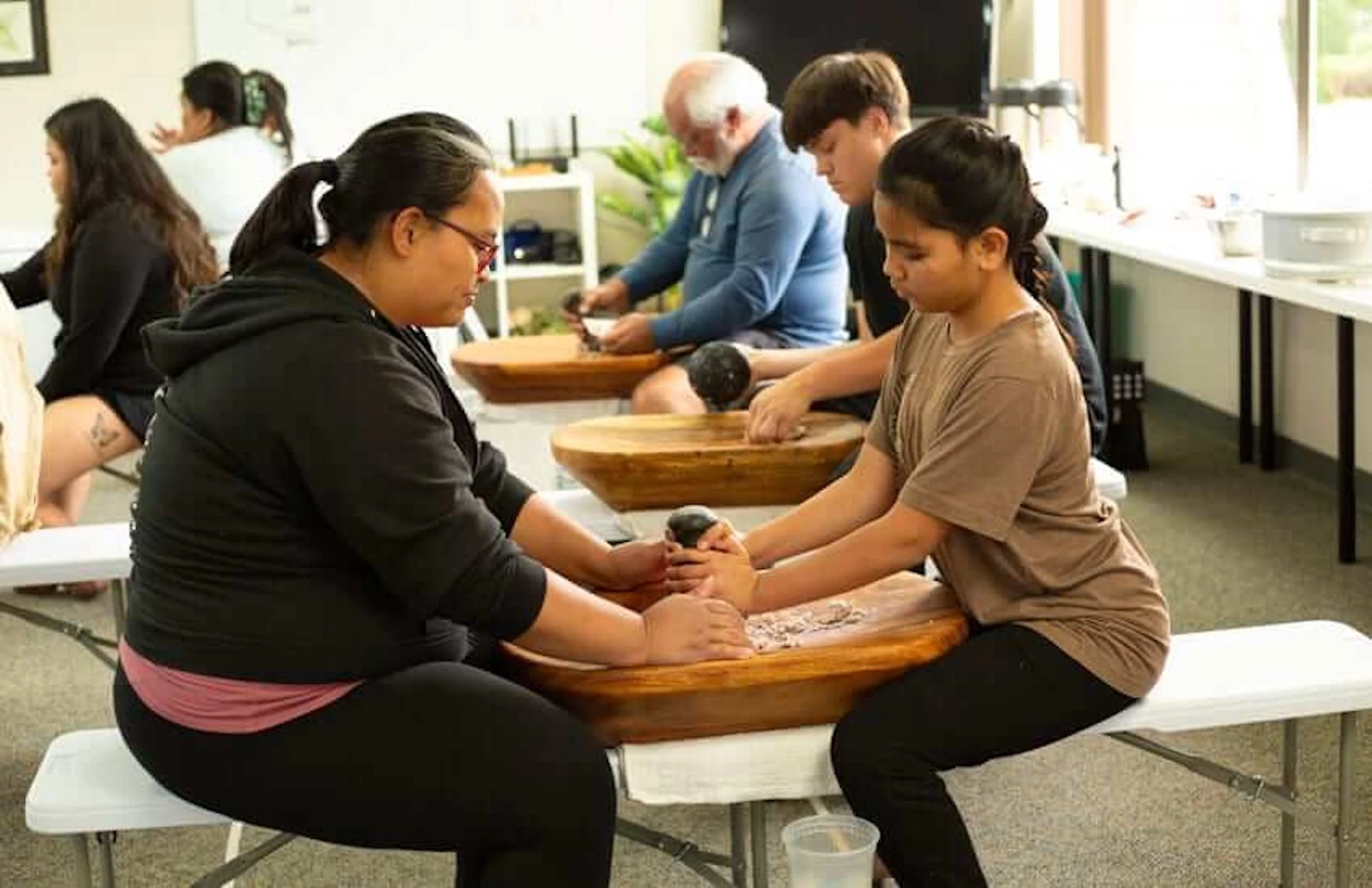
Most impactfully, KALO HCC keeps Native Hawaiian culture alive at the ARCC through hands-on, in-person workshops and community gatherings.
Each month, KALO HCC hosts cultural workshops on topics ranging from lei-making to kōnane. Other activities include regular ʻohana game nights. Our work reflects the strong-willed commitment of our organization’s founder, Prince Jonah Kūhiō Kalanianaʻole, to the rehabilitation of his lāhui. As Prince Kūhiō once stated, “Stick together and try to agree to the best of your ability to meet the most important problem: the rehabilitation of our race.”
With more than half of Native Hawaiians now living on the continent, KALO HCC’s vision continues to center on Prince Kūhiō’s call to uplift the lāhui beyond the pae ʻāina. This is accomplished through scholarships, support for Native Hawaiian artists and businesses, increased access to health and traditional food services, the opening of spaces to learn mele, hula, oli, and traditional crafts, and culturally immersive summer programs; ARCC stands as a living example of ʻike kūpuna guiding community well-being.
ARCC is also a place for elevating ʻōlelo Hawaiʻi. After about three years of planning, KALO HCC has finally launched its Hiʻikua Program, an immersive ʻōlelo Hawaiʻi program that bridges generations. KALO HCC recently wrapped up a 10-week ʻŌlelo Hawaiʻi 101 cohort taught by Kumu ʻŌlelo Hawaiʻi Haia Ku, an alumna of Ke Kula Kaiapuni ʻo Ānuenue and Kamehameha Schools Kapālama.
Another ʻŌlelo Hawaiʻi 101 cohort and an ʻŌlelo Hawaiʻi 201 cohort will open this spring to help our communities build fluency.
Each year, KALO HCC’s community center hosts an annual Prince Kūhiō Celebration during the week of his birthday to hoʻohanohano (honor) his legacy. This always brings together more than 150 community members for protocol, to commemorate Prince Kūhiō’s many notable achievements, to enjoy live music from Kānaka artists living in Oregon, and to share a meal together. Each person who attends is a living testament of Prince Kūhiō’s belief in organizing Native Hawaiians to take charge of their own destiny.
The AloHā Resource & Community Center stands as a living puʻuhonua shaped by ʻike Hawaiʻi, sustained by pilina, and guided by the collective efforts of our poʻe on the continent. As KALO HCC continues to grow in this space, ARCC exists to remind us that culture is not bound by geography, but thrives wherever the community chooses to nurture it.
Here in Oregon, Hawaiʻi is not left behind. We carry it forward through AloHā.
This article is reprinted with permission from OHA's Ka Wai Ola newspaper: "Building pilina on the Continent" by Jayden Kepʻo Caspino , in its March 2026 issue, Vol. 43 No. 3. Read more at kawaiola.news.
For the latest news of Hawai‘i, sign up here for our free Daily Edition newsletter.