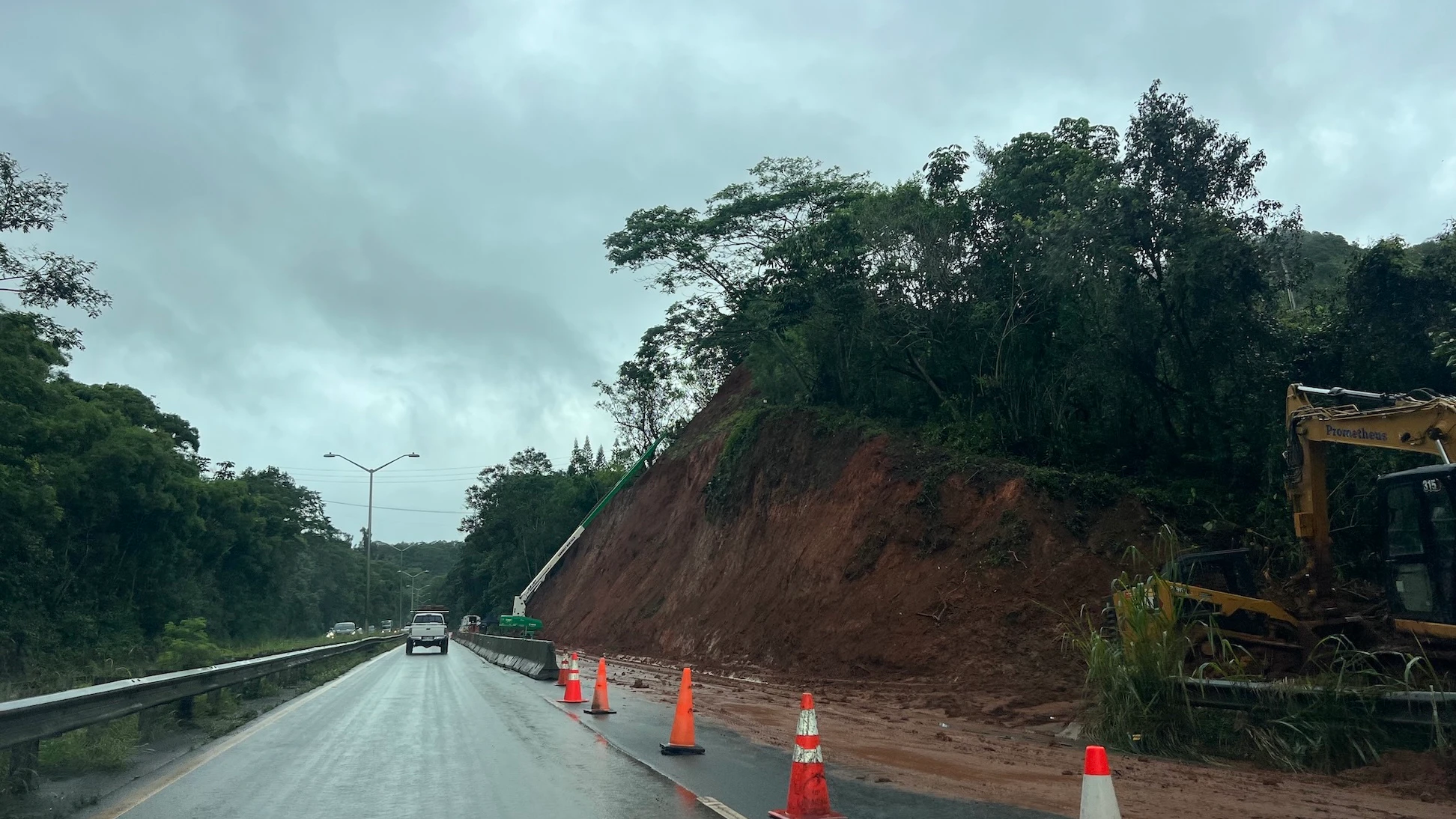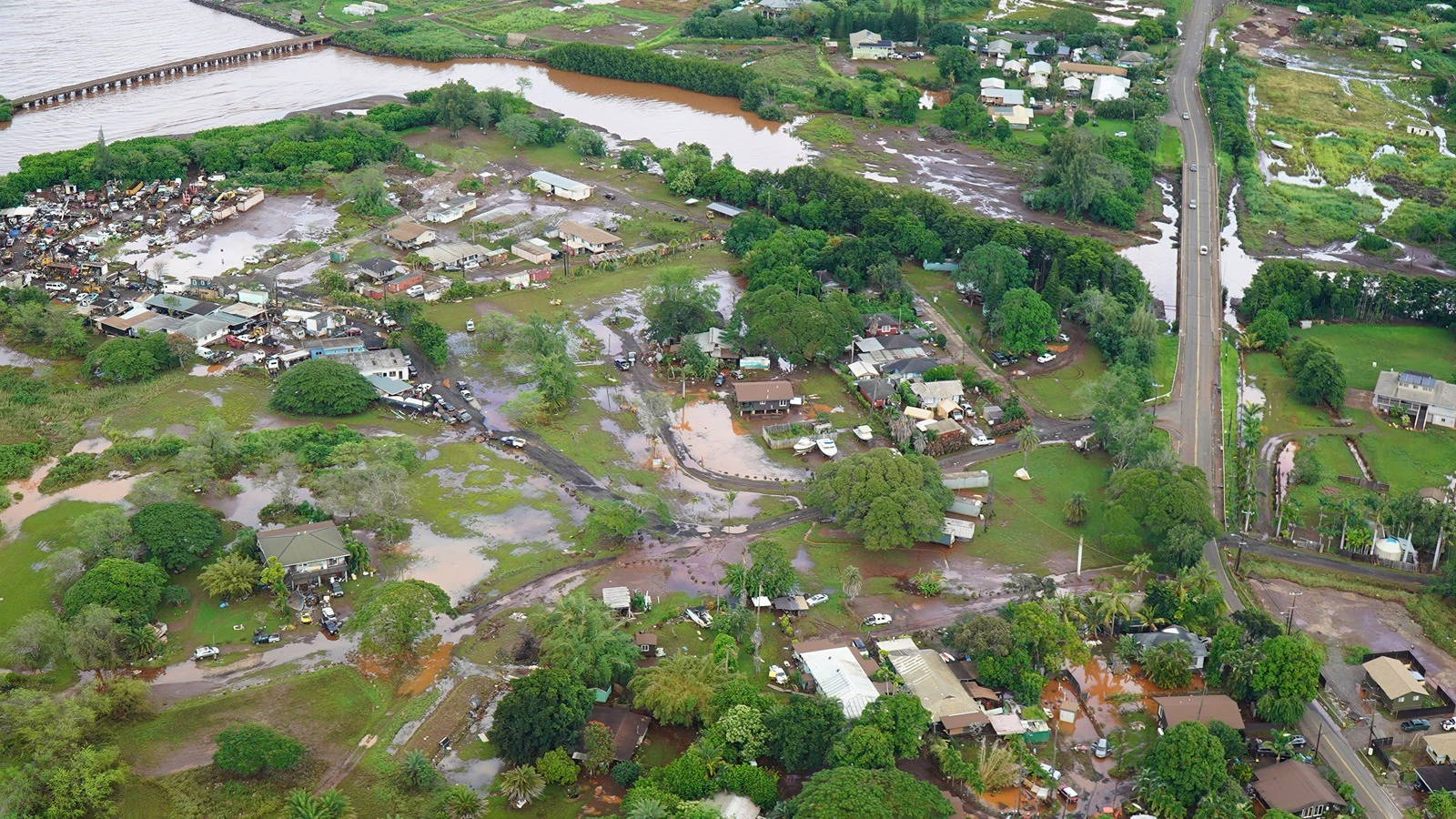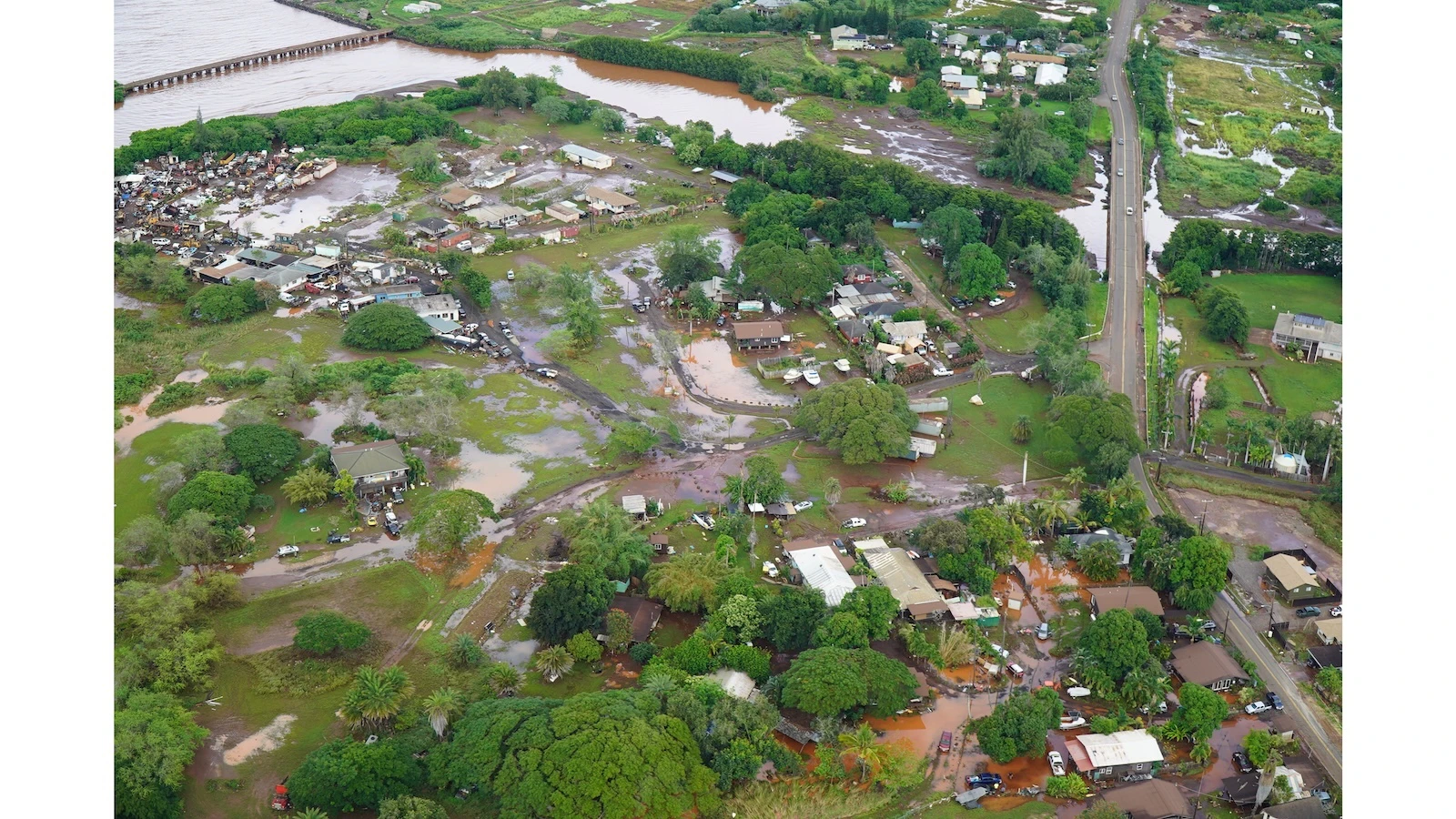
One week after the Wahiawā Dam came feet away from failing, the state will take over ownership of the dam.
The Department of Land and Natural Resources has long sought to acquire the century-old dam, and the greater Wahiawā Irrigation System of which is a component, from its current owner, the Dole Food Company, in order to mitigate various safety issues that Dole was unable or unwilling to correct.
Two weeks ago, the Board of Land and Natural Resources was scheduled to officially take over management of the dam and associated land parcels, but the board meeting was postponed due to the first Kona low storm of the month. On Friday, after the second Kona low emphasized the dam’s weaknesses, the Board will finally decide whether to approve the transaction.
Should the Board approve the acquisition, the roughly 126 acres of land will fall under the care of the DLNR’s Division of State Parks, while repairs to the dam and spillway will be carried out by the state Department of Agriculture and Biosecurity, Andrew Laurence, DLNR’s Communications Director, told Aloha State Daily.
Once improvements to the dam are complete, the land will be transferred again, this time to the state Agribusiness Development Corporation, a division of the state Department of Business, Economic Development and Tourism.
Dole initially proposed donating the dam to the DLNR in 2021, after the DLNR fined Dole $20,000 for failing to address the dam’s undersized spillway, which doesn’t meet modern federal design standards.
A BLNR report, written prior to the storms this month, noted that “the dam is anticipated to overtop during storm events” and that “the aging concrete spillway structure integrity is uncertain and may potentially be compromised during a significant flow event.”
Following Dole’s 2021 proposal, the state Legislature passed a bill in 2023 allocating $26 million to DLNR to acquire the dam and spillway and bring them up to safety standards. That bill set a deadline: the transaction must be completed by the end of June or else the funds will lapse.
Following the 2023 bill, Laurence said the DLNR has been conducting various assessments of the parcels involved in the transactions. Amid those assessments, teams found several environmental violations, including improperly stored petroleum products leaking onto the soil, floor drains from a neighboring autobody shop emptying onto the land, and more.
These violations are cited in the BLNR report as additional justification for the DLNR to take over the land.
Several farmers and agricultural groups have submitted testimony supporting the state takeover of the dam, although that testimony was written before last weekend’s flooding.
The Hawai‘i Farm Bureau wrote that the Wahiawā Irrigation System cannot be replaced by individual farmers in Central and North O‘ahu, who rely on the irrigation system to sustain their operations, particularly during drought conditions. Consequently, state ownership is preferable to the possibility of Dole selling the land to other private owners which may raise water rates or disrupt water availability.
Dole itself also testified in support, noting that the company has been seeking to transfer the property to the state for years.
The BLNR will discuss the matter on March 27 at 9 a.m.
For the latest news of Hawai‘i, sign up here for our free Daily Edition newsletter.