Carlo Liquido, executive director of Pi’ikū Co. — a local nonprofit aimed at cultivating a local tech ecosystem by building pathways for residents to enter, grow and lead in tech careers — is excited to shift gears in the new year.
“We've realized we can't solely focus on creating opportunities for emerging talent,” he told Aloha State Daily earlier this month. “We also need to look at the employer side — what's blocking them from building tech capacity, and how we can provide the support to unblock them so they can fully take over in five to 10 years.”
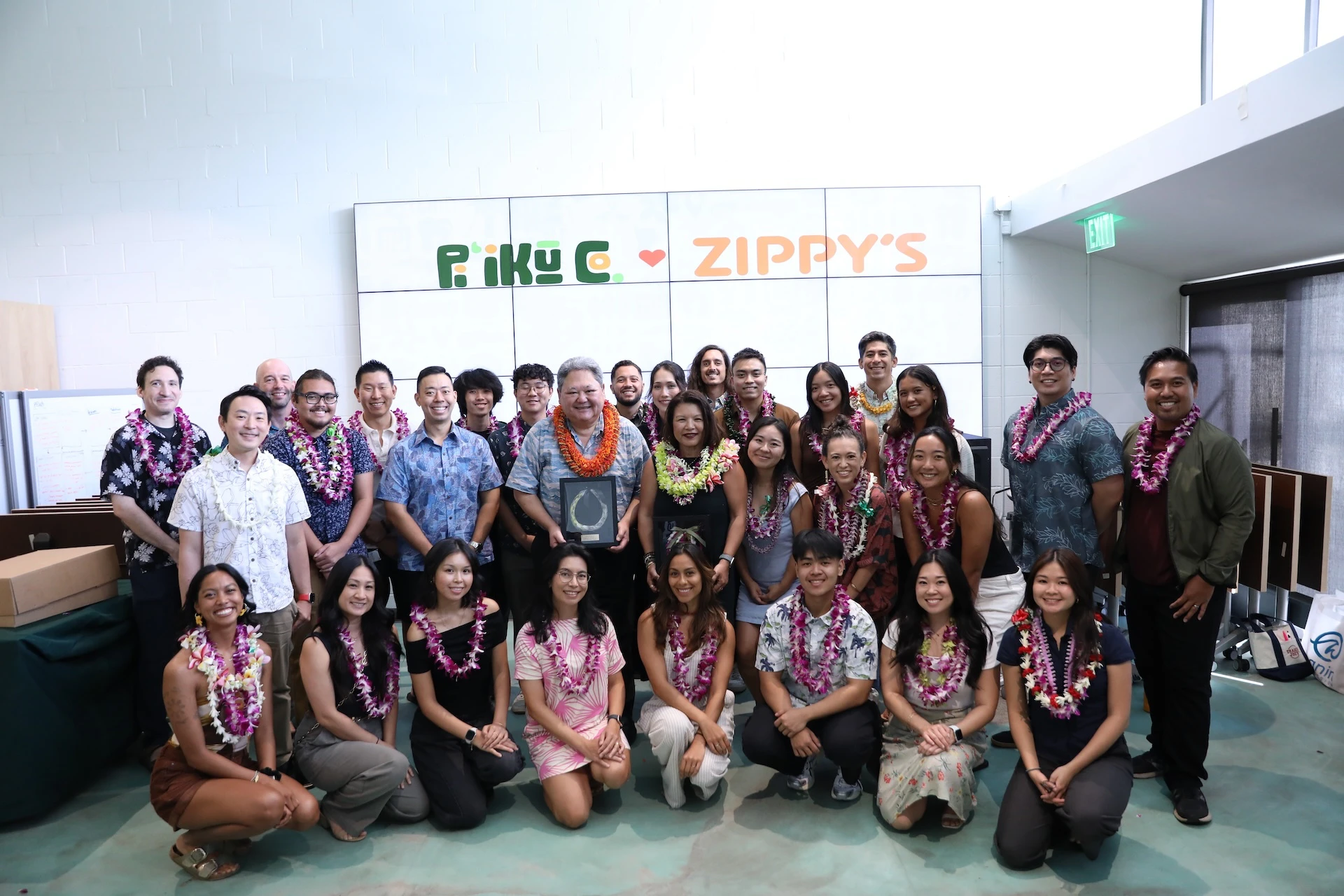
Liquido, who is from Hilo but grew up on Oʻahu, told ASD that this internship model is designed to be cross-functional. It’s a tech-focused work-based learning program, with Pi’ikū operating as the intermediary between participants and legacy companies in the state, which he said most recently included Zippy’s.
Its name means “transpiration” and “to climb or ascend,” and Co. represents the prefixes of words such as “collaborate, cooperate, community, and more,” according to Pi’ikū’s website. “It’s an invitation to create with us. To build something new, exciting, and bigger than all of us.”
The program runs for 12 weeks and pays cohort participants, while they gain hands-on experience, mentorship and community.
ASD asked Liquido more about his background in tech and current day-to-day responsibilities, as well as short- and long-term goals and needs.
What was your first job? How did you get into tech? I went to Brown [University] and graduated with a degree in economics. I came back to Hawaiʻi and rented cars at Enterprise. That was my first job out of college. I think I lasted three months. There’s just limited opportunities, I wanted to make money and wasn’t really patient. Luckily, my next job that got me into tech was working for the state Department of Education. ... I learned coding and data and that’s what got me interested in tech and then I went to UC Berkeley to get my masterʻs. My last job was at Shopify, and I didn’t really want to go back to corporate tech. I’ve been working in tech for 10 years, and still am. I have two startups: my own design and engineer agency and I started Pi’ikū [in 2023].
How was Pi’ikū established? The silver lining of Covid was that I got to come back home. I was like, ‘Why aren’t more people getting into tech?’ I didn’t really find a conduit from education to workforce. And so, if you donʻt see it, I guess create it. But there are a lot of organizations that are adjacent to what we do. We do a very specific thing. I see it as we’re all solving different issues that are a part of a bigger issue.
Who can apply? We do have a lot of people in college that apply, but we’re stoked about career switchers, people who learned on YouTube how to design and engineer, if you can showcase that you are competent, we take you. The typical age range is 18 to 26 but we’ve had people in their late 20s, early 30s.
What makes your program unique? What makes Pi’ikū, Pi’ikū are our:
-Teams, so instead of putting one intern to one mentor, we put together pods of four to six individuals who act almost like a mini consultancy.
-Capacity to come in as a full-service agency (not just a staffing agency) over the course of a 12 weeks. By the end of the program, the company gets working software.
-Senior-level mentors, networking events.
Within six months of completing the program, 75% of alumni secured paid work and average hourly wages of $44.
What are your plans for growth? We’re looking to grow funding and our mentors who are connected to Hawaiʻi. Our limitation is not qualified talent but funding the program is a challenge. Pi’ikū’s first two cohorts were grassroots-funded. Now, we’re looking to find companies that can help subsidize the program with some of our volunteer time. I’m a volunteer executive director.
I’m excited for this shift in thinking from our organization to work with legacy companies who want to invest in Hawaiʻi’s talent and collectively find solutions to their barriers.
What difference do you hope to make? Reduce the brain drain. Make sure that people can stay in Hawaiʻi … I think tech allows you, more than other industries, to have the mobility of making $100,000 to $150,000, which puts people in a place to thrive.
What advice would you give your younger self? "Any decision you make is the right decision." As long as you're genuine about your intentions, you're always making the right decision. One of my career counselors told me we can walk many paths and be equally good at any of them. Which makes choosing very hard. Because you believe there's always one right answer.
"Surround yourself with good people." Everything good that has come to me, I can tie back to a person. I'm in tech and AI is so present on my mind — and I'm sure it is for every person entering the field. AI is so loud right now that you get lost in the technology. Technology becomes the thing you're building for, when it's really the people you're building for and with. My fondest memories building something isn't the thing I built but the people I built it with. And the reason doors were opened for me were because of the close ties and friends I made along the way.
Participant perspective
Born and raised on Oʻahu, Zelda Cole interned as a product designer in the latest Zippy's cohort. She's currently pursuing a master’s in computer science at the University of Hawaiʻi at Mānoa, while working at Liquido’s design firm.
“I didn’t expect to find Pi’ikū,” she told ASD, but was glad she did.
“One pro is how it provides locals with tech jobs.”
When asked what it was like working with other cohort members, Cole added, “It was very supportive. We were figuring it out together. We were scrappy. We learned together. Everybody was nice. It was very team oriented. We all wanted each other to succeed.”
Working on a real product – a bakery app for Zippy’s – was helpful, she said, recalling how she learned more about the kitchen staff, systems and operations.
“We even got to make our favorite dishes, so that was fun. They were an amazing company to work with,” Cole said.
Her most memorable part of the internship, she noted, was the final Hōʻike, where they presented their designs, process and final product.
“It was a good time to reflect and celebrate with food and the whole community.”
Looking ahead, she’s both excited and worried about the unknown. “I’m worried about finding work opportunities, but I’m excited to graduate in May and see what my next chapter is.”
Her advice for anyone interested in tech? “I would tell them they can do it. To reach out to anybody in their community. You’d be surprised by the response.
“Reach out. Don’t be scared. Just do it!”
For the latest news of Hawai‘i, sign up here for our free Daily Edition newsletter.
Kelsey Kukaua Medeiros can be reached at kelsey@alohastatedaily.com.