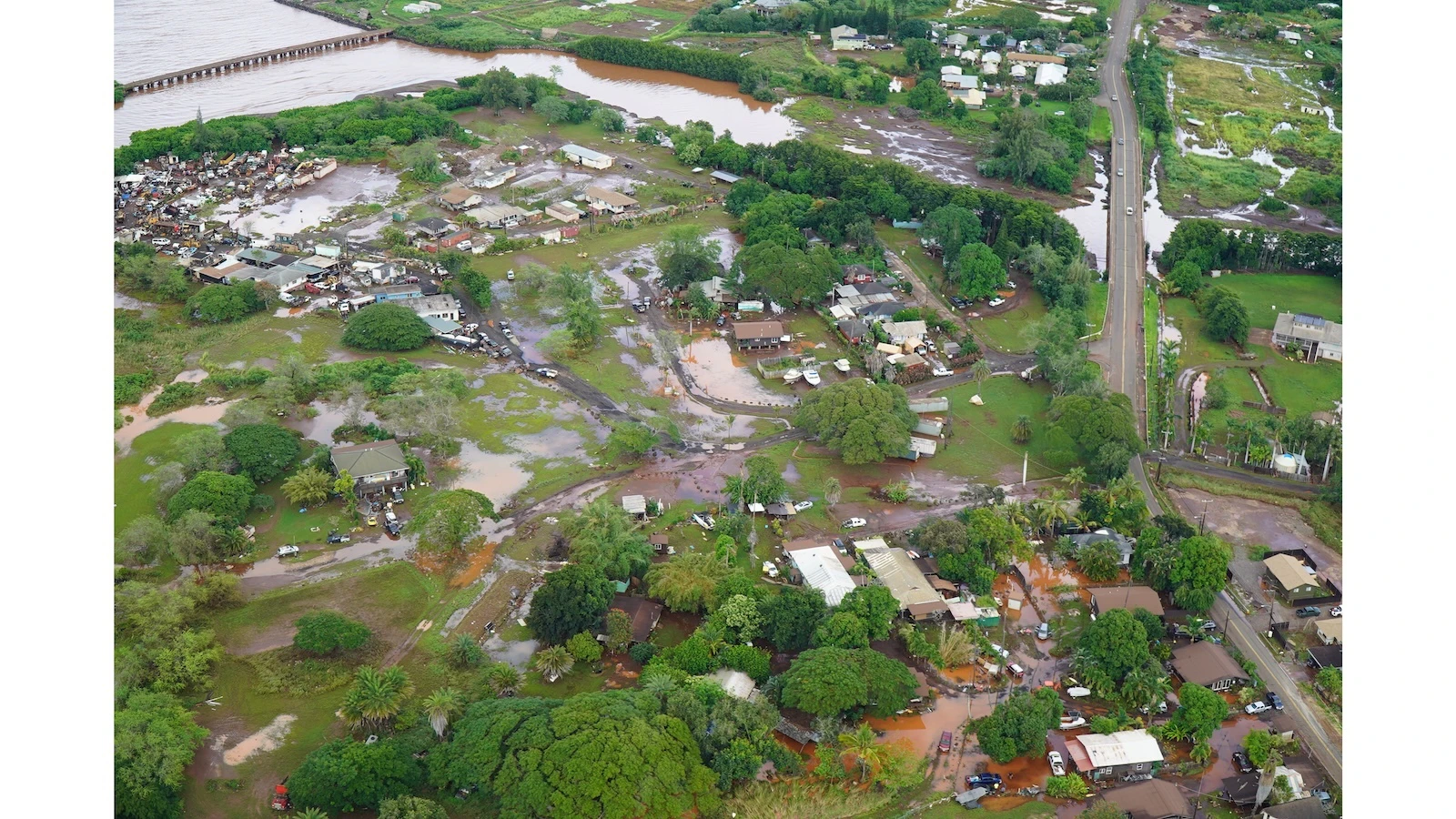
As Hawai‘i communities continue to recover from destructive back-to-back storms that caused significant flooding and damage across the Islands last month, architects across the state are offering their support.
Architects "stand ready to assist in evaluating structural damage, navigating repair options and supporting resilient rebuilding,” a recent announcement from AIA Hawai‘i notes. They can help property owners "understand the extent of damage, determine whether repairs are feasible and ensure that any reconstruction meets current building codes and incorporates strategies to better withstand future climate-related events."
“Architecture, at its core, is about creating physical space that is safe, functional and [meaningful] to community,” Melanie Islam, president of AIA Hawai‘i, told Aloha State Daily in an email. “At this time, the most important perspective architects can provide is supporting the frameworks that ensure families, kūpuna and keiki impacted by the floods are safe, healthy and able to stay together.
“Our role as architects will become more relevant once residents and community have had time to heal, assess the damage and begin thinking about what the future of their community and homes should look like,” she continued. “At that stage, we can work alongside community to shape homes and neighborhoods that feel safer from future storms, while keeping the identity of the [place] they love and call home.”
AIA Hawai‘i said in the announcement last week that there had been no requests from state or county agencies to deploy architects through the AIA’s Safety Assessment Program.
“After a disaster, an important priority is to help residents understand whether their homes and buildings are safe to return to,” Islam said Monday. “The Safety Assessment Program, or SAP, trains licensed professionals — architects and engineers — to support community by assessing damaged buildings so that people can make informed, safer decisions during a difficult time.
“As volunteers, SAP professionals work with the city and state disaster recovery teams. At this time, we have not been activated, but when the community and governmental agencies are ready, SAP Professionals and AIA Hawai‘i are here to help.”
AIA Honolulu President Lance Hirai had a chance to volunteer in Waialua last week through the Pacific Century Fellows, where he was able to connect with and hear first-hand stories from the community.
Hirai says he realized that whether you're offering help or receiving it, "being present makes a difference."
As for ways architects can support the community, Hirai says, “At this point in time, when the community members are ready, we can help. We’d love to have an AIA table in Waialua to listen, to offer guidance and connect in any way we can.”
AIA Hawai‘i also notes that the public should be aware of potential scams that can arise in the wake of natural disasters.
"Residents should be cautious of unsolicited offers for repair services, especially from individuals who request large upfront payments, lack proper licensing or pressure homeowners into quick decisions," the recent announcement noted. "Always verify that contractors and design professionals are properly licensed in the state of Hawai‘i and request written agreements before proceeding with any work."
AccuWeather last week estimated that the two March storms, which brought 30 to 60 inches of rainfall to some areas and led to the worst flooding in Hawai‘i in more than two decades, caused around $2 billion in damages and economic loss. The preliminary estimate accounts for damage to homes, businesses and infrastructure, as well as tourism losses, agricultural impacts, and emergency response and recovery operation costs across O‘ahu, Maui and Hawai‘i Island, AccuWeather notes.
For the latest news of Hawai‘i, sign up here for our free Daily Edition newsletter.
Stephanie Salmons can be reached at stephanie@alohastatedaily.com.