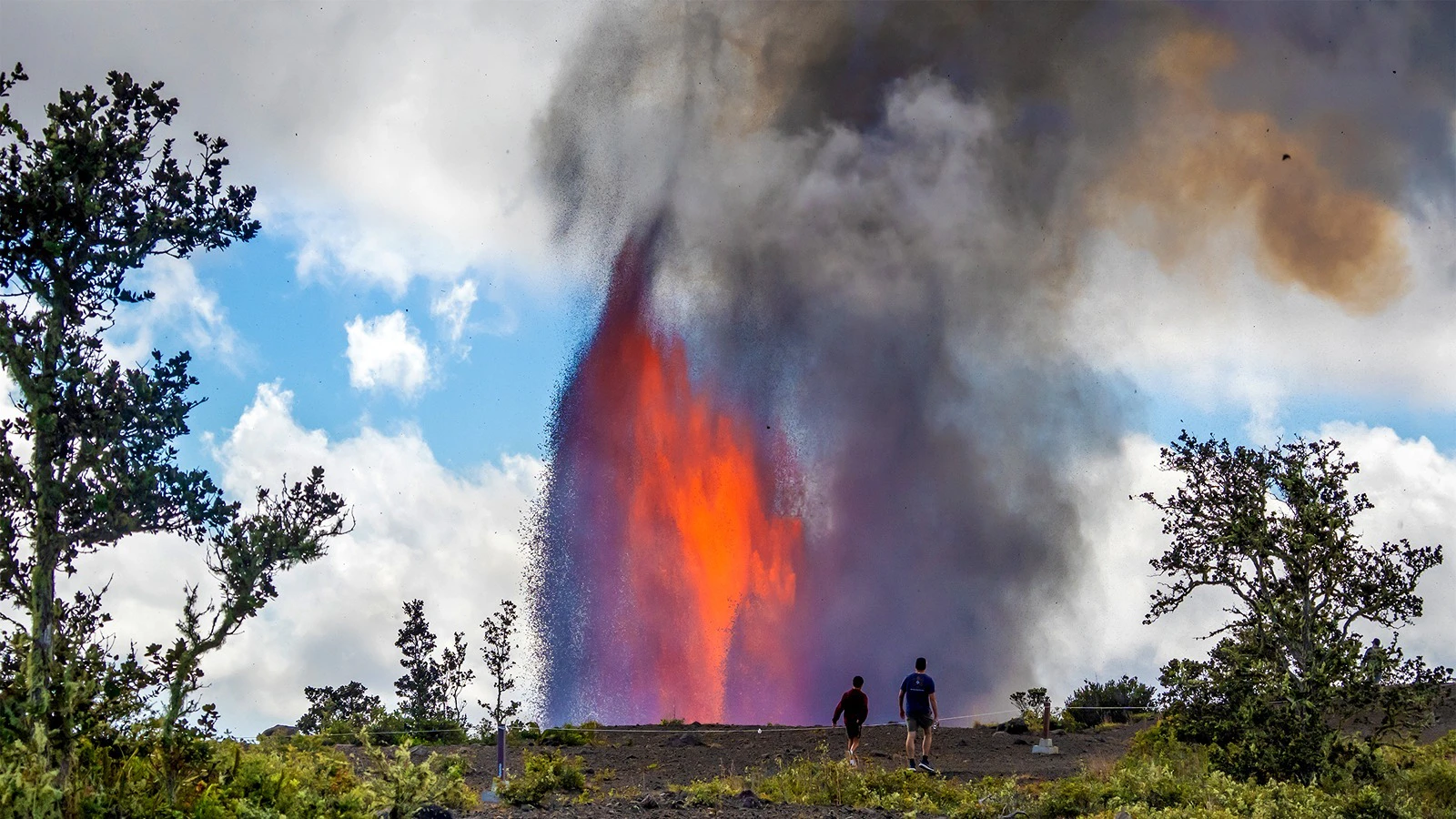
Hawai‘i Volcanoes National Park is gearing up for the next eruption of Kīlauea Volcano — and a possible shift in winds.
"Weather forecasts indicate a shift from northeasterly trade winds to southerly winds by the middle of next week," the park said in an announcement Friday afternoon. "If Kīlauea erupts during southerly winds, it could cause volcanic gas (vog) and tephra to blanket the summit similar to March 10 during episode 43."
The U.S. Geological Survey's Hawaiian Volcanic Observatory expects episode 44 to begin between April 6 and 14.
In an update Friday, HVO says that glow was "continuously visible from both vents" overnight, and the first precursory lava flow occurred from the south vent just after 6 a.m., activity that indicates lava is high within the south vent and close to the surface.
Kīlauea has been erupting intermittently since Dec. 23, 2024, largely from two vents in Halema‘uma‘u crater within the summit caldera.
Episode 43 saw lava fountains reach 1,770 feet, a record for this eruption, HVO says.
HVNP says that extreme fallout of tephra — small glassy volcanic fragments including ash, pumice, Pele hair and reticulite — during episode 43, due to southerly winds and high lava fountains, prompted temporary closures of the park and Highway 11.
Episode 41, which ended Jan. 24 after a little more than 8 hours of continuous lava fountaining, also blanketed HVNP and some surrounding Hawai‘i Island communities with tephra and ash. (ICYMI: An estimated 14 million cubic yards of lava erupted during that episode. Here's how much that really is).
According to HVNP, visitation and traffic soar during eruptions, but the park also anticipates that participants of the upcoming Merrie Monarch Festival will visit Kīlauea in the week ahead. The annual hula competition will be held Thursday, April 9, through Saturday, April 11, in Hilo.
The park urged the following precautions:
- Monitor park air quality here. If vog levels are unhealthy or tephra is falling, leave the area.
- Protect yourself from tephra. Eye protection, a hat, long sleeves, long pants and gloves are recommended. A dust mask will protect you from inhaling tephra but not vog.
- If hazardous conditions persist, the park may temporarily close impacted areas until it is safe to reopen.
In late February, a Hawai‘i man died following an unspecified "incident" in a closed area on the east side of Kīlauea caldera, but the volcano was not erupting at that time. However, the National Park Service said in an announcement then that, the caldera contains "hazardous terrain, including unstable cliff edges and volcanic features. Visitors are reminded to remain in designated open areas and comply with all closures."
Last June, a 30-year-old Boston man trying to get a closer glimpse of the eruption was rescued by first responders after falling 30 feet from a steep cliff within the park. At that time, the park said that a tree broke the man's fall and kept him from plummeting another 100 feet or so to the caldera floor.
For the latest news of Hawai‘i, sign up here for our free Daily Edition newsletter.
Stephanie Salmons can be reached at stephanie@alohastatedaily.com.