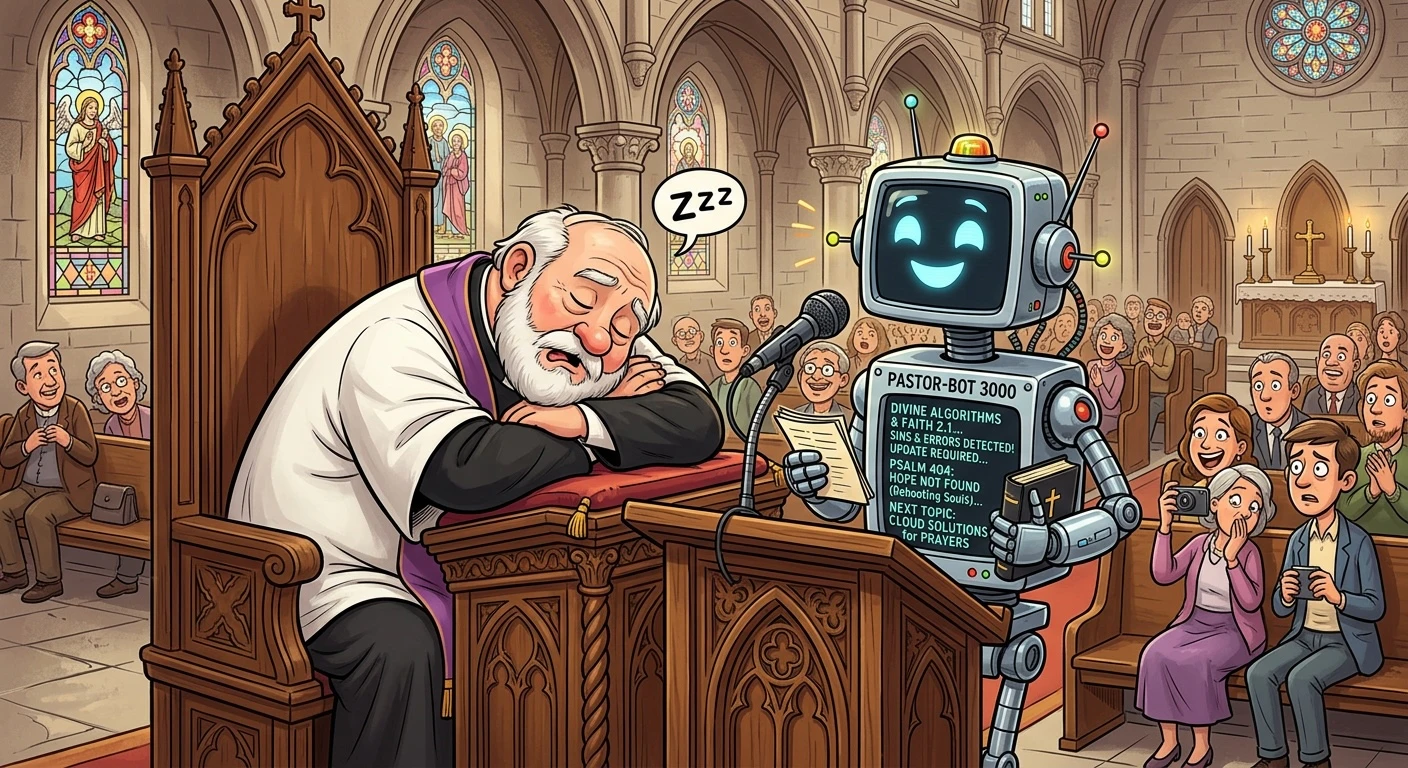
The AI sermon coach promises to save the busy pastor hours each week, freeing up time for more productive work.
This bothers me more than it probably should. Not because ghostwriting is new — it isn’t. John F. Kennedy, no intellectual slouch, is best known for speeches Ted Sorensen wrote. And it is an old trick question to ask who wrote Paul’s letter to the Romans (Tertius, as he notes in chapter 16). Scripture was inspired, yes, but written with human hands.
The help, then, is not the issue. I use AI in the process of outlining, drafting, and revising my own work. What unsettles me is something else: handing the writing off to a machine, and losing what the writing process actually produces.
Writing is how ideas get tested. You start with one argument and discover, somewhere around the third paragraph, that you were wrong. Objections surface that you can’t ignore. The thesis falls apart, and you begin again. Sometimes, a finished piece gets shelved because it doesn’t work. But an essay completed and discarded is not wasted work — it is the work.
Those 30 seconds that produce a finished sermon skip over hours of prayer for a waiting congregation, that they might meet the living God through His Word. They bypass the moments when the pastor might have found he didn’t believe what he was about to say.
Laws used to be written the way sermons and essays are. But no legislator has time to read all the codes, so AI can do it for her. It will scan all the statutes, take her instruction, and draft something precise. Then she can send 20 letters to constituent groups, each personalized to their particular interests. If they want to testify, pre-written remarks are ready to paste. Friction-free lawmaking.
But even this process seems slow. After all, we have voting records. We have public statements. We could model how each lawmaker votes based on past behavior. No need to convene anyone. Program a swarm of AI agents, and let them interact. For more confidence, run the simulation 10,000 times and take the most common result.
The public may object that they’ve been left out. Give them a share of the agents. Sierra Club AI will oppose anything that might disturb a watershed. Grassroot Institute AI will push for limited government. The results will look the same, and arrive much faster.
The friction in lawmaking is not pure waste. It creates space for discernment. It should be difficult to pass a law. The cost forces a choice.
A statesman’s job is not to do everything that could be done. It is to choose, from among many options, what should be done. That takes wisdom about what matters and why.
The Hebrew word for this is chokmah — wisdom. Job, after the loss of everything he held dear, reached a plain conclusion: the fear of the Lord, that is wisdom, and to turn away from evil is understanding.
I asked AI what becomes of a people that trusts it — from the pulpit to the senate floor.
It responded: “A society that can simulate its legislature, generate its sermons, and automate its arguments has not freed itself from the burden of wisdom. It has only lost the habits that made wisdom possible. Job understood this after the whirlwind took everything. We may have to learn it the same way.”