
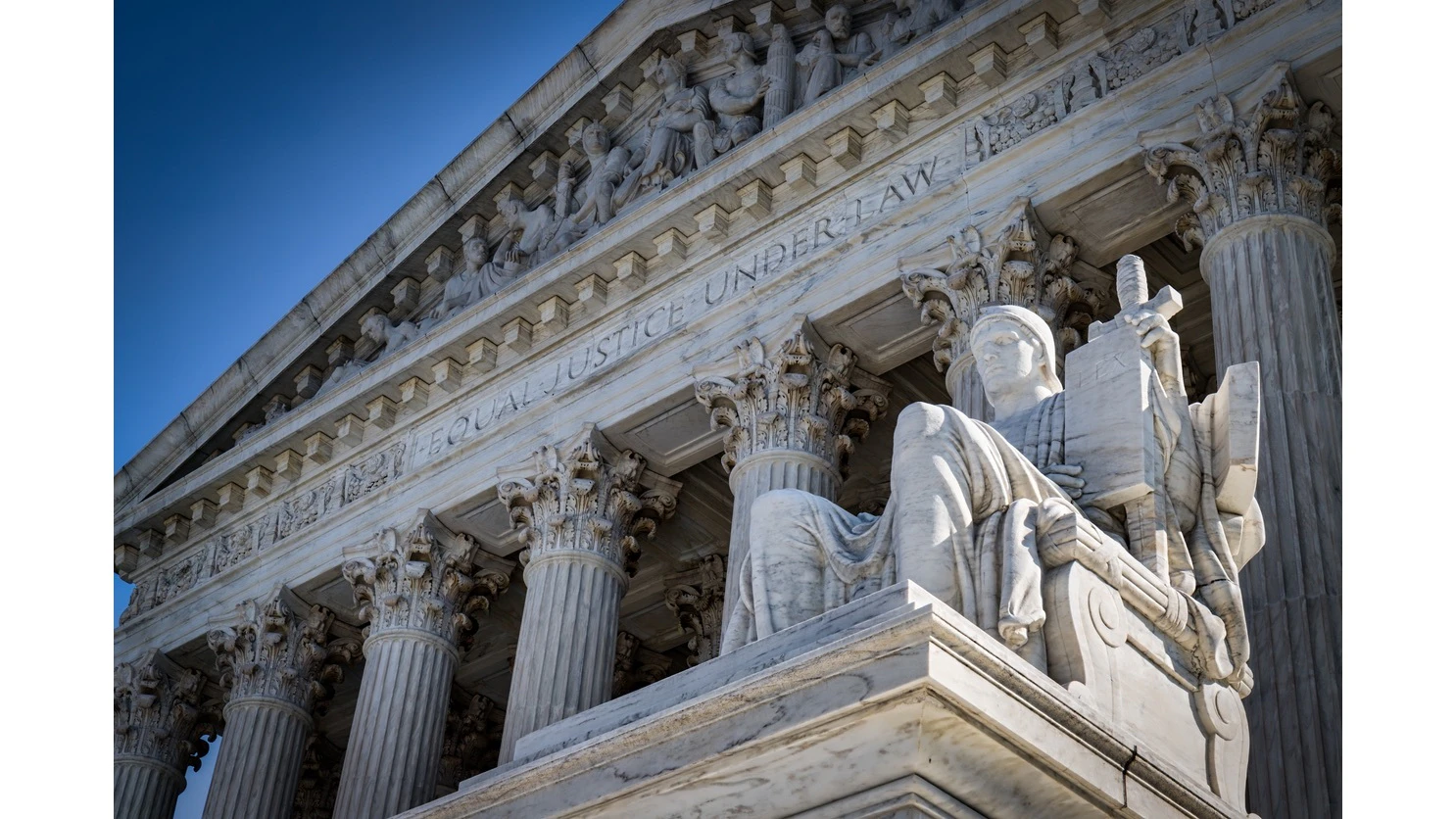
The state Legislature’s attempt to overturn Citizens United, as it applies to Hawai‘i, keeps advancing. The latest step will be a hearing Wednesday, April 29, at 2:40 p.m., deferred from Monday and again from Tuesday as lawmakers tweak the wording of SB 2471, “Relating to the powers of artificial persons.”
As we’ve reported, the bill is an attempt to create a backdoor to the U.S. Supreme Court’s 2010 decision in Citizens United v. Federal Election Commission, which held that it is unconstitutional to prohibit political spending by corporations. Doing so violates their First Amendment right to free speech.
That backdoor is being built on the fact that the states grant corporations the powers they have under law, so Hawai‘i, and about a dozen other states this year introduced nearly identical legislation — total coincidence, I’m sure! — to change those laws. Hawai‘i law, for example currently says:
“[E]very corporation has … the same powers as an individual to do all things necessary or convenient to carry out its business and affairs…”
It then goes on to specify such powers as “to sue and be sued,” to own land, make contracts, lend money, “make donations for the public welfare or for charitable, scientific, or educational purposes,” and more.
SB 2471 would add language stating that corporations can keep on acting in every way like an individual with one new exception — no spending on political speech. From the bill’s latest version:
“[A]rtificial persons created under state law possess only those powers that are necessary or convenient to carry out lawful business and organizational purposes, and that those powers do not include the power to spend money or contribute anything of value to influence elections or ballot measures.”
Why? Why is this even necessary?
Well, for all the furor over this bill, the bill itself doesn’t really say.
Its defenders do say why they think it’s necessary in testimony and editorials, but their arguments are heavy on vague threats, light on evidence.
“Dark money is poisoning our democracy,” wrote state Rep. Della Au Belatti (D), District 26, and state Rep. Kanani Souza (R), District 43, in an April 12 editorial.
The two make much of the fact that one of them is a Democrat, the other a Republican. They go on about the genius of this “genuinely historic” approach to “stop giving the corporations that operate on our Islands the power to spend in our politics.”
Please do read the whole thing and look not only at what they say, but what they don’t say.
They don’t name a single example of a specific corporation whose spending affected any election or ballot measure in Hawai‘i. Not one.
Perhaps in the House? Belatti spoke about the bill in an April 14 floor session (here, at 4:41:00). We’ve always had this power to redefine corporations, she said, and we must do so to “rein in undue influence of monies flowing from unlimited corporate treasuries that undermine our political process and has fueled voters’ distrust and disenchantment with government.”
She says that in Hawai‘i’s 2024 election, three PACs spent $13 million, whereas the candidates themselves spent only $10 million they raised directly from donors.
That $13 million, she said, “is the dark money that SB 2417 is striking at.”
But which PACs spent the money? On which candidates or issues? What did their spending achieve and how was Hawai‘i harmed?
She didn't say. She won’t name the threat but does emphasize the “we’ve always had this power” argument, urging, “We need to be brave and take up this mantle and let this legislation move forward.”
OK. Citizens United was decided in 2010. Did Hawai‘i lawmakers have amnesia about their powers for the past 16 years? Or is it more accurate to say they’ve spent 16 years with their lawyers digging through the lawbooks looking for some way to try to outsmart the Supreme Court? Something tells me, if this was the obvious slam-dunk they’re making it out to be, state legislatures would’ve done this long ago, and Hawai‘i's current legislators wouldn't still be fussing with the draft.
Since lawmakers won’t identify a single clear instance of “dark money” yielding a specific bad result for Hawai‘i, we have to guess at their target. Who is this bill trying to silence that the U.S. Supreme Court otherwise gave a voice to?
A little history lesson, because you might not remember who Citizens United was or what it wanted to do.
It was, and still is, a conservative 501(C)4 public policy nonprofit, founded in 1988. In 2007, the group wanted to take out advertisements telling people to watch a documentary it made, “Hillary The Movie,” critical of Clinton as a presidential candidate. It challenged Federal Election Commission rules that would’ve prevented it from doing so.
The U.S. Supreme Court said it could go forward and Democrats, in particular, have hated this decision ever since.
The U.S. Supreme Court decision led to the creation of political action committees, PACs and Super PACs, which can spend money they raise on candidates and issues. These entities are not bound by the campaign donation limits set when one gives directly to a specific candidate. If you want to read a better criticism of “dark money” then than the one being made locally, check out this piece on Citizens United from the Brennan Center for Justice.
There’s a lot going on here, a lot of complicated motivations and I don’t trust the people who won’t tell us who took the $35,000, and who won’t let us have real elections, when they say we need to take on the U.S. Supreme Court to protect democracy.
Maybe they don’t like seeing all that money spent independently, rather than getting donated to them.
Maybe they don’t like that conservatives had a win.
Maybe they’re sacrificing the “dark money” they’ve benefitted from — there are plenty of progressive Super PACs that support Democrats, after all — because they are certain they have other kinds of corporations on their side.
Namely, the media. Search SB 2471 for “news” and it shows up 20 times. Example: “‘Election activity’ does not include any bona fide news story, commentary, or editorial distributed through the facilities of a broadcasting station or of any print, online, or digital newspaper, magazine, blog, or other periodical publication, unless the broadcasting, print, online, or digital facility is owned or controlled by a candidate, political committee, or political party.”
No one has said so, to my knowledge, but this may be the biggest vulnerability of SB 2471.
Here’s the First Amendment:
Congress shall make no law respecting an establishment of religion, or prohibiting the free exercise thereof; or abridging the freedom of speech, or of the press; or the right of the people peaceably to assemble, and to petition the Government for a redress of grievances.
States, in turn, are bound by this as well. They also shall make no law abridging the freedom of speech, or of the press.
Remember, Citizens United made a documentary. From its preview, it’s a mix of clips from Clinton’s own speeches (reporting), close-ups of news headlines critical of Clinton (second-hand reporting) and commentary from political observers, including one Barack Obama.
In other words, it’s a “60 Minutes” segment, only one “60 Minutes” would never do.
If SB 2471 becomes law, I’d expect a PAC to take Hawai‘i to court demanding a clear explanation of why its reporting and editorializing in a documentary, an advertisement or a direct mail piece is any different than what I do here at Aloha State Daily in my column, or what Civil Beat does when it hosts an essay from the defenders of SB 2471, or what the Star-Advertiser does when it endorses candidates.
The Star-Advertiser in 2024, for example, endorsed Kamala Harris for president, among other candidates in other races, and told voters how they ought to vote on State Constitution and City Charter amendments.
In the latest version of the bill, our lawmakers are arguing that this is OK, but identical speech from other groups structured as corporations is not.
Then there’s the convoluted language of “artificial persons,” and, again, I think our lawmakers are being too cute for their own good. They are arguing in the bill and in their testimony that they are not silencing the natural rights of individuals to speak, only that of “artificial persons.”
But they know perfectly well that corporate structures don’t just spring from the ground of their own accord, staffed by no one. They’re made of people, who have rights. Do those rights vanish because those people found it beneficial to incorporate? If so, then, again, one would have to wonder why a newspaper that makes endorsements, or a cable news network that blasts President Donald Trump all day, can benefit from being a corporation, but other people with a political message can’t.
Hawai‘i might expensively push this all the way back to the U.S. Supreme Court only to find that the definition of “the press” gets put on trial, in which case, I’d say, journalism as we know it has no special privilege. Freedom of the press is the freedom to publish, no more, no less.
Well, look, I’m not an attorney. On SB 2471, all I know is, my alarm bells are going off.
When lawmakers tell me we need to act now in the face of a dire threat, but the threat is unnamed, the harm ill-defined, I get suspicious.
When lawmakers say somebody needs to shut up, but they won't say who or why, I wonder what sneaky stuff they're up to.
And when lawmakers tell us we need to be brave and charge ahead, regardless of obvious risks, I have to point out: It’s easy to be brave with other people’s money, isn’t it?
Remember, this is a Legislature insisting that Hawai‘i is so broke, it can’t afford to let taxpayers keep the tax cuts we were promised.
But to get cute with the U.S. Supreme Court? Suddenly, money is no object!
I hope SB 2471’s supporters plan to chip in for the defense.
UPDATE April 29, 4:15 p.m.: The Joint Senate and House Conference on Wednesday again rolled a vote over to Thursday, video at the link, go to 2:40 p.m. to see the brief exchange. Both chambers still have legal review underway and it was noted that the House Finance Committee needs to sign off as well.
Pay particular attention to Rep. Scot Matayoshi's passing reference. "Our biggest fear is we don't want to make this situation worse," he said. "We don't want to pas a bill that puts us in a and especially Hawaii companies in a potentially worse position, uh, not companies but non-profits and [garbled] committees in a worse position than when we started."
Matayoshi has mentioned this before in hearings on the bill, his desire to carve out exceptions of some kind for nonprofit organizations and unions. We'll see what, if anything, gets added to the bill as a result. But every exception they add is another opportunity for someone to say, in a court, "Why does that group get to speak, but ours can't?"
UPDATE April 30, 9:20 p.m.: The Senate and House Conference deferred again, to Friday. Skip to 1:26:00 in this video of the discussion between conference committee chairs Matayoshi, on behalf of the House, and State Sen. Jarrett Keohokalole, to hear them both boast and hedge on what they're doing behind the scenes.
Hedge No. 1 is to get rid of reset language in the bill. As written, it strips all Hawai‘i corporations of their charters entirely, then reinstitutes them, minus the freedom to spend on political speech. Instead, says Keohokalole, they want to give the state Attorney General and/or the Department of Commerce and Consumer Affairs authority to dissolve a corporation that engages in electioneering.
Good luck with that. The AG's office has already opposed this bill as a reckless challenge to the U.S. Supreme Court, so I'd be shocked if it wants the job of corporation executioner.
Then this bombshell from him, "We are trying to provide clarity for labor organizations because there are a number of structures that labor organizations take in Hawai‘i, and there's some ambiguity around that that we want to make clear for everyone." He's also looking at language about how Mainland-based outfits operate in Hawai‘i.
It might interest you to know that according to Federal Elections Commission data, some top donors to Keohokalole include the International Longshore and Warehouse Union Political Action Fund, Carpenters Legislative Improvement Committee United Brotherhood of Carpenters and Joiners and Mainland-based leftwing PAC ActBlue.
I guess there's some "dark money" Keohokalole likes after all. More and more this is looking like a bill to silence any political spending in Hawai‘i that isn't the faithful pillars of Democratic Party monopoly power.
Matayoshi, for his part, continues to express concern that this bill will get Hawai‘i into trouble, despite, in his view, the obvious need for its good intentions. He brings up an approach the House has been looking at, based on Mainland legislation, to simply cap the size of donations to Political Action Committees.
If the two Chambers can't agree on Friday to a version they can put forward for a final reading, it dies for this session.
UPDATE May 2, 5:20 a.m.: On Friday, a revised version of SB 2417 passed the conference committee and goes before the Legislature for a vote on Wednesday. At a glance, it still makes an exception for corporate political speech in the form of news and commentary, applies penalties to foreign — meaning based outside of Hawai‘i — corporations conducting electioneering in Hawai‘i as if they were Hawai‘i-based, and does not seem to contain the labor union clarifications Keohokalole was looking for.
The room greeted the passage with applause, including from the folks in Indivisible Hawai‘i T-shirts seated near me when I attended the final vote. By the way, did you know that if you want to donate to Indivisible Hawai‘i, the funds go to Mainland-based ActBlue Civics, designated by Influence Watch as a leftwing fundraising 501(c)(4) nonprofit?
One suspects they are confident their electioneering will remain unencumbered if this bill makes into law, despite all the rhetoric about keeping Mainland money from contaminating our local politics.
In any case, despite the bill's passage, Matayoshi and Keohokalole appeared glum as a result of whatever wrangling passed between them over the bill between its 3:30 p.m. hearing and its final vote. Judge for yourself in the video of the conference meeting, starting at 4:36:13.
A. Kam Napier is editor in chief of Aloha State Daily. His opinions in Pipikaula Corner are his own and not reflective of the ASD team.
A. Kam Napier can be reached at kam@alohastatedaily.com.
For the latest news of Hawai‘i, sign up here for our free Daily Edition newsletter.


