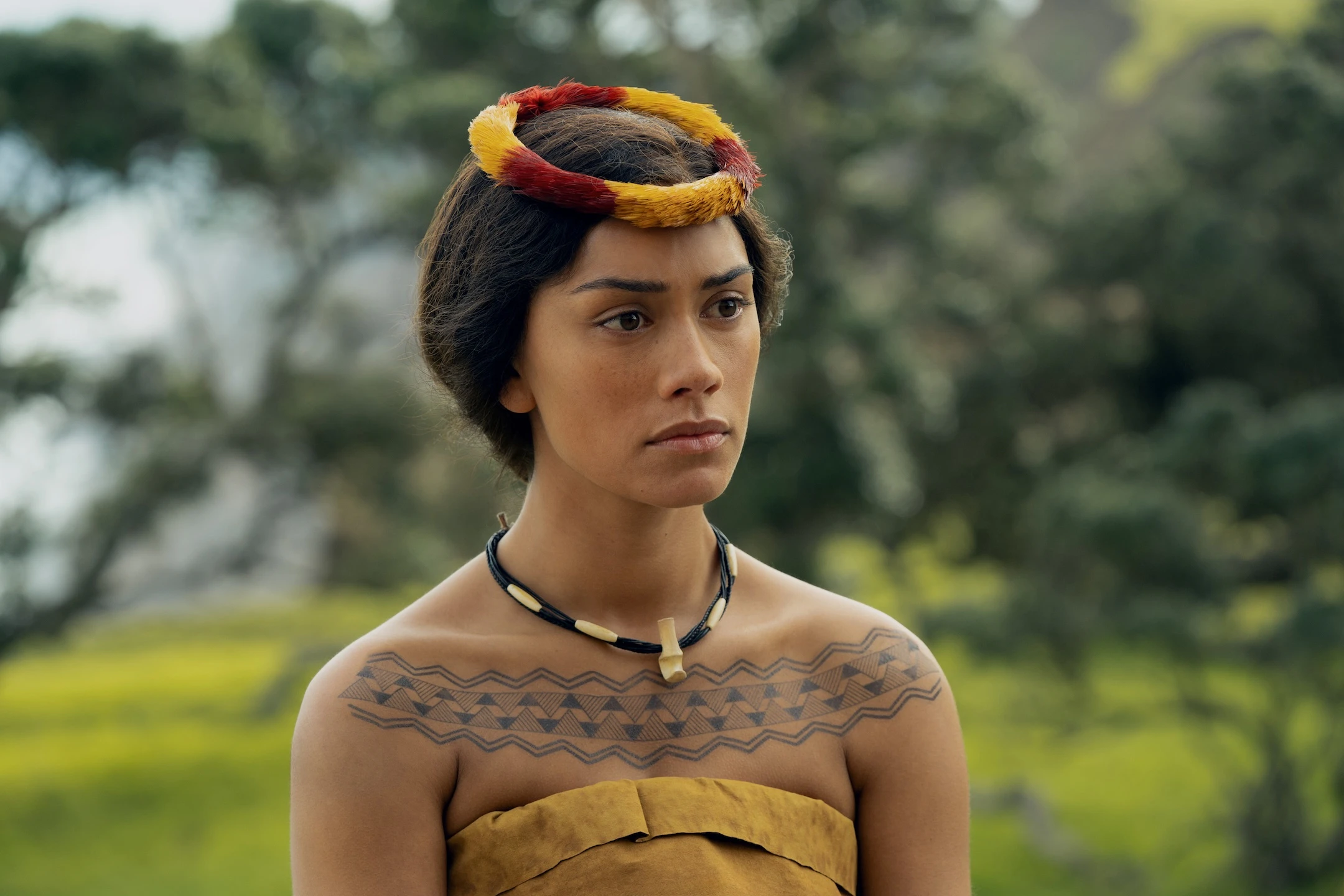
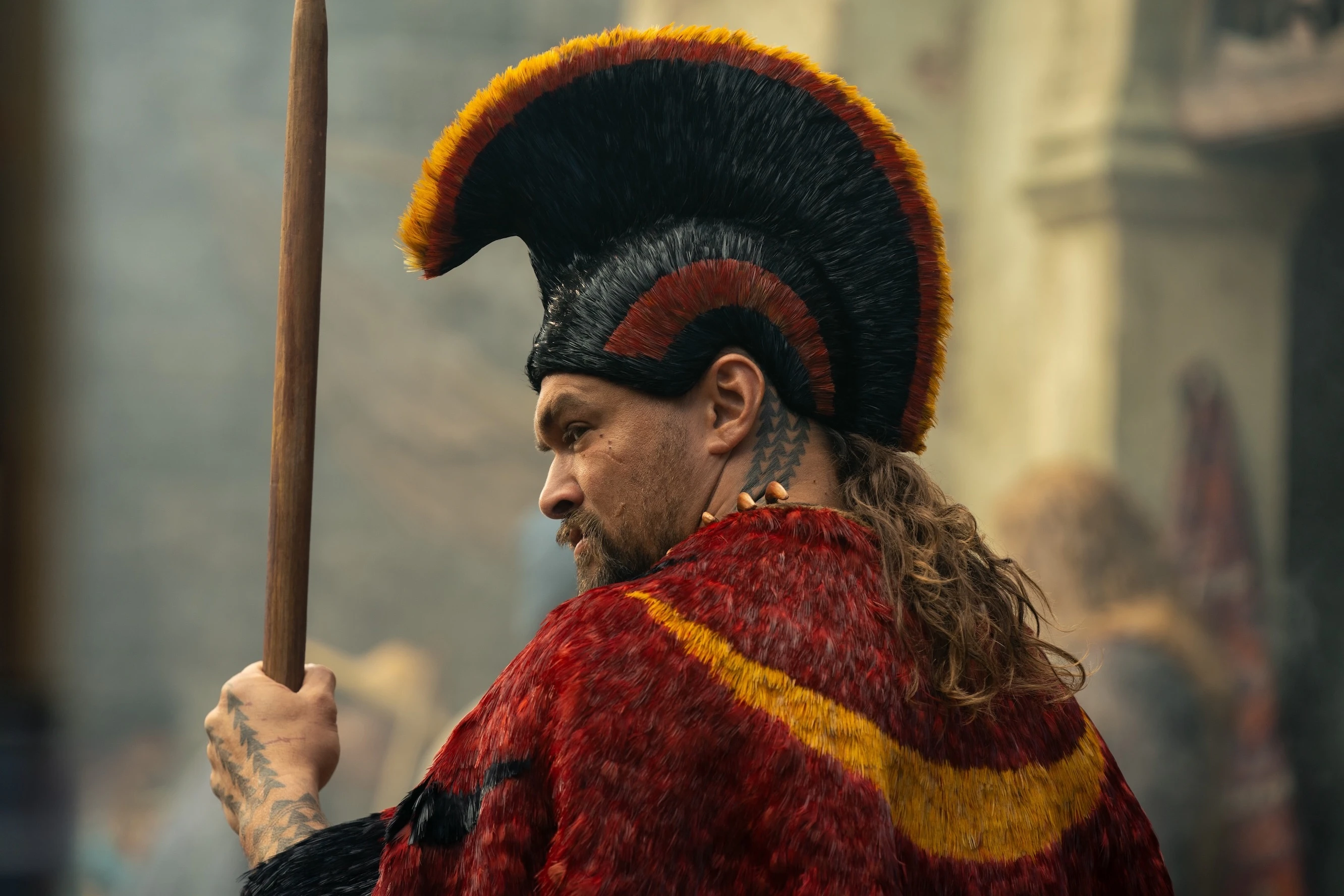
The opening credits of “Chief of War” feature yellow and red feathers that flow across mountains and bones. Behind the featherwork worn by actors and actresses in the nine-part miniseries is Kumu Hulu Nui Rick Makanaaloha Kia'imeaokekanaka San Nicolas, a master featherworker and the authentic Hawaiian featherwork consultant for the Apple TV production.
San Nicolas, who lives in Modesto, California, is also a longtime vendor of the Merrie Monarch Invitational Hawaiian Arts and Crafts Fair. This past fair, which marked his 26th year as a vendor, his role as a consultant for the featherwork featured in “Chief of War” was a frequent topic of conversation. The production, which premiered Aug. 1,2025, on Apple TV, required between 140 and 150 feather capes and cloaks, plus at least as many helmets, he said.
As a consultant for “Chief of War” his kuleana was to teach, he said. San Nicolas worked closely with the costume department, which included a team of professional seamstresses, on the development of these pieces. While he creates his pieces by hand, the costume team used sewing machines, since they had to create a large number of pieces in a short period of time.
San Nicolas taught himself the art of feather lei making through a book called “Feather Lei as an Art,” by Mary Louise Kekuewa and Paulette Kahalepuna. Since then, he has created replicas of the feathered cloaks, capes and helmets worn by ali’i by hand, which can take up to 3,000 hours and include 60,000 to 100,000 feathers in a single item. His work is on display in museums, private collections and resorts. He has been an artist in residence at Hawai’i Volcanoes National Park multiple times. San Nicolas also founded the George Na’ope Hula Festival, which takes place in Sacramento.
The Kumu Hulu Nui also consulted with the costume team on what might be worn by individuals in the series, based on their family lineage.
San Nicolas did create the feather lei worn in "Chief of War," including pieces worn by Ka’ahumanu and the Kahu, or priests.
He was especially moved by the filming of battle scenes on the lava fields of Kalapana on Hawai’i Island, he said.
“It was just like you went back in time,” he said. “Because the amount of people — the amount of capes and cloaks that were being worn — the battle scene that they were projecting and such too, the background of the lava, the steam which you would see coming out of the fissures and the cracks in the ground. And of course, the gray skies, the blue ocean in the background. And then seeing all of these people standing — all of these warriors standing with the pololū, or the big, long, 20-foot, 30-foot spears, up against the ocean in the background, seeing that through the steam that they generated was just awe inspiring.”

“Chief of War” includes a significant battle in the final episode of Season 1. (Courtesy of Apple) 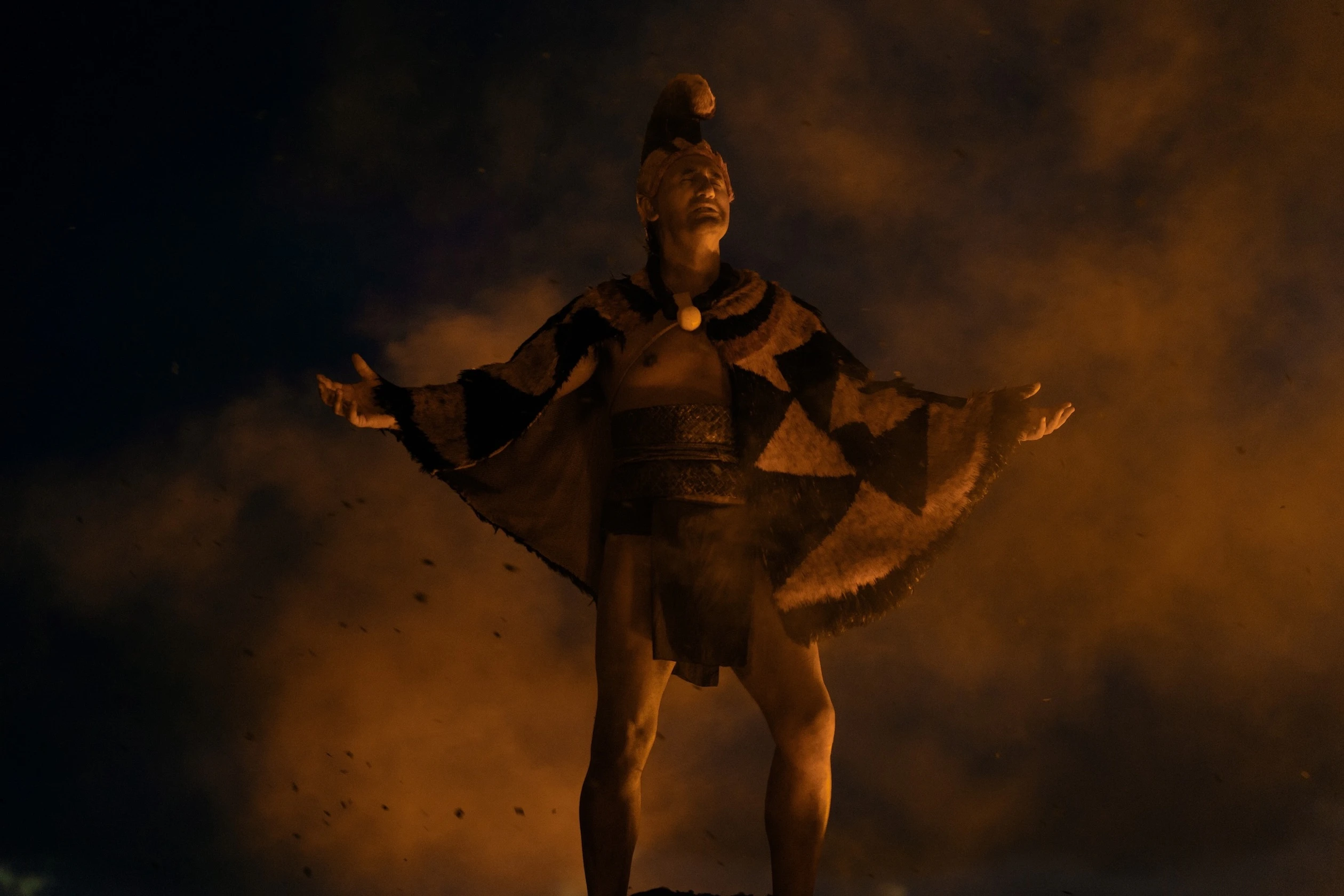
Actor Cliff Curtis plays Keoua in "Chief of War." The miniseries includes a battle on lava fields. (Courtesy of Apple) 
Actors Moses Goods, Jason Momoa and Te Kohe Tuhaka star in "Chief of War," which is now streaming on Apple TV. (Courtesy of Apple)
As the sun broke through the clouds, it illuminated the colors of the capes, cloaks and helmets, adding to the moment.
“What made that happen was the featherwork,” he said. “Talk about chicken skin everywhere, and people with teary eyes and stuff, too.”
San Nicolas offers workshops for those interested in learning the art of featherwork. Entrance to the workshops is by application only. Currently, the entire 2026 year is booked and there are enough applicants to fill workshops through the first half of 2027, he said. Follow San Nicolas on Instagram to see when the next set of applications open.
Katie Helland can be reached at katie@alohastatedaily.com.
For the latest news of Hawai‘i, sign up here for our free Daily Edition newsletter.