The most powerful man in the world got his start firing people on reality television.
For years Donald Trump leaned across a boardroom table and told contestants they were fired, and millions watched. When he ran for President, the bluntness that had been a television gimmick became a qualification for office. He spoke without a script and often without a filter. A great many Americans discovered they preferred a man who acted badly to men who performed well.
Politics runs downstream of culture, the saying goes, and culture runs downstream of whatever screen we happen to be staring at. The television screen that made Trump plausible has been retired. Now the glowing screens that replaced television are in the hands of the children who will pick his successor.
Each generation is raised by a medium, and they seldom notice. The grandparents had radio and the evening news. Their children had cable and a remote in hand. The next generation had broadband by high school. The youngest among us have clutched a glowing rectangle since before they could read.
David Foster Wallace once told a room of college graduates about two young fish. An older fish asks them how the water is. The two swim on for a while before one turns to the other and asks, “what’s water?” The hardest thing to see is the thing you are swimming in. And the water now is streaming.
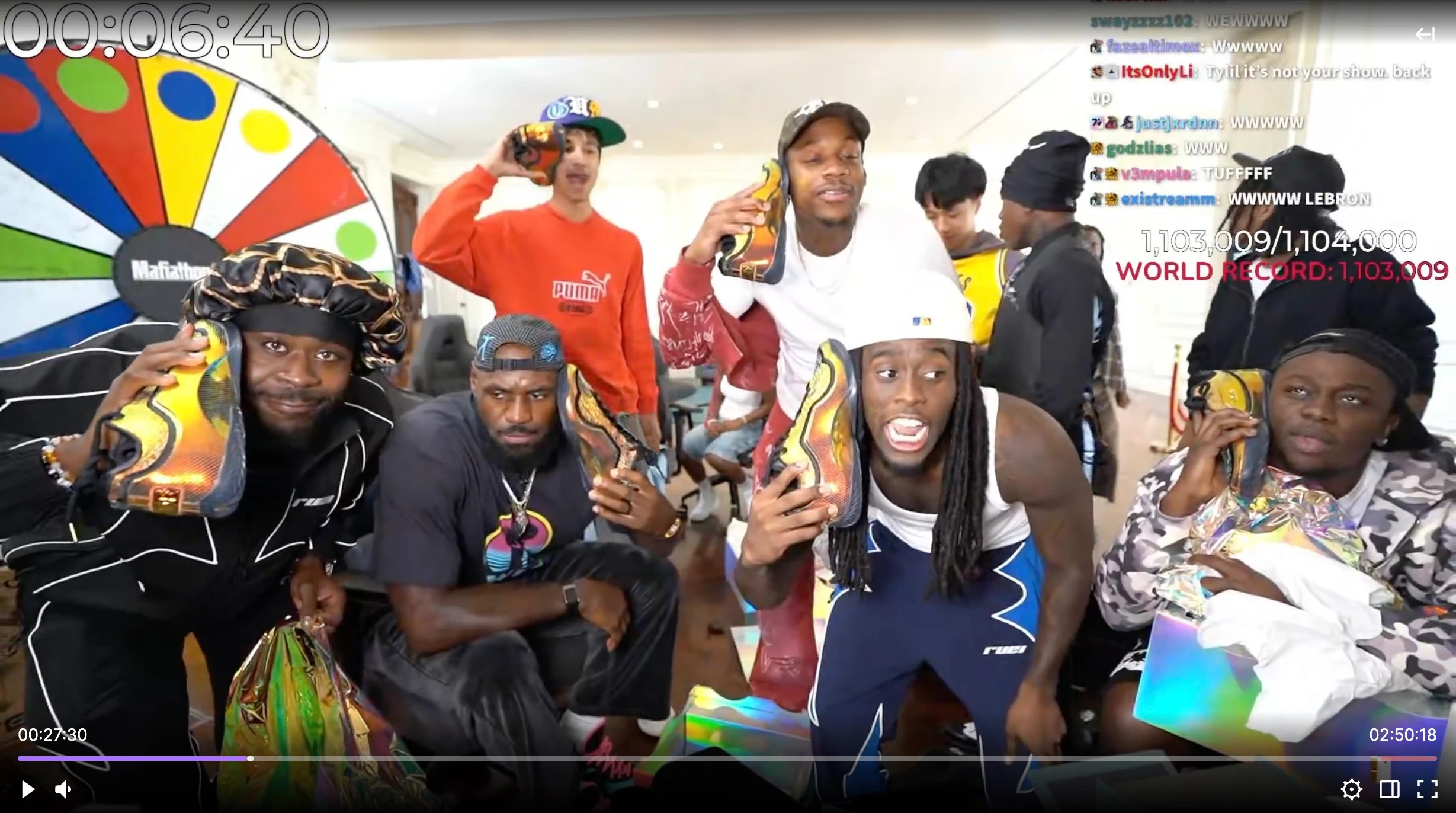
A stream is a strange thing to describe to anyone who has never sat through one. A young woman plays a video game. A column of text races up the side of the screen, faster than a person can read, full of strangers shouting for her attention. The game is built to dole out small rewards on no fixed schedule, which is the same feature that keeps a gambler seated at a slot machine. Most of the time nothing happens. The viewer stays anyway. He’s probably playing his own game on another screen, and he is waiting, half there, for the day something interesting happens.
Children grow attached to these streamers. Many spend more hours each week with their favorite streamer than they do with their parents.
The streamer does not pose and does not edit. They sit for hours on end, and the rawness is part of the product. The generation before this one built careful profiles and took flattering photos, forever arranging the self for the selfie. This one lets the camera roll.
The printed word once demanded forethought. Ink is permanent, and a man preferred not to look a fool in something that would outlive him. A stream asks for nothing of the kind, only a camera, a connection, and a willingness to be watched doing very little.
If you do not recognize the names Ninja, Kai Cenat, iShowSpeed, or Pokimane, you are not swimming in the stream. But your 16-year-old nephew knows them well. His heart is being trained to speak as they speak and act as they act.
Someone will object that this is the worry of every graying generation. Plato fretted over the written word, our grandmothers over MTV, and the children always turn out fine. Perhaps, but a child reading a book after bedtime is one thing. That same child sitting beside a stranger late into the night, while their parents sleep, is another.
Who pays for all of this? As the saying goes, “whose bread I eat, his song I sing.” For most of history the bread came from a single hand: a patron, a publisher, a network. The streamer’s bread arrives from 10,000 hands, a few dollars at a time.
The man on camera learns, the way Pavlov’s dog learned, which tricks ring the bell. He drifts toward whatever is loud and lurid, because that is what loosens the audience’s pursestrings. And the streamer’s purse, more often than anyone cares to admit, is filled by the small donations of the lonely and unwell. The performer fancies that he is leading his audience. In reality, the audience is training the performer.
None of this stays in the world of entertainment. It is now, almost precisely, how a person raises money and wins office.
Congresswoman Alexandria Ocasio-Cortez raised more than $20 million last year. Most of that came in small sums from ordinary people. It’s the same $5 gesture that lands in a streamer’s account, pointed at a political campaign.
Television made Trump famous, and only later made him a candidate. With AOC it went the other way around. She was on camera before she was anyone, and the politics grew out of that.
In 2016, she crowdfunded and livestreamed her journey to attend the Standing Rock protests. Then she got a call to run for office. Ten years later, she is an early front-runner for her party’s 2028 nomination.
AOC never stopped streaming. In 2020, she sat down to play a video game with Pokimane, then the most popular female streamer on Twitch. They drew a live audience of 400,000 people. This was two weeks before the election, and AOC was stumping to register voters.
In 2024, AOC played Madden on a stream with Minnesota Gov. Tim Walz, who was then running for Vice President as a Democrat. A few days earlier, Republican candidate Donald Trump sat for a three-hour Joe Rogan interview. This was a week before the election.
The Psalmist said that men who trust in idols become like them. Our streaming idols never stop talking but rarely say anything. They speak through the night, whispering into our children’s ears. They perform for a few dollars at a time, taken from 10,000 hands. And soon, they may choose our President.
Author Sterling Higa can be reached at hello@sterlinghiga.com.
For the latest news of Hawai‘i, sign up here for our free Daily Edition newsletter.