Six mayoral candidates want to run Kauaʻi County. On a Saturday afternoon in Līhuʻe, a few took turns at the microphone explaining how the island would feed itself.
The businessman Megeso-William Denis put it least cautiously. He believes in “total food independence,” he said. The island should stop leaning on outside sources.
The crowd, gathered to mark the 20-year anniversary of a food-security nonprofit, took this in without a murmur. No one asked whether an island that grows almost none of its dinner can be made to grow all of it. No one asked who would still be living there if it did.
The other five disagreed mostly about method. A county agriculture department, zoning rewritten so farmers can house themselves, government grocery stores — the means varied, the destination did not. Kauaʻi feeding Kauaʻi is a good so self-evident that the only live question is how fast to arrive.
These islands have run the experiment already. For five centuries before Captain Cook, Hawaiʻi was as food-independent as a place can be. It was sealed off in the middle of the largest ocean, fed by what its people drew from soil and sea.
The archaeologist Patrick Vinton Kirch has spent a career piecing together what that isolation produced. The population climbed for centuries, struck a ceiling around 1450, and held there for a time. Then the dryland farms of Maui and Hawaiʻi were worked to the soil’s nutrient limits, until their surplus shrank rather than grew. The oral traditions remember famines when people survived on ferns.
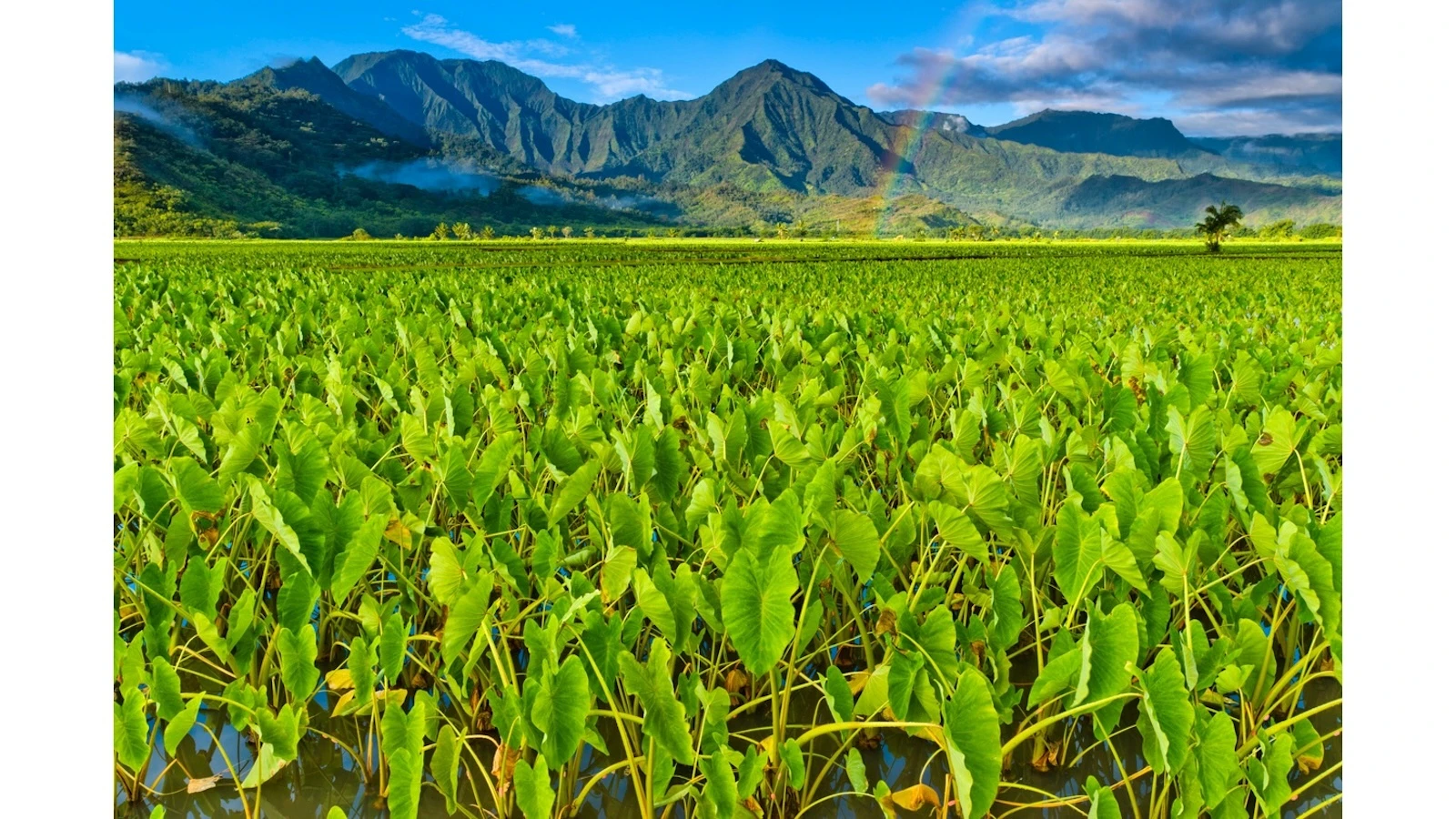
What the islands could grow shaped how they were ruled. Kauaʻi and Oʻahu have the valleys and year-round streams for irrigated terraces, and a steady surplus kept their kingdoms settled. Maui and Hawaiʻi leaned on dryland fields instead, worked at the mercy of the rain. So those islands bred the restless, conquering kings, in part because a kingdom that cannot grow more food can still take from its neighbor.
When Cook’s ships returned in 1779, the kings of Maui and Hawaiʻi were at war. The unification that followed was finished, in the end, with European muskets.
We can look back on that world and see a garden, not a barren field. We can afford to, because we live on the comfortable side of the divide. The 85 to 90 percent of our food that arrives by sea is only the surface dependence. Beneath it run federal aid, state transfers, tourist dollars, and the quiet giving of people who made their fortunes far from any field.
The conversation on Kauaʻi runs on that last kind of money. Civil Beat’s “Hawaiʻi Grown” reporting is funded in part by the Ulupono Fund, established by Pierre Omidyar. He also founded Civil Beat and has long been its principal backer.
Omidyar made his money at eBay, a company whose apocryphal founding legend has him building a marketplace so his fiancée could trade her collectible PEZ dispensers. The dream of growing our own dinner is underwritten, in part, by the global trade in plastic candy toys.
The same sleight of hand appears wherever self-sufficiency is preached. The island that means to free itself from foreign energy will do it on solar panels from China. China makes more than four-fifths of the world’s photovoltaic panels. Kauaʻi will store that energy in batteries from the same China. Autarky, it turns out, is brought to you by globalization.
Nor does the fantasy belong to one party. The degrowth left and the bunker-stocking right find in it the same flattering promise — that a community, or a household, or a single man, might arrange life to need no one else.
There are good reasons to grow more food here. It tastes better when it hasn’t crossed an ocean. Open land is worth keeping in cultivation rather than left to become a fire hazard. Farming is honest work, and a shelf of local sweet potatoes is a fine thing to have when a shipping lane snarls.
Some of what the candidates propose is sensible. Rewriting zoning so a farmer can build a house on the land he works removes an obstacle the county itself put up. Whether a thin harvest calls for a brand-new county department is another matter. The instinct to meet every shortfall by adding to government is its own quiet tell. The error is not in wanting more gardens. It is in the small, smuggled step from growing more to growing all — from a sensible hedge to a daydream of sovereignty.
The daydream is least affordable now. The farming that fed old Hawaiʻi was punishing, and it rested on a population that was large and still climbing. Ours is shrinking and growing old. The state lost residents again last year, as it has for most of the decade. Our working-age people are leaving for cheaper lives on the Mainland faster than children arrive to replace them.
Kauaʻi has held its overall numbers, but this masks a hollowing out. At that same forum, Councilmember Felicia Cowden warned that the island is pushing its own people out and will soon have no workforce left. A place cannot wall itself off from the world while its own young are filing toward the airport.
Suppose the island managed it — every acre planted, every farmer housed, the container ship turned away at the harbor. The farmer would still rise each morning and search the sky. He cannot make it rain, or call up the sun. He cannot hold off the storm that flattens a field the week before harvest, or the blight that takes a crop overnight. He clears the ground and sets the seed and pulls the weeds, and then he waits on weather he cannot command. Rain comes as a gift or it does not come at all.
By all means, grow the gardens and let the land bring forth food. But whether food comes from the farmer’s market or the Matson container, we should bring it to the table with gratitude that God has fed us again. We ought, then, to let go of the oldest and proudest illusion there is: that the aim of man is to reach the point where he depends only on himself.
Author Sterling Higa can be reached at hello@sterlinghiga.com.
For the latest news of Hawai‘i, sign up here for our free Daily Edition newsletter.