The National Oceanic and Atmospheric Administration is forecasting an above-normal 2026 hurricane season in the Central Pacific, with up to 13 tropical cyclones expected this year. For Hawaiʻi residents, that's a reminder to stock emergency supplies, check flashlights, review family preparedness plans — and perhaps think about something many of us overlook.
Our trees.
Most homeowners understand the importance of maintaining roofs, clearing gutters, and securing outdoor furniture before a storm. We recognize these as critical parts of our property's infrastructure. Yet few of us think about the trees that tower above our homes, streets, schools and parks.
We should.
Trees are infrastructure, too.
They cool our neighborhoods, reduce energy costs, absorb stormwater, improve air quality, and make our communities healthier and more beautiful. But like any infrastructure, trees require maintenance. A neglected tree has a higher risk of failing during severe weather, while a healthy, properly maintained tree is far more likely to withstand high winds and continue providing benefits long after the storm has passed.
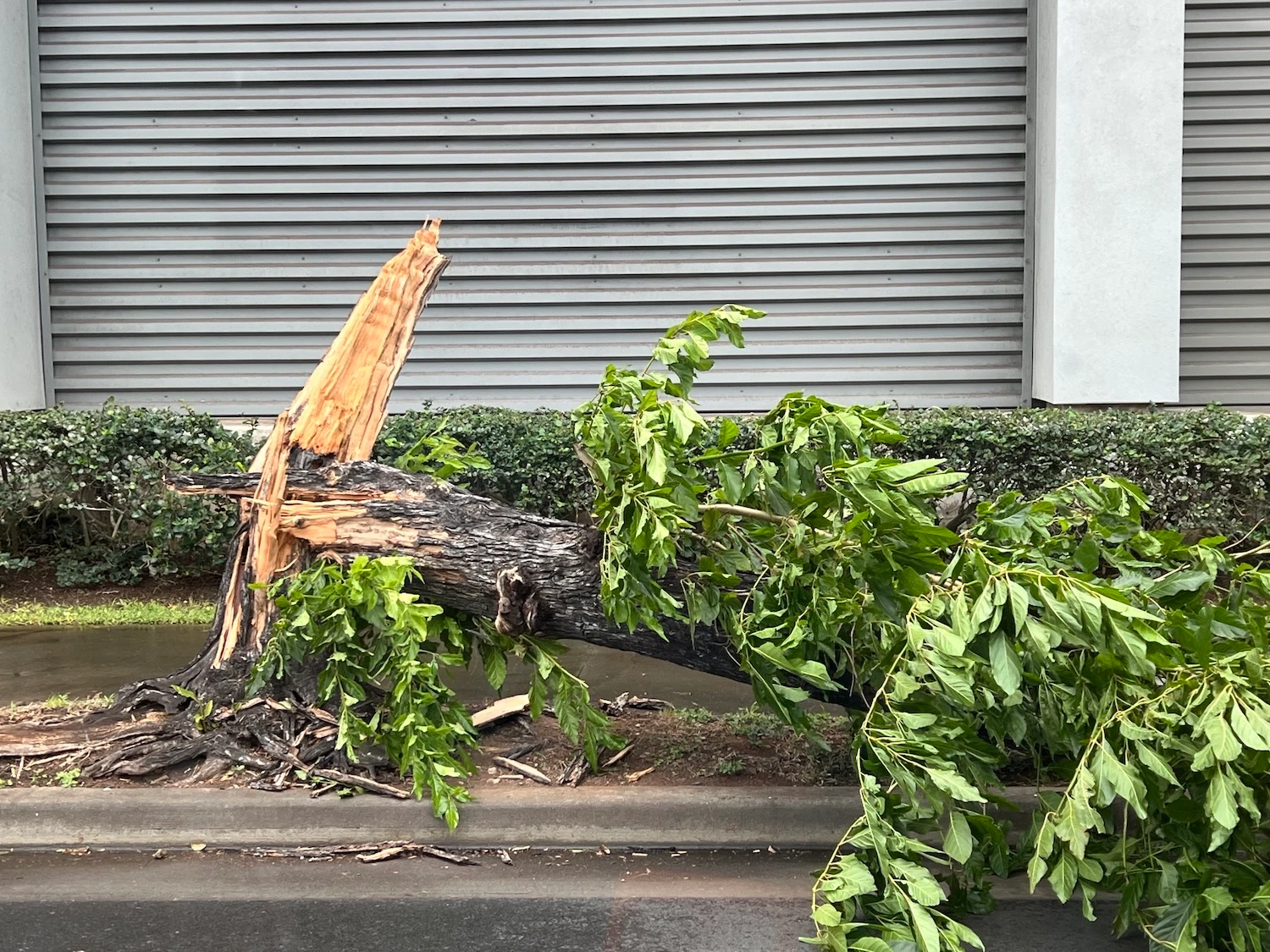
Hawaiʻi residents have seen firsthand how destructive extreme weather can be.
The good news is that there are practical steps homeowners can take now to reduce risk.
No tree is "hurricane-proof," but properly maintained trees are generally more resilient to strong winds. Strategic pruning can reduce wind resistance and lessen the likelihood of branch failure during a storm. The key word is properly.
Unfortunately, some common practices actually make trees more dangerous. Topping a tree by removing most of its canopy can trigger rapid growth of new branches that are weakly attached. "Lion's tailing" branches by stripping foliage from the interior and leaving foliage only at the tips amplifies wind loading on branches. Both of these practices increase the likelihood of failure and are prohibited under nationally recognized arboriculture standards. They leave trees structurally weaker than before.
Instead, qualified arborists use pruning techniques that preserve a tree's natural form while reducing risk. Dead, dying, or damaged branches should also be removed as part of a regular maintenance cycle.
One of the most important things homeowners can do is act early.
Tree care is not something to put off until a hurricane watch is issued. Reputable tree care companies often become overbooked when a storm is approaching, and proper pruning should never be rushed. Hurricane preparedness for trees is most effective when done well before a storm appears on the horizon.
When hiring a tree care professional, verify that the contractor is properly licensed and insured. Tree care contractors in Hawai‘i are required by State regulations to hold a specialty license. You can check a contractor’s license status online at Department of Commerce & Consumer Affairs’ Professional & Vocational Licensing search website, here. If the company is licensed, click on its name and then License Class to verify they have a C-27 or C-27B license.
Homeowners should also ask whether an ISA Certified Arborist is involved in the work. Check credentials here by using the Find an ISA-Credentialed Arborist tool.
Hiring an unlicensed, often uninsured, contractor may save money upfront, but it can become an expensive mistake if property is damaged or a worker is injured. And only prune trees that you own unless your neighbors’ tree has grown over the property line into your yard. In that case, while you can prune it back to the property line, it’s best to speak with the tree’s owner first. Your neighbors may prefer to prune it themselves. In addition, the tree fronting your house along the street typically belongs to the county where you live, so you could be breaking the law if you prune it.
As hurricane season unfolds, it's worth remembering that preparing for storms isn't only about what we store in our closets or garages. It's also about caring for the living infrastructure that surrounds us.
A resilient Hawaiʻi depends on staying healthy and prepared — and that includes our urban forest. Well-maintained trees help neighborhoods recover faster, remain cooler, manage stormwater more effectively, and continue providing benefits for decades to come.
This hurricane season, add one more item to your preparedness checklist: look up. Your trees may be some of the most valuable infrastructure on your property.