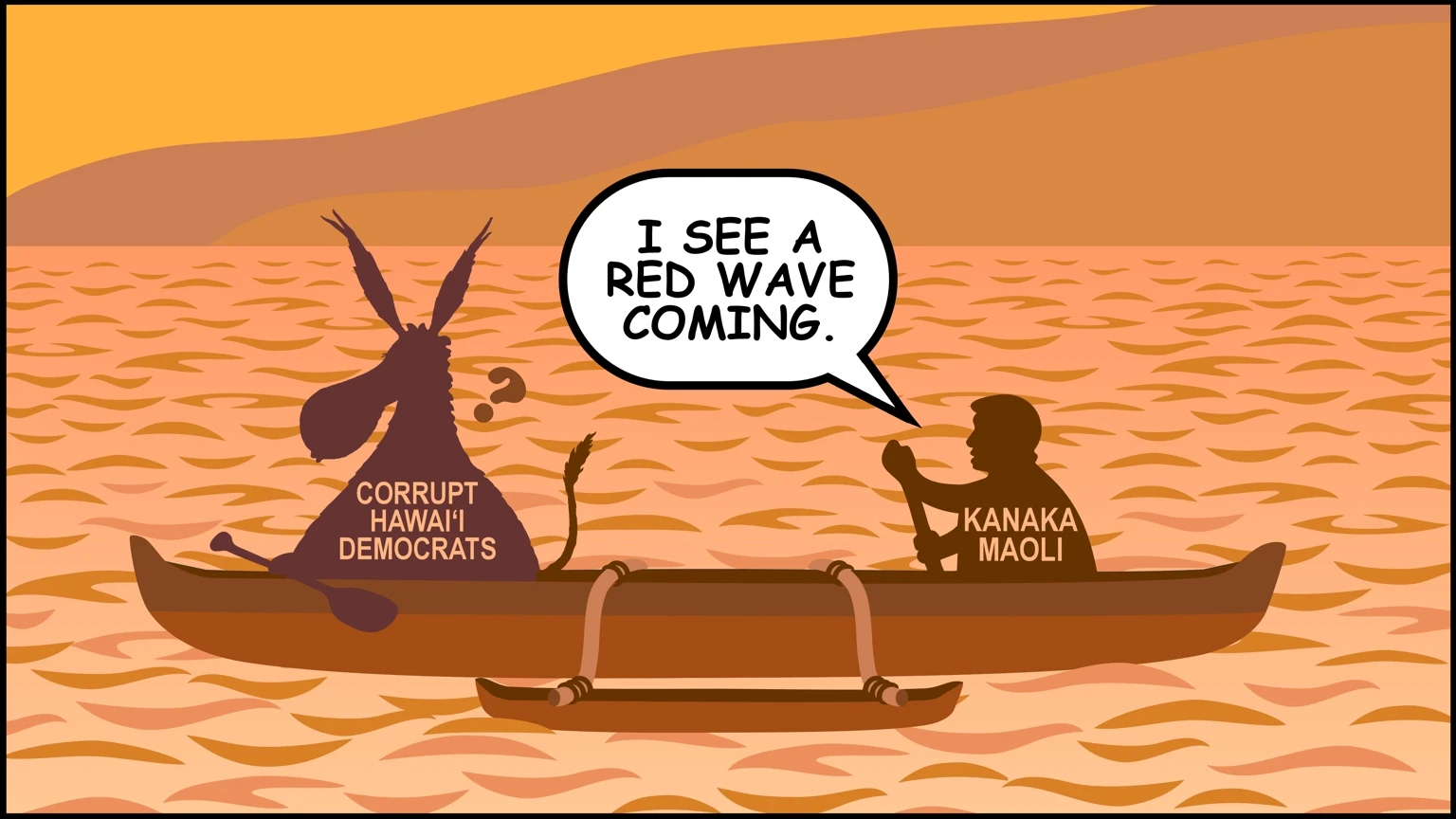
On Monday morning, the trustees of the Office of Hawaiian Affairs spent more than an hour accusing one another of retaliation, secrecy, and filing court documents nobody approved.
One of the agency’s lawyers said a court filing by four dissenting trustees had hurt his ability to defend the agency. One of those trustees asked, twice, that the four’s own lawyer be heard as well, but the chair said no. The chair asked, more than once, who authorized the filing. The answers satisfied no one.
If you read the coverage, you learned a great deal. There was a budget fight last June between the board’s chair and its chief executive. The chief executive was placed on leave in September. By November she was suing the agency and its trustees, claiming her removal was retaliation.
A judge let four trustees hire their own lawyer in April. A unanimous board voted in May to seek mediation. This was upended weeks later when the dissenting trustees filed a court document siding largely with the woman suing them. Civil Beat’s careful reporting runs about 1,800 words.
Now try to answer one simple question: why did those four trustees hire their own lawyer? The news offers a paraphrase — they felt their views were not being represented. Represented by whom? Against what risk? Were they defending themselves, or the ousted executive, or some idea of what the agency owes its beneficiaries?
The article cannot say. Not because the reporter failed, but because 1,800 words cannot hold one year of drama, seven months of litigation, nine trustees, and a stack of dueling filings.
The four trustees’ account is available in writing. The disputed filing runs 42 pages and cost $4.31 to download from the state courts. The record is public, yet almost nobody will read it — not from laziness, but because a person who paid that toll on every public dispute would have time for nothing else. So everything most of us will ever know about this issue must pass through a narrow opening.
This is how we meet nearly every public matter. We come to Red Hill this way, and to the rail, and to the zoning fight down the road. We arrive in chapter twelve of a novel that began before we started paying attention, and someone hands us a synopsis — written, usually, by a person who also arrived late.
The first to plead his case seems right, the proverb says, until another comes and examines him. A news article is somebody’s opening statement, or several opening statements stitched together. The cross-examination comes later, if it comes at all. It comes in follow-up stories, in depositions, and in records requests nobody reads. The news article is not lying to you. It is simply the latest voice in an ongoing proceeding.
The tempting response is to fire the narrator. Many conservatives have concluded that the mainstream press cannot be trusted, so they switched to friendlier news outlets, taking the new synopsis on the same faith they once gave the old one. But that is not skepticism. The man who trades one narrator for another has not become harder to fool. His progressive neighbor, who treats a single outlet’s account as the complete record, is making the same mistake. Different congregations, same habit.
Consider the people we might expect to be immune. New members of major public boards routinely inherit contested case files that run hundreds of pages, covering litigation that began years before their terms. They read every document, consult with counsel, and then the law obliges them to decide. But they are always entering halfway through.
And yet we still have to judge. The voter votes for OHA trustees this fall whether or not he has read the court filings. The juror must return a verdict. The board member makes a decision with the case file still heavy in her lap. “It’s complicated” is not a verdict any court will accept, and the ballot has no box for it.
So the question is not whether to judge with partial knowledge — we have to. The question is how to judge well.
Hear the other side before you settle anything, even when the first side sounded complete. Hear at least two witnesses. Keep what is alleged and what is proven in separate drawers, and check which drawer you are pulling from before you repeat the news at dinner. Where the record lets you wait, wait.
These are old disciplines, older than newspapers. Courts adopted them for a humbling reason: our law assumes that the judge cannot see everything. Our whole system of trials is built on that admission. No single narrator, however honest, tells the whole story.
There is one Judge who has read every file to the last page, who sat in every executive session, and who requires no cross-examination. His position is filled, and none of us should aspire to it. Our verdicts are drafts at best. Knowing this is not a reason to stop judging. It is the only way to do it well.
Author Sterling Higa can be reached at hello@sterlinghiga.com.
For the latest news of Hawai‘i, sign up here for our free Daily Edition newsletter.