
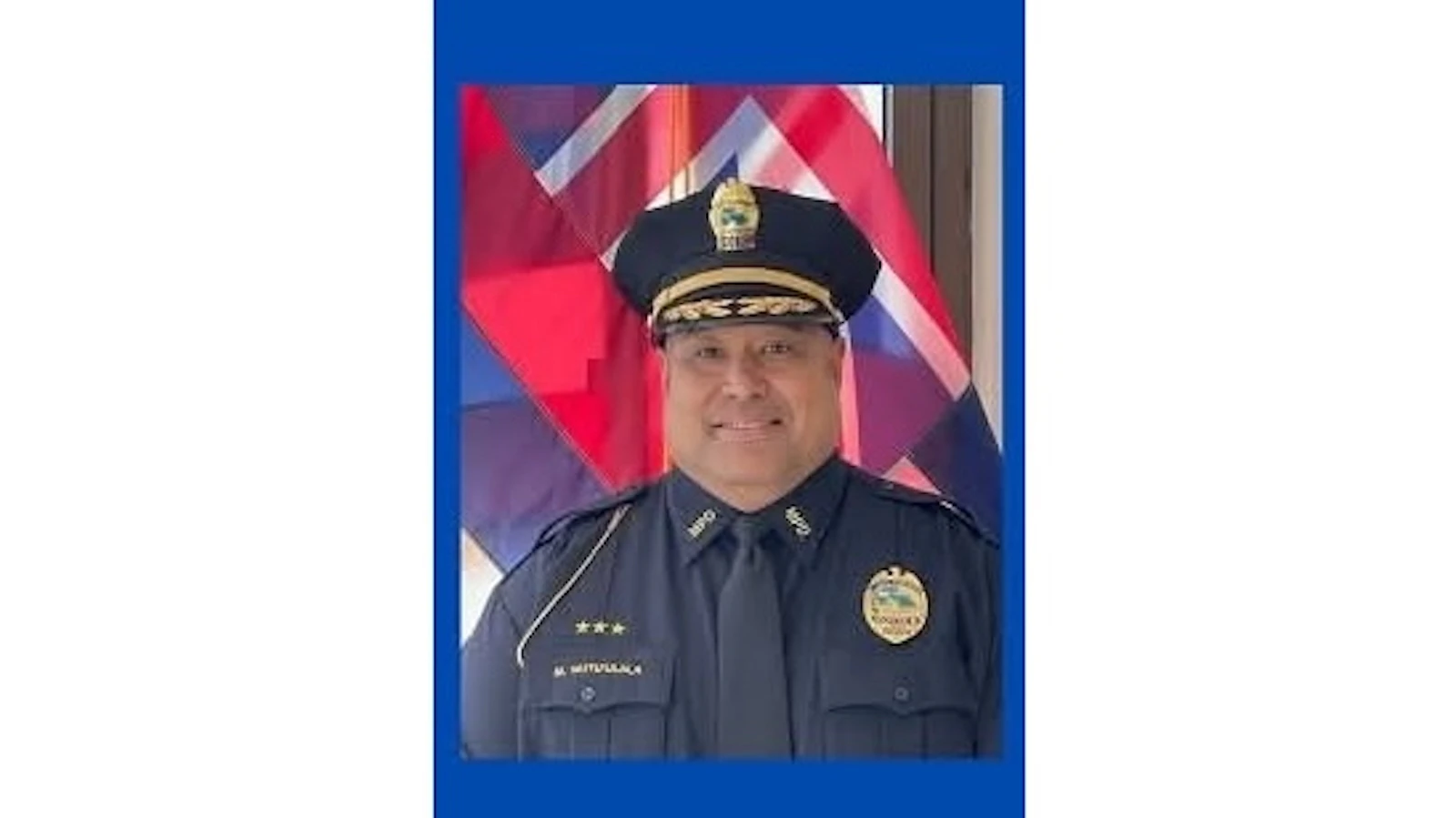
The criminal complaint says the lieutenant was careful. When money changed hands, he allegedly insisted on Instagram messages and FaceTime calls on burner phones, apps he believed the police could not easily reach.
Michael Vaituʻulala served nearly 18 years with the Maui Police Department. According to the complaint filed in federal court, he took cash to keep officers away from illegal cockfights. One organizer paid him a cut of the proceeds, and the low end was about $3,000 an event. On one trip to Las Vegas with an organizer, he allegedly gambled more than $30,000 at blackjack. Vaituʻulala is also accused of tipping off drug dealers about pending investigations, alerting them to wiretaps and warrants.
He is charged, not convicted, and the courts will sort out the truth. But one detail deserves a long look. Vaituʻulala led the Maui Police Department’s Criminal Intelligence Unit. The man assigned to watch organized crime on Maui is accused of working for it.
If the watchers are bought off, who watches them? If the allegations hold, this went on for years under the department’s own roof. The case that finally landed is federal — the FBI and federal prosecutors are bringing it, not the Maui Prosecutor, and not the state Attorney General.
There is a reason, and it is not an insult to Maui. Wire fraud is a federal crime, and electronic messages cross state borders. Drug trafficking is a federal crime, and the cooperating witnesses in this case were likely bargaining down their own federal sentences. But this is not the full story.
Corruption is rarely rooted out at its own level. The local police live next door to the people they would have to investigate. They are related to them, or they owe them, or they are afraid of them. So counties answer to the state, and the state answers to the federal government. Each rung of the ladder is watched by the rung above. When the feds bring a case, they bring wiretap recordings, witnesses who flipped, and private messages the defendant believed were beyond reach. They tend to win.
Paul wrote that the ruler “does not bear the sword in vain.” The sword in this case looks like subpoenas and postal inspectors, which is less dramatic than it sounds and more effective than it looks.
A man who can be paid to sell his badge is not restrained by conscience. He is restrained by the knowledge that somewhere above him sits an authority he cannot buy, with resources he cannot match. Criminals should feel fear.
We have been reminded before what happens when criminals are fearless. In 1970, state Senator Larry Kuriyama was shot dead in his ʻAiea carport after coming home from an event.
Ronnie Ching, the mob hitman who admitted being a lookout for the killing, later claimed involvement in some 20 killings. One of these was the son of Charles Marsland — the man Honolulu then elected prosecutor in 1980. Marsland went to war against the syndicates.
Which brings me to Hawaiian sovereignty. The activists hold a premise I take seriously: Distant power is dangerous, and sometimes abused. History gives them plenty of material. But I have never heard one of them answer a simple question. In an independent Hawaiʻi, who stands on the rung above?
When local law enforcement is in bed with organized crime, who will investigate and prosecute? When state judges are taking bribes, who will take them to court?
Hawaiʻi is host not only to tourists, but also to human traffickers, drug traffickers, and extortion rings. Syndicates run game rooms and hold cockfights. Criminals in these organizations will bribe or murder the ones who stand in their way.
A nation of 1.4 million people would face foreign syndicates with more money and more manpower than the government itself. Our prosecutors are a thin bench. County law enforcement is already stretched. Small island nations across the Caribbean and the Pacific have run this experiment. The syndicates usually win.
Federal agencies harbor corruption of their own. The same logic that sends the FBI to Maui demands that Congress, the courts, and the inspectors general watch those watchers too. No agency is above the law.
Human justice will never be perfect. It must be pursued anyway.
The state cannot save a soul, and it has not been asked to. Its assignment is narrower: to be a terror to bad conduct.
In Hawaiʻi, the feds have lately been doing that work. They convicted a Honolulu man of trafficking three adults and one minor. They convicted a West Oʻahu man who bought over 100 pounds of methamphetamine. They convicted a businessman and two lawyers who looted a Hawaiʻi County affordable housing program through bribery. Now they are taking on alleged corruption in local law enforcement.
The criminal complaint describes a man who believed some conversations were beyond reach. Many criminals make the same mistake, thinking that they will never be caught. On Earth, this may be so. But there is a judge who sees all, and His verdicts are perfect.
Author Sterling Higa can be reached at hello@sterlinghiga.com.
For the latest news of Hawai‘i, sign up here for our free Daily Edition newsletter.


