
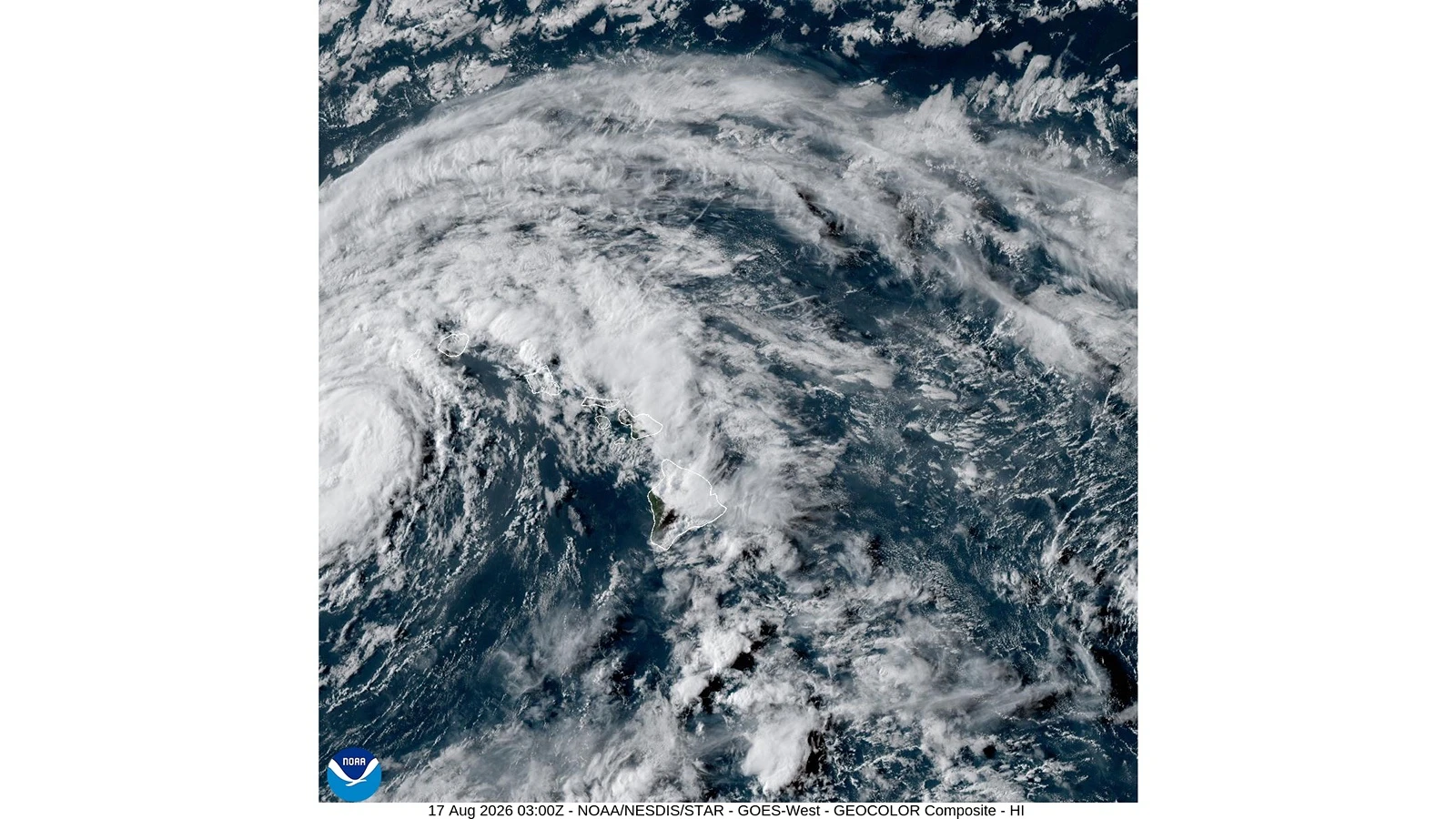
Lala showed us our vulnerability. Hundreds of thousands lost power. No firm damage numbers are in yet, but they will be large. No total can capture what this storm means for a family that has lost their home or a loved one. Though not deadly on the scale of the Lahaina wildfires, this disaster is no small thing.
Traffic signals went out across the islands. Honolulu’s Board of Water Supply reported loss of pressure in the mountain ridges of metro Honolulu. And two sewage spills resulted from a backup power failure at Ala Moana Wastewater Pump Station.
And yet Lala was not a direct hit. Its worst devastation fell on the rural southern tip of the Big Island, which is sparsely populated. Even there it broke rainfall records, unleashing dangerous floodwaters, with wind and rain combining to cause tremendous damage.
Hurricanes are a fact of life in these Islands, and more will come. Lala was barely a Category 1, and its worst impacts landed where few people live.
What happens when a stronger storm hits urban Honolulu? What happens if it cripples the airport and the port? The tourism plant that pays so many of our bills would go dark along with everything else, and the military and construction sectors would not be far behind.
Lahaina gives us a preview. Three years after the fires, tourism there has yet to recover, and the commercial core has not been rebuilt to any significant degree.
Some of this delay is due to community resistance, nurtured by a cadre of professional activists who would like to tear down capitalism writ large. Some stems from government inefficiency and corruption. But some of it is a plain economic judgment. Why invest in commercial property in an area prone to wildfire?
Widen the lens and the question gets uncomfortable: Why invest in Hawaiʻi at all, exposed as we are?
Japan faces the same exposure. It is battered by earthquakes and typhoons, and like us it is aging fast, which has slowed its growth. But Japan is a technology and manufacturing power with some of the best disaster response in the world. And it remains a high-trust society, one that bands together in crisis rather than dividing.
Recoveries from such disasters run K-shaped. The affluent, those with somewhere else to live, those whose work survives a blackout — they do fine. The super wealthy don’t weather storms; they flee them, decamping by private jet to their other villas. Meanwhile those whose homes were destroyed, whose wages stop when the power does, suffer.
The GoFundMes and nonprofit funds and federal assistance will launch, as they always do, and they will go only so far. In Lahaina the assistance programs are already winding down, and the disaster is already being forgotten.
“The prudent sees danger and hides himself, but the simple go on and suffer for it” (Proverbs 27:12). Households will take stock now: keep more food and water in reserve, perhaps add solar panels or battery backup to keep a refrigerator running. But those adaptations are not available to all families. The divide begins before the storm comes.
There are broader economic arrangements to be made. The state must wrestle with how to reduce the impact of natural disasters on its key industries: tourism, the military, and construction. Meanwhile, businesses and investors will evaluate risk, and insurers will adjust their models and pricing. All this is done quietly, with the effects hard to measure. Where on the ledger does a canceled investment show up?
And there are deep political questions. Since the Lahaina wildfires, Hawaiian Electric has appeared flat-footed. It is paying for decades of deferred investment in the grid. Major transmission lines cross mountainous terrain, and they failed again in this storm. These lines are hard to fix on a good day, near impossible mid-storm. Even neighborhood distribution has failed. For decades, direct-buried insulated cables were laid in the ground without any protective layer. These lines drown whenever flooding is severe.
HECO’s finances leave little room to harden the grid before the next storm. It sought legislation capping its wildfire liability and letting it borrow against ratepayers — what critics call a bailout. And HECO’s holding company sold most of its stake in American Savings Bank to help pay its share of the $4 billion wildfire settlement. If a major hurricane struck urban Honolulu and destroyed critical infrastructure, could HECO rebuild at all?
Lala spared Honolulu. Policymakers should take the reprieve for what it is and prepare for the day that the big one comes.
Author Sterling Higa can be reached at hello@sterlinghiga.com.
For the latest news of Hawai‘i, sign up here for our free Daily Edition newsletter.


