
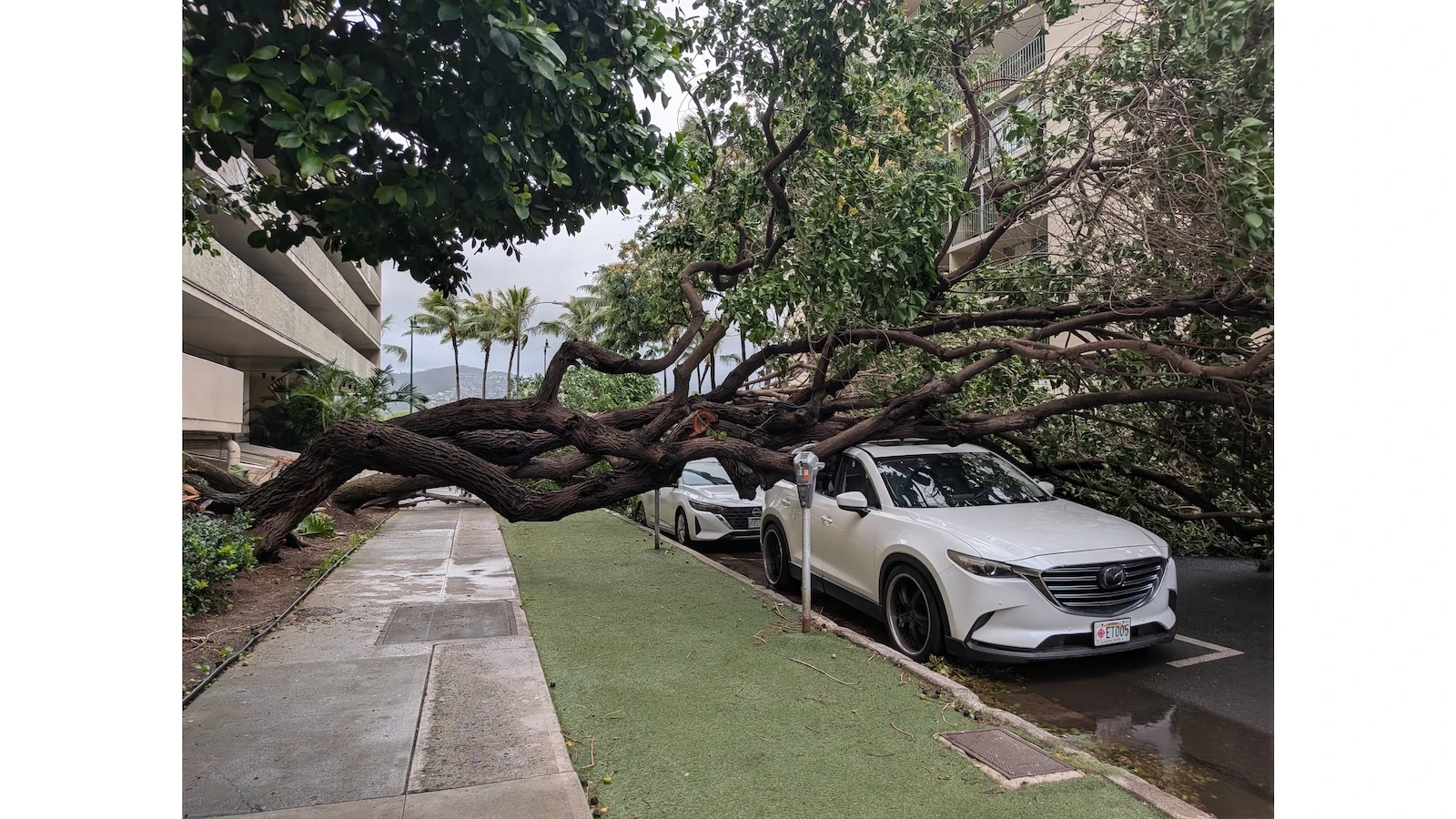
Hawai‘i residents with homes damaged during Hurricane Lala are encouraged to file insurance claims as soon as possible.
While some storm damage may be covered by homeowner’s insurance, or renters’ insurance, or dedicated hurricane coverage, Sam Thomsen, investigations branch director for the state Department of Commerce and Consumer Affairs, said Tuesday that residents should simply file a claim with their insurer now.
“A lot of people hesitate to [file claims],” Thomsen said. “It’s your property, it’s your policy, it’s up to you if you use it or not, but this is exactly the type of event that insurance is for.”
Thomsen said the timeline of the storm’s impact on the state might have implications for whether damage is covered. While Lala struck Hawai‘i island as a hurricane — with the National Weather Service issuing an official Hurricane Warning for the island on Friday — it struck the remaining islands as a tropical storm.
For Big Island residents, therefore, storm damage could be covered by dedicated hurricane insurance policies or clauses. On other islands, damage may instead be included in homeowners’ insurance policies.
Thomsen said there may be exceptions, and some storm policies might cover “named storms” instead of hurricanes specifically. Regardless, he said people should file claims and let their insurer tell them what is covered under which policy.
“If you have damage, make the claim,” Thomsen said. “The policy itself is a contract, so the insurance company has to explain to you … how it’s being paid, or if they can’t pay it here, this is why.”
While Thomsen acknowledged that some people may not have dedicated hurricane insurance, he said that, on the Big Island, people with mortgages will most likely have coverage.
But, Thomsen added, residents without coverage may still avail themselves of the Hawai‘i Property Insurance Association, the state’s insurer of last resort. However, the cost for that coverage will likely be greater than that for insurance purchased on the open market.
Renters, meanwhile, might also be able to cover damage to personal property through renters’ insurance policies, if they have them. And people with comprehensive vehicle insurance policies should be covered for storm-caused damage or destruction of their vehicles.
Despite all of this, most standard homeowner, renter or condo owner insurance policies do not cover flood insurance, which is usually its own standalone policy.
Residents making claims should document all damage with clear photos or videos, keep records of all damage-related expenses, and confirm with their insurers whether there are deadlines for filing and submitting documentation. They should also take reasonable steps to prevent further damage — placing a tarp over a leaking roof, for example — but should hold off on permanent repairs until the insurer has OK'd them.
On the Big Island, residents still unsure about their coverage can attend a public assistance center held by hurricane insurer Zephyr Insurance at 75-167 Hualālai Road, Suite 101, in Kailua-Kona. Representatives from Zephyr will be on hand from 9 a.m. to 4:30 p.m. Wednesday and Thursday to help policyholders with filing claims, reporting damage and more.
Policyholders are recommended to reserve a time slot, but walk-ins will still be permitted, and assisted on a first come, first served basis. Additional events on Hawai‘i Island will be announced in the future.
For the latest news of Hawai‘i, sign up here for our free Daily Edition newsletter.


