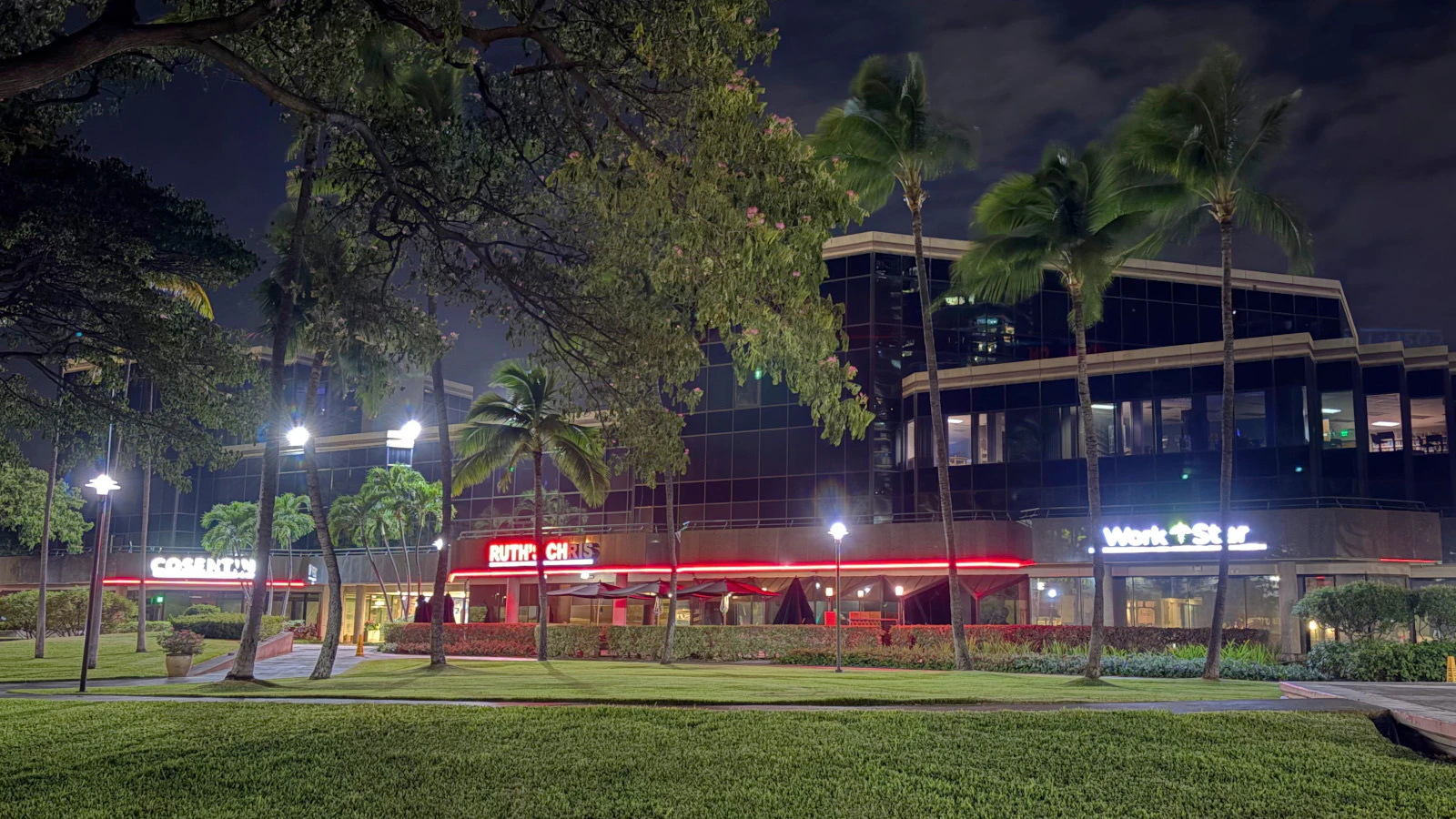
When American missionaries arrived in Hawai‘i in 1819, they were given a parcel of land at Kawaiahaʻo, near the village of Honolulu, where they could live and carry out their work. They initially lived in hale pili (grass houses) and built a small thatched church on the property. That humble structure established Kawaiahaʻo as the oldest Christian church on Oʻahu.
Hawaiians called the early church Ka Hale Pule (the House of Prayer) and Ka Hale Halawai (The Meeting House). Because Hawaiian royalty attended services there, it also became known as the Kingʻs Chapel, but most non-Native residents simply called it the Stone Church or the Native Church.
For years, services were held outdoors, and the missionaries went through four iterations of thatched buildings they used as their church. It was during this period that the missionaries introduced the Western practice of graveyards, defined by boundaries, tombs, and headstones. Before this, Hawaiians did not bury their loved ones in designated spaces. Graves could be found along sand dunes, in and around heiau, or even near their homes.
In 1837, work began on gathering materials for a permanent church. Massive blocks of coral were cut from the nearby reef and transported to the site, eventually becoming the Kawaiahaʻo Church we know today.
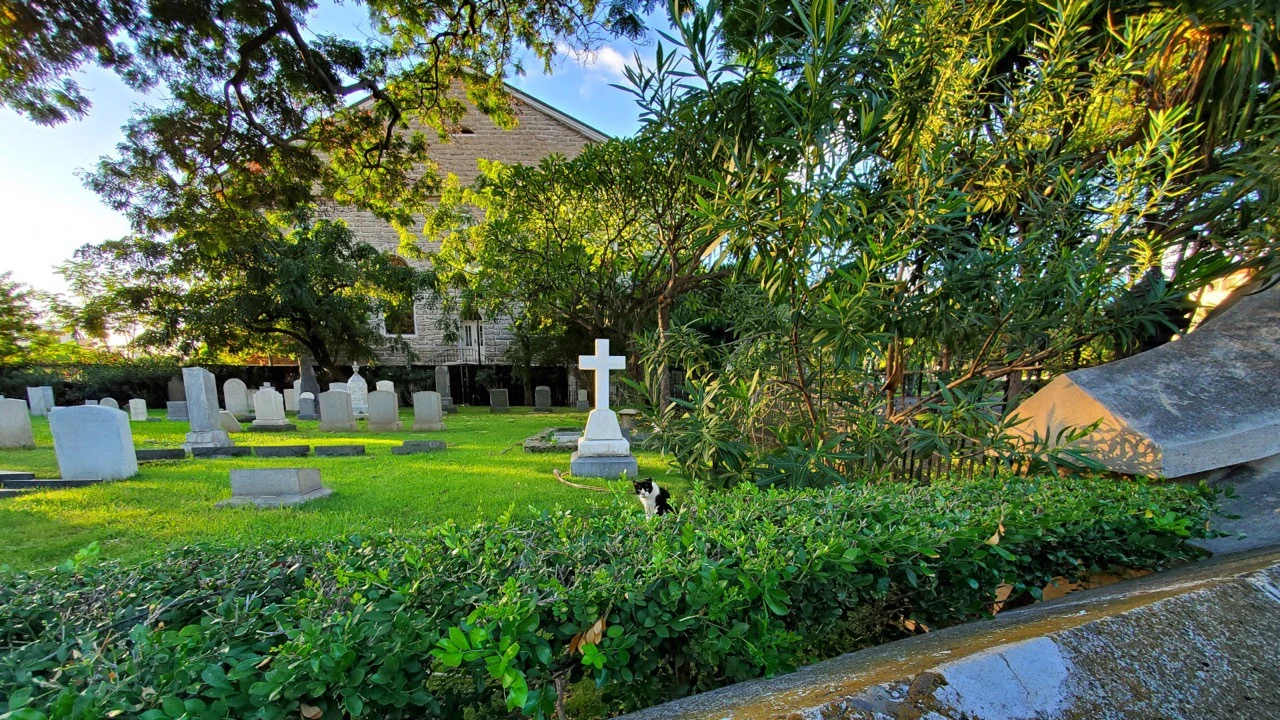
The cemetery surrounding the church is one of the oldest Western-style burial grounds in Hawaiʻi. While there are 296 marked graves, an estimated 200 unmarked burial sites remain, with as many as 600 individuals identified within the cemetery. The oldest burial dates back to 1834, belonging to an unknown person whose name has since been lost to history.
Despite Kawaiaha‘o Church being included on the original National Register of Historic Places, its cemetery has not received the same protection. In 2006, plans were discussed to demolish an old structure and construct a wedding reception area over part of the churchyard.
After years of legal and cultural conflict, the church has permanently abandoned the controversial building project and finalized a burial treatment plan, approved by the Oʻahu Island Burial Council, to reinter the remains near their original resting place.
Years ago, my cousin had his wedding reception at the old Likelike Hall on the grounds of Kawaiahaʻo Church. At the back of the hall was the kitchen with a door that led out to the cemetery.
The reception was well attended, with nearly two hundred friends and family members gathered to celebrate the young couple. The bride’s wedding dance for her husband was exquisite. Everyone was captivated. As more speeches and dances carried on through the evening, the joy and happiness of the crowd took on a life of its own.
Suddenly, a commotion rose from the kitchen, and the noise began to overwhelm the celebration. Curious partygoers gathered in the small space to see Shaun, a mountain of a man, on his knees crying hysterically.
Once his mother calmed him down, Shaun said that as he was preparing to send out more food, he looked out the door and saw a haole woman in a white dress sitting on top of the tomb right outside the door. Her head was down, and she was weeping into her hands.
Shaun put the food on the counter and asked the woman if she was okay.
“My child,” the woman wept, “He died of the dropsy.”
Shaun said her weeping was so bitter that it moved him to the point of chicken skin and pity. He told his mother he placed his hands on her shoulders to gently help her sit up and get a better look at her face. As she straightened and looked up at Shaun, her face was not flesh, but smoke slowly vanishing into thin air. Suddenly, the rest of the woman’s body followed, dissipating into nothing.
Word spread quickly, and people began leaving the reception, especially those who had parked in the cemetery lanes. Night was falling, and perhaps their paranoia made the wedding guests a bit panicked about spirits lurking in the graveyard.
A few months later, the security firm that patrolled the church grounds called my home at 3 a.m. I worked at the immersion preschool on the grounds of Kawaiaha‘o, and because I lived nearest the church, I was a security contact.
Security said they heard furniture moving in the classroom, then a woman’s voice. When I arrived, everything was in order. All the chairs were stacked on top of the tables so the janitors could sweep and mop. The desk hadn’t been moved, and the toys were all put away. Nothing seemed out of place. I called the security firm back to let them know everything was in order, turned the alarm back on, and locked the door from the outside.
That’s when I saw her.
The haole woman dressed in white, standing next to the door, looking at me.
“My child died of dropsy,” she said.
Then her face became smoke. I didn’t wait to see what would happen next. I jumped over the fence, not even bothering to fiddle with the gate. I got in my car and sped off. The whole thing took a few seconds, but I felt like I was moving in slow motion. I couldn’t get out of there fast enough.
I’m sure I screamed out of fear. I can’t really remember. Either way, I never answered a late-night call from the security firm after that.
The authors can be reached at hawaii.mysteries@gmail.com
For the latest news of Hawai‘i, sign up here for our free Daily Edition newsletter.