
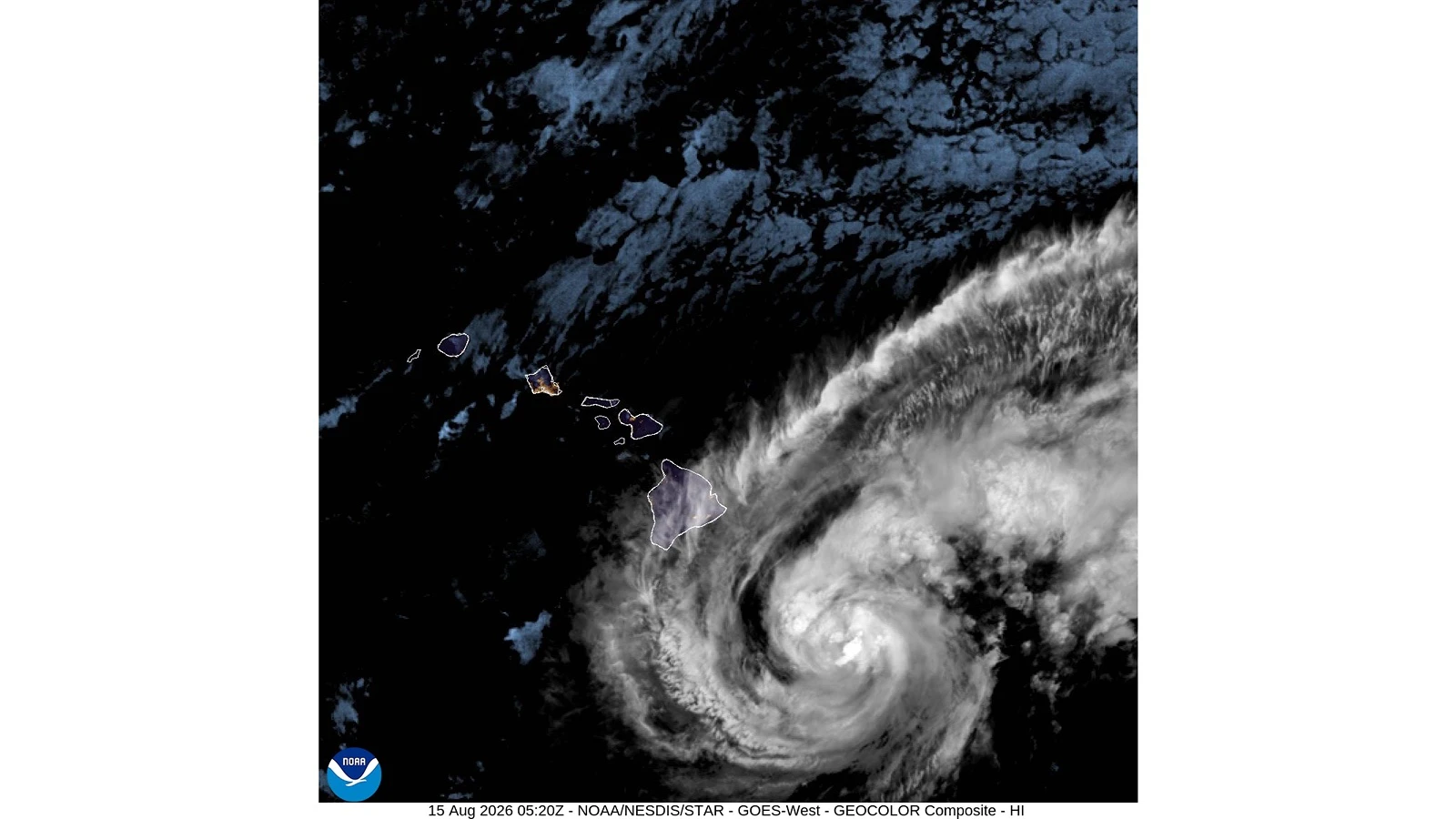
Lala has left the building.
Yes, her impact was profound.
Friends and families on the Big Island bore the brunt while the rest of the island chain took its lumps as well.
The anticipation of yet another major weather event may have given some fatigue, especially since recovery from the two recent Kona Lows was somewhat still underway. Honestly, fatigue wasn't the only effect. I would submit that fear was the dominant emotion and partly fear of the unknown.
I try to be as empathetic as possible with those who are so negatively impacted. My family and I live in a secured high rise with diesel generator backup to mitigate power loss; we live high enough above ground where flooding is not a major threat, and we've been blessed in literally weathering every storm for so many years. These statements are not intended to gloat or brag but to share perspective. We have not suffered as others have suffered, yet we're saddened for those who have and we are prayerful for a speedy recovery. It's truly heartbreaking.
It's important that in times of trouble that the collective objective is to learn and not to repeat. If that's an acceptable and reasonable policy goal, then what happened?
Why is our infrastructure so fragile?
It's not like inclement to hurricane force weather is breaking news.
Since 1949 when storm tracking officially began, Hawaii has counted 69 tropical cyclone encounters. Yes, some are counted where a minimum amount of impact was made, but it also includes Hurricane Nina (1957), Dot (1959), Iwi (1982), Iniki (1992) and now you can count Lala (2026). Interestingly, there are documented reports of cyclonic activity in the Hawai‘i chain dating back to September 1843 and more so on August 9, 1871.
Again, this is not breaking news that we are susceptible to damaging storms. If we have foreknowledge that we are exposed to brutal elements, then what have we done to prepare ourselves?
I mean we've had a 183-year heads up.
OK, I can hear it already.
Hamada, you simply don't understand. Since when did you become a civil engineer? Do you realize how much money and how much impact to the community it would be to retrofit, replace or even repair vulnerable spaces? If it breaks, we fix it.
That's one point of view.
Here's another.
In 1959, the first year of statehood, the total of all taxes paid in Hawai‘i was $314 million. That's everything; federal, state, county taxes, gas taxes, all of it. By 1969, annual total was $922 million.
In today's dollars, that's $3.6 billion and $8.4 billion, respectively, just in those two bookend years of our first decade as a state.
The issue is prioritization.
During that decade we had the opportunity to declare that, along with public education and health and human services (the two largest budget expenditures of the state), infrastructure preparedness would have received some love.
The widely accepted notion is that the essential role of government is to defend her people and create a safe environment for all.
What is the essential life blood of a free society.
Infrastructure.
It's electricity. It's water. It's transportation. It's waste treatment and removal.
The same afflictions of the past haunt us today.
Post-Lala we have tens of thousands still without power. You're rendered virtually into seclusion. You cannot communicate, you cannot preserve your expensive food, you cannot have lights, or fans, or air conditioning in your home. No laundry, no dishes, no bathing or other water-centric needs. It takes a toll on your mental health. It exposes families to inordinate amounts to stress and oftentimes children are affected. Roads may be impassible, you may live in a "one-way in, one-way out" community or public and closures have an impact on your lives, too. And you pray that you can flush the toilet because the health implications are grave.
The essential role of government is to keep her people safe.
Over the past several decades have the previous generations of leadership fulfilled this directive?
I maintain that Hawai‘i does not have a revenue problem. Never has.
But it's always had a spending and prioritization problem.
Government stresses that we must be prepared in times of great challenges.
I agree.
But that siren call for preparedness extends to providing excellent infrastructure so we can live and survive during those challenging times.
If over the past century we invested in the best power generation and distribution, road construction and maintanence, quality upgraded water mains and sewers then perhaps we would not have to contend with such devastation. Rather our mutual preparedness would be complimentary in mitigating the suffering of so many, time after time.
Until that time comes we must acknowledge and celebrate those first responders, dedicated crews, volunteers and non-profits, public and private sector staffs and teams, small and large businesses taking care of so many and everyone else who graciously help those in need.
Let's call upon excellence in our public policies but never waver in our support and appreciation for those who live aloha to so very many.
There's no reason we can't have both.
Rick Hamada can be reached at rickhamada@aol.com.
For the latest news of Hawai‘i, sign up here for our free Daily Edition newsletter.


