This April Sports ETA, the trade association for the U.S. sports events and tourism industry, released its 2026 State of the Industry Report, which revealed that sports tourism has evolved into “a $274.5 billion total economic impact industry, generating $111.2 billion in direct spending, supporting 1.6 million jobs, and producing $20.5 billion in state and local tax revenue nationwide.” In total, 339 million sports travelers generated 124.3 million hotel room nights.
The Sports ETA report declared: “Sports tourism has firmly established itself as one of the most powerful economic engines in the United States.” States now see it as “core economic development,” on the same scale as film incentives or tech-sector recruitment and compete for a piece of that revenue.
Hawai‘i is not one of the states winning a slice. Not because our sports calendar is weak but because no one in state government is running sports tourism as a strategy. We are, in effect, sitting out a race other states — Texas, Florida, California, Pennsylvania, Ohio, New York, Georgia, Illinois, and North Carolina — are winning.
Pennsylvania is the clearest example. The Commonwealth built PA Sports, a single statewide alliance representing destinations across all 67 counties, backed by tens of millions of dollars in dedicated, multi-year state marketing funds and a grant program that treats individual events as parts of a coordinated portfolio rather than one-off requests — the Disc Golf Junior World Championship with 433 players representing 13 countries in Pittsburgh — part of “niche” sports strategy that draws spectators globally. The result shows up in the numbers: Pennsylvania now ranks in the top five nationally in both spectator and participatory sports tourism, year after year — not because of one lucky tournament, but because the state built the machinery to keep winning, from the Disc Golf Championship to the USA Ninja World Cup in Harrisburg.
Florida runs the same play through a different structure. The Florida Sports Foundation operates with one job: Coordinate event recruitment, athlete development, and destination marketing. A Tourism Economics study for the state found Florida's sports industry generated $146.5 billion in economic activity over two recent fiscal years and supported 978,000 jobs — and Florida has held the No. 2 national ranking in economic impact from sports tourism consistently. That consistency is the tell. A single major event can happen anywhere. A state that keeps landing them, year after year, has built something structural. For example, just one Florida city – Sarasota – hosts annually the International Dragon Boat Festival, Scottish Highland Games & Celtic Festival, and Florida Inline Skating Marathon – three entirely different spectator and sponsor markets, all captured by one city's coordinated calendar.
Strip away the differences between the two states and the model underneath is the same, and it is not complicated: One named body with real statewide authority to speak for the sector; a dedicated budget tied to that body instead of scattered across county tourism offices competing with each other; a recurring public report that tracks the same numbers year over year, so legislators and taxpayers can see whether it's working; and a working pipeline connecting universities, venues, and destination marketing so the three reinforce each other instead of operating in silos.
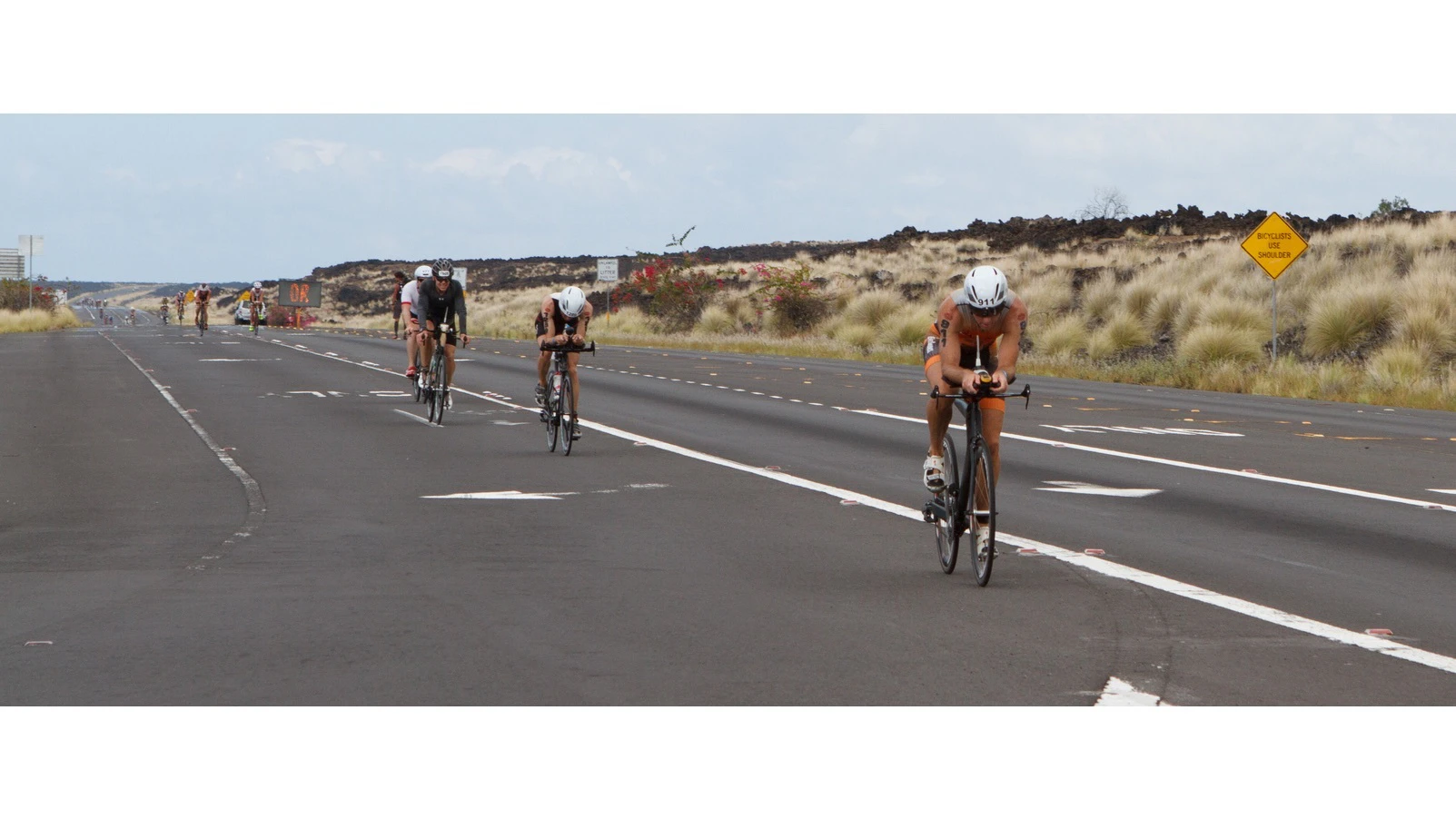
We have the raw material to do this better than almost anyone. The Sony Championship Hawai‘i. LPGA Lotte. World Surf League events across three islands. The Honolulu Marathon, drawing 40,000 runners and international media focus. The Ironman World Championship. The Maui Invitational. A statewide outrigger canoe racing circuit no other state can replicate. This is not a thin calendar padded out for tourism brochures — it is a genuinely deep, diversified portfolio that most states would envy.
And yet no single body owns it. No dedicated budget forces anyone to prioritize which events are worth doubling down on and which are quietly losing money once public safety and traffic costs are counted. No annual public report tells the Legislature, Bishop Street CEOs, or UH's leadership whether the state's sports assets are generating a return or just generating expenses. Individual events succeed, sometimes spectacularly. But nothing compounds because nothing is coordinated.
I made a version of this argument before. This July, I wrote that Hawai'i's golf industry — an estimated $1.9 billion a year in economic activity — has gone two decades without a statewide strategy or a single body responsible for stewarding it, despite two separate studies, 15 years apart, reaching the identical conclusion. Hawai'i Public Radio invited me on The Conversation to press the point further: golf's problem was never really about golf. It is a leadership and coordination problem. The same gap runs through Hawai'i's entire sports tourism portfolio, not just one sport.
Every year without a coordinating strategy is a year Pennsylvania and Florida pull further ahead, and a year Hawai‘i's own events generate less than they should while competing against each other for the same limited attention and funding. This is not a call for more events. Hawai'i does not have an events problem. It has a leadership problem — the same one golf has had for 20 years, now playing out at a much larger scale across an entire sector.
The Legislature, Bishop Street, and UH all have a stake in this, because a coordinated strategy touches state revenue, private capital, and campus athletics alike. The states already running the modern playbook did not get there by accident. They built the structure first, then the outcomes followed. Hawai'i has the assets. What it does not yet have is the entity to run them like a portfolio instead of a scattered list of bookings — and knowing what that entity would actually need to succeed here is worth its own conversation.
Ray Tsuchiyama’s series explores one central question: How does Hawai‘i use the wealth and land it already has to create its next economic future? He can be reached at ray@guild.im
For the latest news of Hawai‘i, sign up here for our free Daily Edition newsletter.