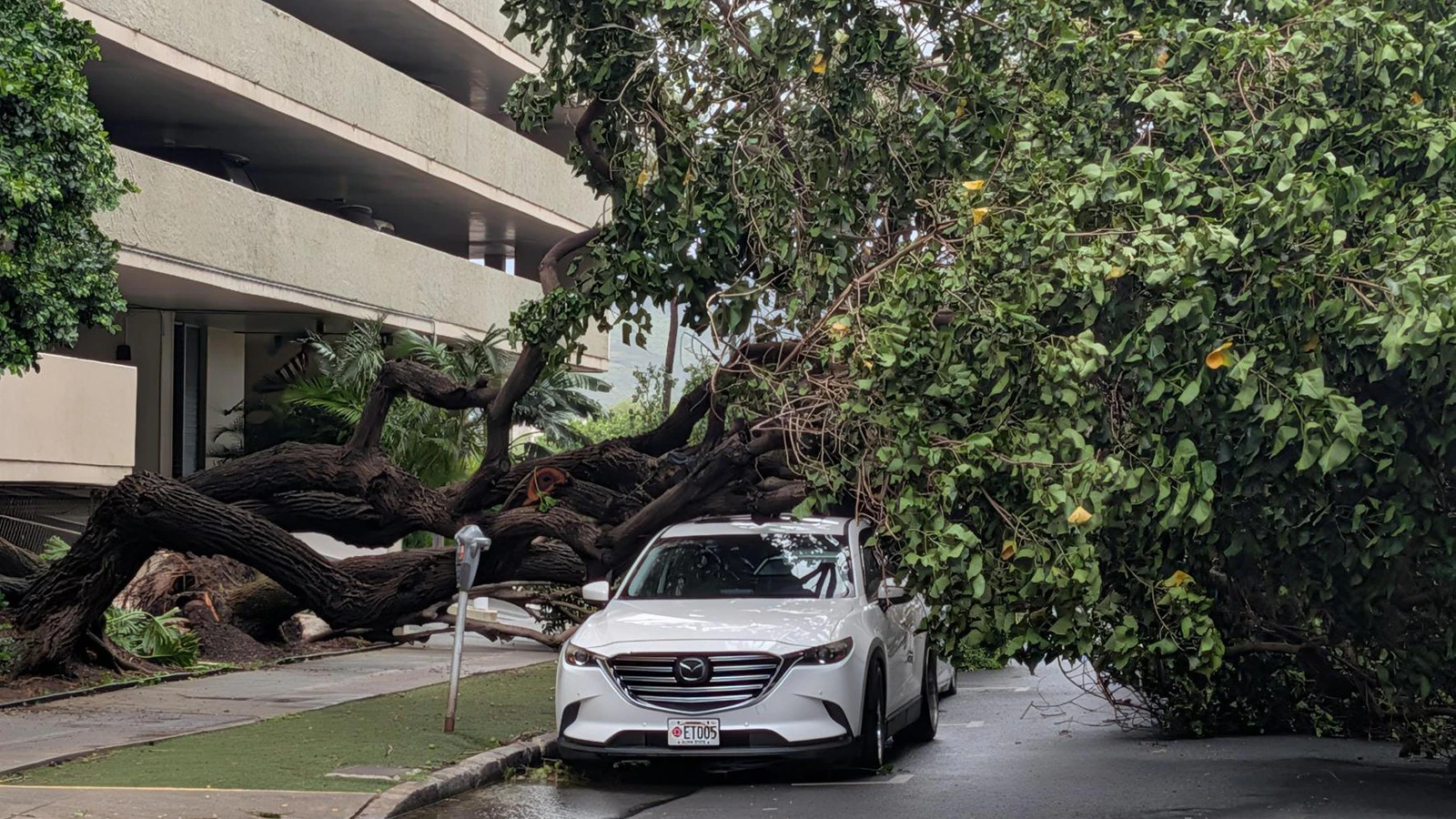
After Hurricane Lala, residents of a Waikīkī high-rise waited nearly a week for power and water to be restored while nearby buildings were already back online, due to its own flooded circuitry.
One storm. One outage. But it points to a much larger question: What happens when Hawaiʻi's aging condominium buildings can no longer keep up with the demands placed on them?
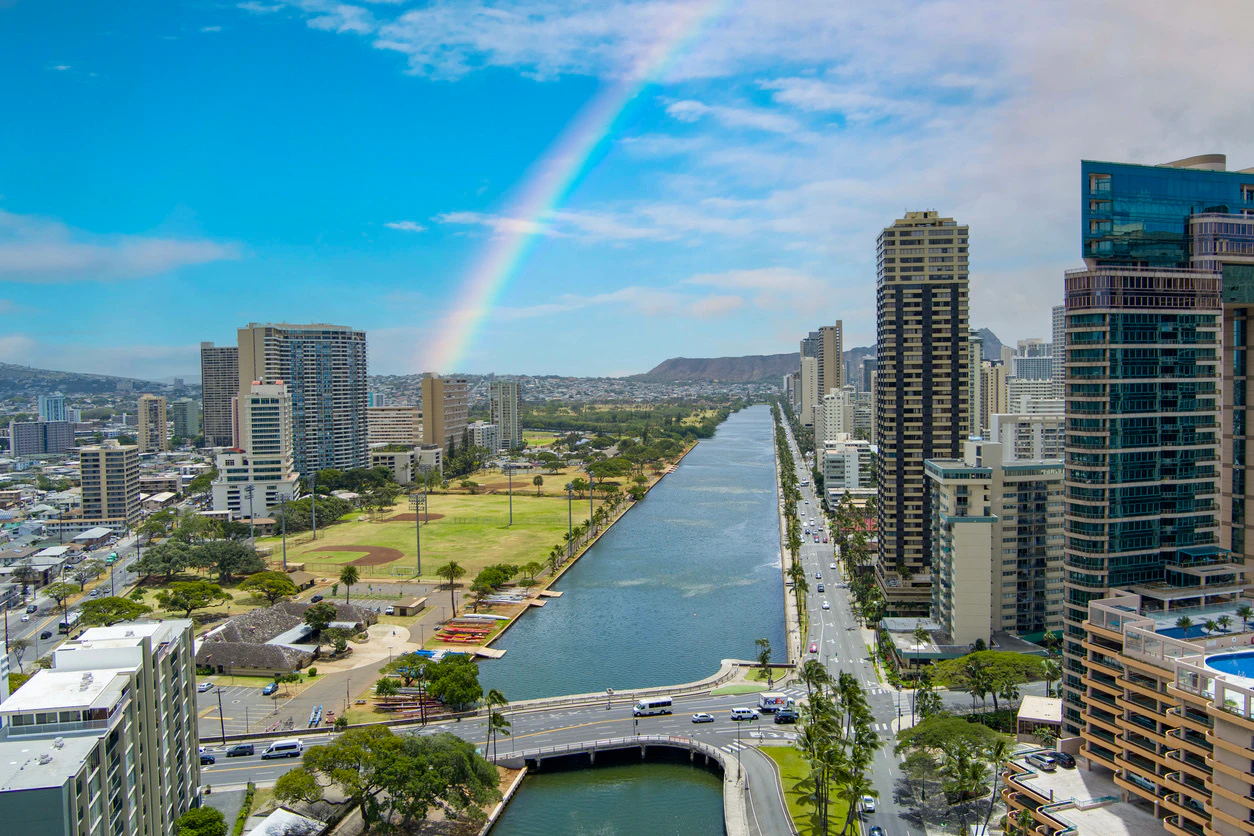
Walk through any 1960s or ’70s-era condominium tower in Waikīkī or Makiki, and you are looking at a building entering a difficult stage of its economic life.
Many of Hawaiʻi's condominium buildings are now 40, 50 or even 60 years old. The issue is not necessarily their structural lives; it is that major systems installed decades ago — plumbing, electrical, elevators and roofs — are increasingly expensive to maintain or replace.
The bills are not small. Some owners are facing special assessments of $50,000, $100,000 or more per unit for repairs and replacement of aging building systems.
And for many owners, their condominium may be the largest asset they own, yet they face a large bill for a unit they may eventually have difficulty selling.
Here is what is missing: Hawaiʻi has a law for terminating a condominium. It does not have a practical legal mechanism for turning majority agreement into redevelopment.
Hawaiʻi law provides a process for condominium termination for liquidation through a court-ordered partition sale, which does not address the collective-action problem when a large majority of owners want to sell or rebuild but a minority does not.
Owners are not simply choosing repair over redevelopment.
They often have no practical redevelopment option to choose.
And zoning can make the problem worse. Tear down an older, grandfathered tower, and current rules may permit less density than the building already contains. A developer may be willing to take on the project, but if the replacement building cannot generate enough value to pay for land, construction, financing and owner buyouts, there is no deal.
The state has never built a door for a redevelopment pathway with development incentives.
Other places have.
New South Wales, Australia, created a statutory strata-renewal process that addresses the collective-action problem. A supermajority can initiate a renewal plan, with a court reviewing the process and protections for dissenting owners, including compensation based on independently determined value.
Florida provides another useful example, although its experience also demonstrates how minority-owner protections can complicate redevelopment and generate litigation.
Japan has gone further in combining condominium-reconstruction mechanisms with urban-planning tools that can allow additional development potential to help finance replacement buildings.
The lesson is not that Hawaiʻi should copy any one system. It is that the problem has already been addressed elsewhere in pieces — and Hawaiʻi needs two of them.
First, a way to assemble the property.
Chapter 514B should be amended to create a condominium-renewal process under which a substantial supermajority of owners could approve a redevelopment plan, subject to independent valuation, notice, financial disclosure, and judicial review.
The principle should be straightforward: dissenting owners deserve fair value and due process, but they should not possess an indefinite veto over a transaction approved by an overwhelming majority and determined to satisfy statutory protections.
A specialized condominium-renewal docket within Hawaiʻi's existing Circuit Court system could develop expertise in these cases without creating an entirely new court.
Second, a way to make the redevelopment economically possible.
Even an approved redevelopment plan is worthless if the replacement building does not pencil.
This is where land economics becomes critical.
Hawaiʻi should establish a statewide statutory framework allowing qualifying older condominiums to seek a defined redevelopment incentive — potentially additional floor area or other development flexibility — when specific criteria are met.
The criteria could include building age, documented physical or financial obsolescence, a professional structural or capital-needs assessment, an approved renewal plan and demonstrated economic feasibility.
This should not become a blank check for developers or a wholesale rewrite of county zoning. The Legislature would establish the rules and eligibility standards; the appropriate authority would administer them against objective criteria; and the courts would address owner rights and the fairness of the renewal process.
The objective would not be to guarantee redevelopment. Some buildings will still be too small, too expensive, or too constrained to make the numbers work. That is a market outcome. But Hawaiʻi should at least allow the market to test the possibility.
This would not apply neatly to every building. Leasehold condominiums present a different problem because the underlying ground lease and landowner's rights must also be addressed. That is a separate legal and economic issue.
The point is to create an option that does not exist today.
Every component already exists somewhere.
New South Wales built a mechanism for collective action. Florida offers experience with owner buyouts, dissenters and the litigation that can follow. Japan demonstrates how redevelopment law and additional development potential can sometimes work together to finance replacement buildings. (More on this in future columns.)
Hawaiʻi already knows how to establish special land-use frameworks (e.g. HCDA) when a public policy objective demands them.
What Hawaiʻi lacks is a system that connects these pieces.
We do not need the government to rebuild every aging condominium. We do not need to guarantee developers a profit. And we should not take away the legitimate property rights of minority owners.
But we should give a willing majority of owners a legitimate path to discover whether redevelopment makes more sense than another special assessment.
That is the missing door.
Hawaiʻi's aging condominium problem is not simply about old buildings. It is about what happens when private property, collective ownership, land economics, and outdated law collide.
Hawaiʻi does not have a shortage of aging condos. It has a shortage of options for renewing them.
That is a shortage the Legislature can fix.
For a parent hoping to pass a Makiki condo to the next generation, the question is no longer simply what the unit is worth. It is whether the building around it has a future.
Ray Tsuchiyama’s series explores one central question: How does Hawai‘i use the wealth and land it already has to create its next economic future? He can be reached at ray@guild.im
For the latest news of Hawai‘i, sign up here for our free Daily Edition newsletter.