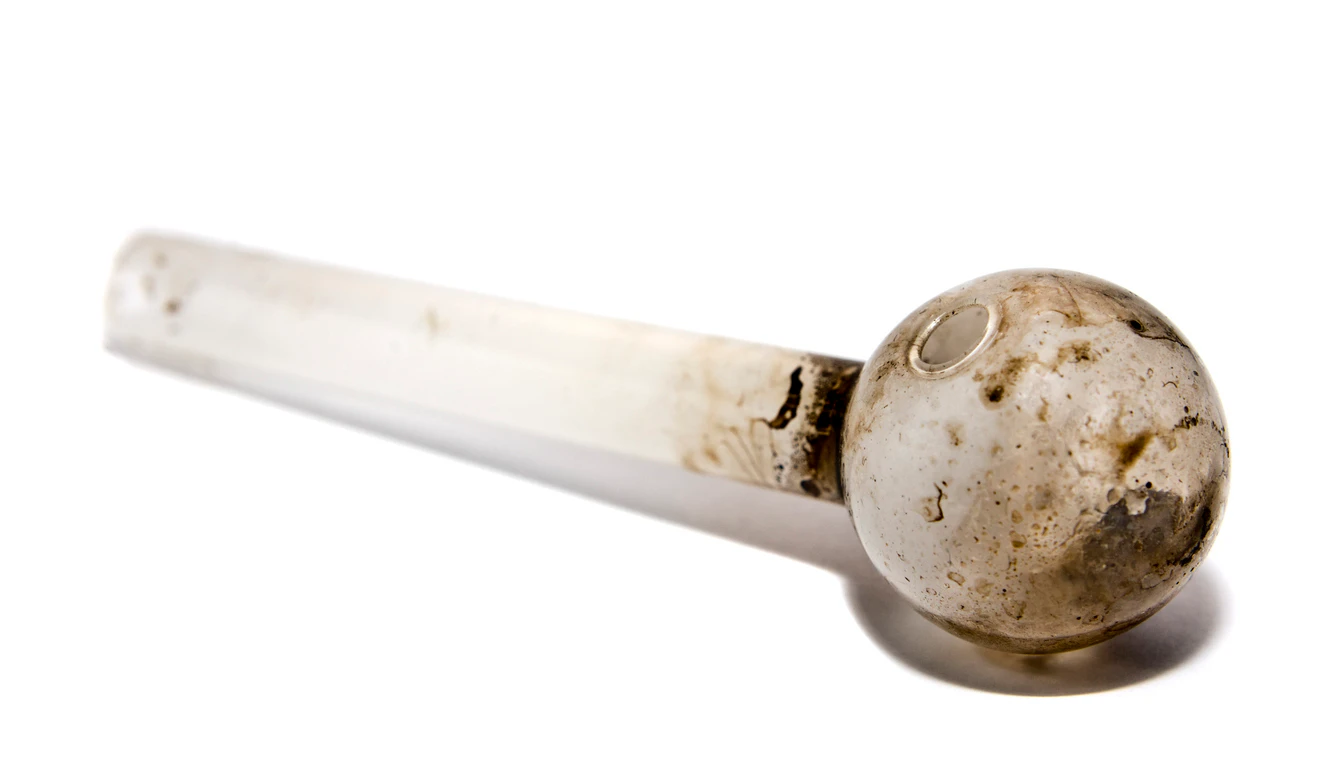
Civil Beat has begun a series on meth in the Islands, and it opens with the dead.
A hundred autopsies, with a selected few arranged as a series of vignettes. Some died of overdose, others of heart conditions caused by their meth habit.
One of the deceased was Christopher Woodard, the chief planner for the state Department of Business, Economic Development and Tourism, making $139,860 a year. He was found on his apartment floor with a glass pipe in his lap.
John Hill has written about these people with care. He calls them users and he calls them victims, and he never once calls them addicts.
It’s a sentimental start to a series of articles on meth that Hill has promised.
Meth is not deadly at the same scale as heart disease, cancer, or stroke. But its impacts are wide ranging. Meth use often tears families apart. It frequently comes paired with mental illness, and it may accompany other forms of disorder, including lying, theft, and violence. The consequences of meth can be seen on many a street corner. For this reason, meth looms large in the social imaginary.
Despite the scale of Hawaiʻi’s meth epidemic, there is little local journalism on the subject, except for reports of arrests and prosecutions. So a series like Hill’s will shape the state’s policies in dealing with meth. This makes it worth asking what the author assumes about his subject.
Every remedy rests on some account of the sick man. Begin with the wrong account of man, and we will spend a great deal of money on cures that cannot work.
Hill has said his series will look at contingency management, a policy the state is trialing. The idea is to pay people for clean drug tests, in gift cards or small sums of cash. Advocates claim that contingency management is more effective than other treatments. At least that’s what experts and some academic studies suggest, with all the normal caveats about the quality of experts and academic research.
Grant the point that the treatments work, and ask why.
In part, contingency management works because some men will stay clean for $50. Should our state be in the business of paying these drug addicts to stay clean?
And why doesn’t Hill call them addicts?
The Associated Press writes the style guide that most newsrooms follow. Writers are steered away from words like addict and alcoholic. Pejoratives like junkie, drunk or crackhead are off limits. Journalists shouldn’t call people who use drugs users, though they can describe people’s drug use, with select adjectives permitted (e.g., risky, unhealthy, excessive or heavy).
Hill is willing to skirt the rules, as he calls his subjects users.
But the guide goes further and offers to redefine words: addiction is “a treatable disease that affects a person’s brain and behavior,” brought on by genetics and mental illness and other factors.
According to this definition, addiction is something that happens to a man, like the flu or chickenpox. The Stylebook’s definition has no place for the man’s will.
The idea underneath this definition is older than the Stylebook. Rousseau taught that man arrives in the world basically good and is then spoiled by civilization. This thought is taken for granted today. It is like water, and we are fish swimming in it.
If corruption comes from outside the man, then the cure must be applied outside him. Adjust his surroundings and he will improve. Nearly every drug policy of the last 50 years has been some version of that hope.
The gift card is the gentle version. The hard version uses incarceration to reform the addict, controlling his environment to change his behavior. But it is the same anthropology in a different uniform.
Both remedies work on a man’s circumstances because neither can account for his will. One offers a reward and the other a threat, but neither engages with the whole person.
Are humans good by nature or fallen? For the answer, we can look to our children.
Leave 10 toddlers alone in a room and no social contract emerges. The result is chaos.
Anyone who has taught toddlers knows that they often defy instruction, sometimes seeming to revel in disobedience. We tell ourselves that small ones are only testing the boundaries, and perhaps they are. But this explanation cannot account for their behavior later in life.
Some people may use meth because of mental illness. Others may use meth because they’re forced to. Many people don’t know the full consequences of meth use when they start. But a few know full well that meth is illegal and harmful, and they use it anyway.
Why do they transgress?
The professional with a house and a pension does not take up meth because his surroundings failed him. The husband who cheats is not always short of affection at home. The teacher who molests a child knows that his behavior is wrong.
The simplest explanation is that man sins because it is in his nature to sin. Augustine stole pears when he wasn’t hungry and then threw them away. He didn’t want the pears. He delighted in sin for sin’s sake.
And meth use is sin, plain and simple. Scripture is filled with cautions against inebriation, often connecting sobriety to spiritual discernment. “Be sober-minded; be watchful. Your adversary the devil prowls around like a roaring lion, seeking someone to devour.”
A Christian can say that meth is evil and still feel love for the man smoking it. These are not rival claims. He can pray for the man’s soul, that he would come to faith in Christ and have his sins forgiven. And he can also say something the reporter cannot — that there are some things worse than death.
A journalist keeping his objectivity must treat death as the worst outcome, so his stories end with the funeral and the surviving family’s GoFundMe.
But there are worse things than dying. We used to be able to say so without lowering our voices.
The state should bear the sword against the man who sells poison for money. And the state should stop people from smoking meth on the sidewalk and in public parks. These are proper tasks for government.
But government cannot reform a man.
The state makes no provision for the role of the family and church in helping the addict because the state wants to displace the family and church. But the cures available to the state are clumsy, limited to what can be easily administered and quantified. Hence, gift cards.
Hawaiʻi does have a drug problem, and it does have a meth problem. But the problem won’t be solved by bribing drug addicts with gift cards.
We ache for those who drug themselves to death because we know that they too are made in the image of God. Marred as that image is by sin, it shines through. But getting sober will not make us clean. A man can be sober while his soul is still black.
The problem is sin, and the solution to sin is Christ. The Associated Press can never tell you this, for they have sworn not to.
Author Sterling Higa can be reached at hello@sterlinghiga.com.
For the latest news of Hawai‘i, sign up here for our free Daily Edition newsletter.