
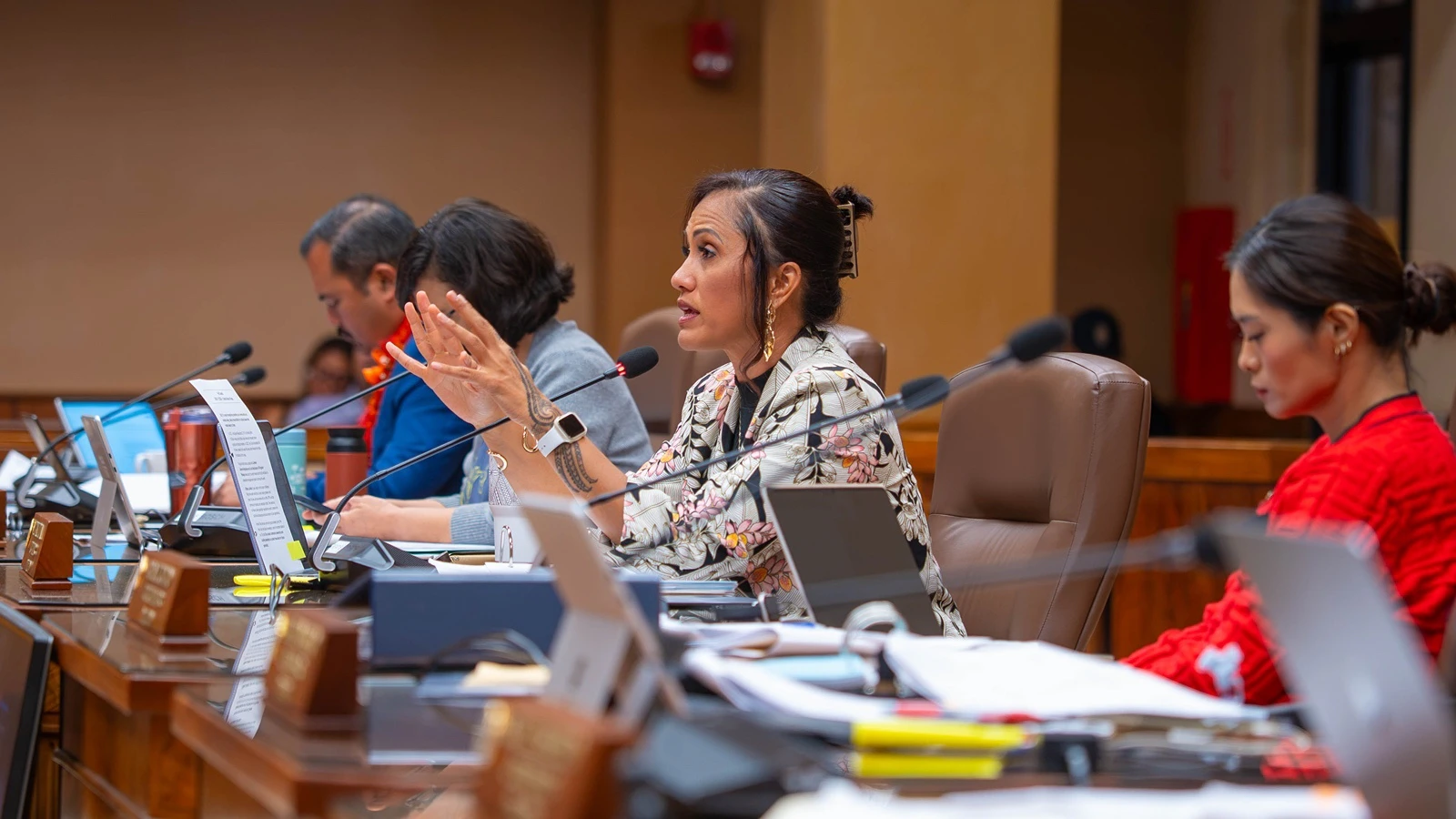
A Honolulu City Council bill is heading to the mayor’s desk after Waialua resident Kathleen Pahinui advocated for a bill to permit farmers markets and food distribution in underutilized public parks.
The Waialua Bandstand hosts concerts about once a month and Pahinui said she believes the small park could be better utilized. The Waialua Farmers Market is on Saturdays behind the Waialua Sugar Mill, and Pahinui said that if the farmers market was permitted to meet at the Waialua Bandstand, it could make the market more visible, easier to find and make the park more of a gathering place in the North Shore community.
Pahinui met with city councilmembers and worked with the Department of Parks and Recreation on the bill.
Bill 30, sponsored by Councilmember Andria Tupola and passed by the Honolulu City Council on Wednesday, would allow nonprofits to operate food distribution events and farmers markets in public parks.
Tupola said that she sees the bill as an opportunity to revitalize Oʻahu’s public parks while supporting farmers and food security efforts.
“In a lot of our parks we see vandalism, illegal camping and too often our response is the same: we spent hundreds of thousands of dollars trying to eradicate problems over and over which isn’t sustainable. What we really need in our parks is transformation, bringing back life, bringing back community and bringing back food,” she said at a City Council meeting in July. “Can you imagine some of our underutilized parks with a regularly operating farmers market? I’m excited about that. It transforms our parks into positive community gathering spaces instead of places that we’re constantly policing.”
The Committee on Housing, Homelessness and Parks adopted suggestions from the Department of Parks and Recreation to clarify that farmers markets are operated by nonprofits, are subject to the department’s rules and regulations, are not located on properties where the people’s open market program operations and are not located in highly utilized parks. People’s Open Markets operate for about 45 to 60 minutes at 13 locations on Oʻahu.
The bill received opposition from tour operators and the Waimānalo neighborhood board.
The City and County of Honolulu banned unregulated commercial activity at beach parks between Waimānalo and Makapuʻu in 2022.
Kimeona Kane, chair of the Waimānalo neighborhood board, expressed concern in a March letter to the council that the bill goes against Wāimanalo stance against commercial activity in public parks.
“If this is allowed, it may undermine the current law that supports our community position, protects our public spaces from disrespectful attention and overwhelming strain on conditions and value of life for local residents,” Kane wrote. “There could be potential for this bill to serve other communities, and I encourage them to seeks these opportunities, however I do believe that other options can and do exist, where Farmers Markets may take place.
Pahinui told ASD that she shares Kane’s concerns about commercial activities in public parks, which is why she pushed for the bill to be for nonprofit organizations and in smaller parks off the beaten path.
Hawaiʻi Farm Bureau Executive Director Brian Miyamoto supported the opportunity to support small farmers and improve access to fresh food, and wanted the council to clarify that “products being sold are locally grown or produced.”
His requests that the bill prioritizes Hawaiʻi grown agricultural products, direct participation by farmers and local producers and transparency in product sourcing and labeling did not make it into the final bill.
Jennine Sullivan, executive director of Feeding Hawaiʻi Together, wrote to the council that the bill strengthens local food systems and improves community wellbeing.
Feeding Hawaiʻi Together operates The Pantry, which distributed 2.2 million pounds of food in 2025. “Expanding access points for fresh food is critical to meeting the growing needs of our community,” Sullivan wrote.
The bill also supports small businesses and improves access to fresh, nutritious food, Sullivan stated, writing, “Allowing farmers’ markets in public parks creates more opportunities for communities to connect directly with local agriculture in accessible, familiar spaces.”
ʻElepaio Social Services distributes food to about 1,200 kūpuna each week through four pantries on the west side of Oʻahu, including at Nānāikapono Protestant Church. Director of Community Impact and Engagement Cassidy Keola wrote that the bill would allow ʻElepaio Social Services to operate the pantry in a public park, like Nānākuli Beach Park, which could make it more accessible.
“Holding food distributions at a park would improve operation logistics and efficiency and re-open the church to community members. Plus, hosting a distribution in a public and visible space such as park would help us reach more community members who may not know of our services,” Keola stated.
Ted Kefalas, director of strategic campaigns for Grassroot Institute of Hawaiʻi, wrote to the council that Grassroot supports legislation to lower barriers to entrepreneurship.
“Selling food or homemade wares at a farmers market is a low-cost, low-risk way for people to turn an idea into a business. This measure would give more Oahu residents the opportunity to start up small businesses and participate in the tourism industry,” he wrote.
Chamber of Commerce Hawaiʻi President and CEO Sherry Menor wrote that the bill supports one of the chamber’s missions to support the economic viability of agriculture careers and reduce operating expenses, and food and economy security as food prices rise.
Haley Lehman can be reached at haley@alohastatedaily.com.
For the latest news of Hawai‘i, sign up here for our free Daily Edition newsletter.


