HĀLAWA — Each passing month has provided more signs that the old Aloha Stadium as currently constructed will turn a new page.
On Thursday, the Stadium Authority held its final monthly meeting inside the stadium after 47 years of doing so. Starting in 2026, a temporary location nearby will host the meetings until the new stadium is ready.
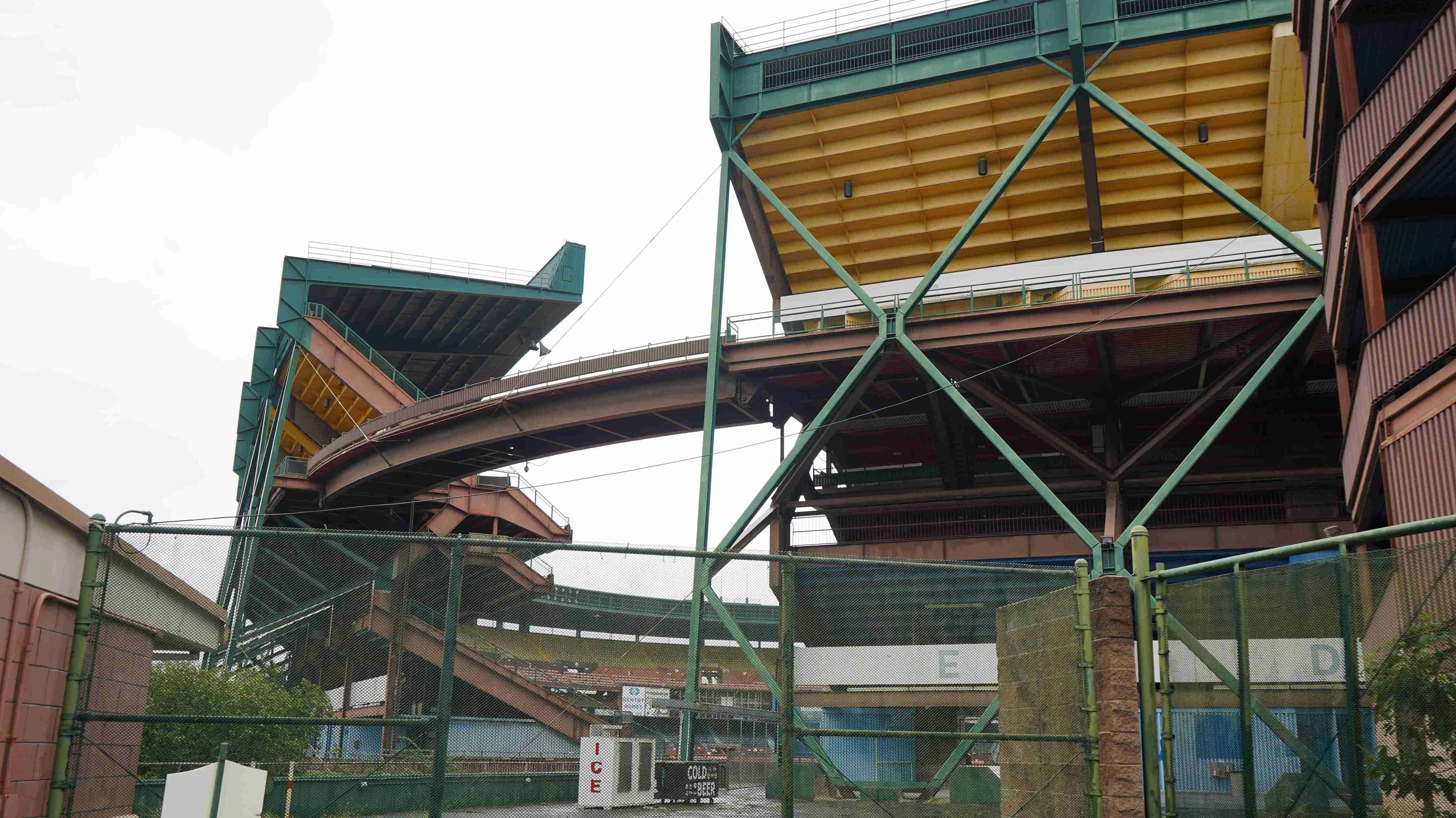
It was also at Thursday's meeting that Stadium Authority chair Eric Fujimoto bluntly stated that dismantling of the old Aloha Stadium is underway — the crucial first physical step towards building the new Aloha Stadium, which will be built on the same grounds in Hālawa.
"It's a huge milestone," Hawaiʻi Department of Accounting and General Services (DAGS) special projects manager Chris Kinimaka said following Thursday's meeting. "To actually see the work underway is what we were all anticipating."
Dismantling of the stadium began last Friday.
"You'll see materials being delivered. There's going to be several cranes and trucks and that type of work," Kinimaka said. "There is going to be a lot of activity inside already before you actually tear down the facility."
Site fencing and dust screens are being installed throughout parts of the stadium. Seats are also actively being removed. While the current Aloha Stadium has a seating capacity of 50,000 with individual seats, the new Aloha Stadium will hold 22,500, mostly consisting of bleacher seating.
Dismantling of Aloha Stadium, which developed the "Metal Mecca" nickname in some local circles, will involve the removal of the bulk of the steel currently in the stadium. Aloha Hālawa District Partners, the developer of the stadium, will determine how much of the metal can be salvaged and how much will be a part of the old stadium's landfill.
"The majority of the steel will be removed. All of the east and west sidelines will be all the way down to foundation," Kinimaka said. "Up north, the end zone will be bringing it down to the concrete substructure, because that's going to be preserved. AHDP does have contracts in the works to sell the steel, probably put that on market, just trying to make sure it doesn't go into the landfill."
A dust fence went up on the north side of the stadium for dismantling, which is projected to take nine months. From there, the new stadium can begin to be built.
"Taking down the hazardous materials inside the stadium itself before they actually start taking on the heavy structure and also the inside equipment and whatever furnishings has to be removed, all of that is now underway," Kinimaka explained.
Kinimaka and NASED program director David Harris both explained that the impact of dismantling and construction on traffic in the area generally should not be a concern.
"Basically, everything's going to be on site, so it's not going to really impact the roadways, highways," Kinimaka said. "All the equipment will be brought in on Sunday. Any impacts would primarily be bringing in the heavy equipment. The cranes are already on island, and they're working to relocate them to the site. Usually they do that after hours. They'll also have trucks hauling off debris, but they have a very set pattern for that movement of trucks.
"We are still waiting for the final submittals on where the debris is going. They're working hard to salvage a lot of the materials, and that includes getting special companies on board to actually salvage a lot of this. So, we'll be watching to see where the remnants go, and they are coordinating with us as well."
Additionally on Thursday, Michael Yadao was voted in by the board as the stadium's new deputy manager. Yadao was previously on the board and chose to abstain from the vote. Chris Sadayasu had previously served as the stadium's interim manager after previous manager Ryan Andrews resigned in January to take a role as the University of Hawai‘i's new director of recreational services.
Yadao, a 1998 Damien Memorial School graduate, will oversee the day-to-day operations of the current stadium and the transition to the new one.
A press release announcing Yadao's appointment as the stadium's new deputy stated that he "brings decades of experience in Hawaiʻi’s construction industry, labor relations, government affairs and project leadership, and has served on the Stadium Authority Board since 2021."
The UH-Mānoa alumnus has served in a variety of roles locally. In 2020, he became the executive director of the Hawai‘i Masons and Plasterers Union's stabilization fund. In 2018, he was named a lobbyist for the General Contractors Association of Hawai‘i.
"Completely feasible, absolutely," Yadao said when asked about the new Aloha Stadium's 2029 target date. "We're currently on schedule to do that. We will remain such. I know construction can be complex. I know that there are market forces sometimes outside of your control, but I absolutely believe that this is feasible, and I'm excited by it."
For the latest news of Hawai‘i, sign up here for our free Daily Edition newsletter.
Christian Shimabuku can be reached at christian@alohastatedaily.com.