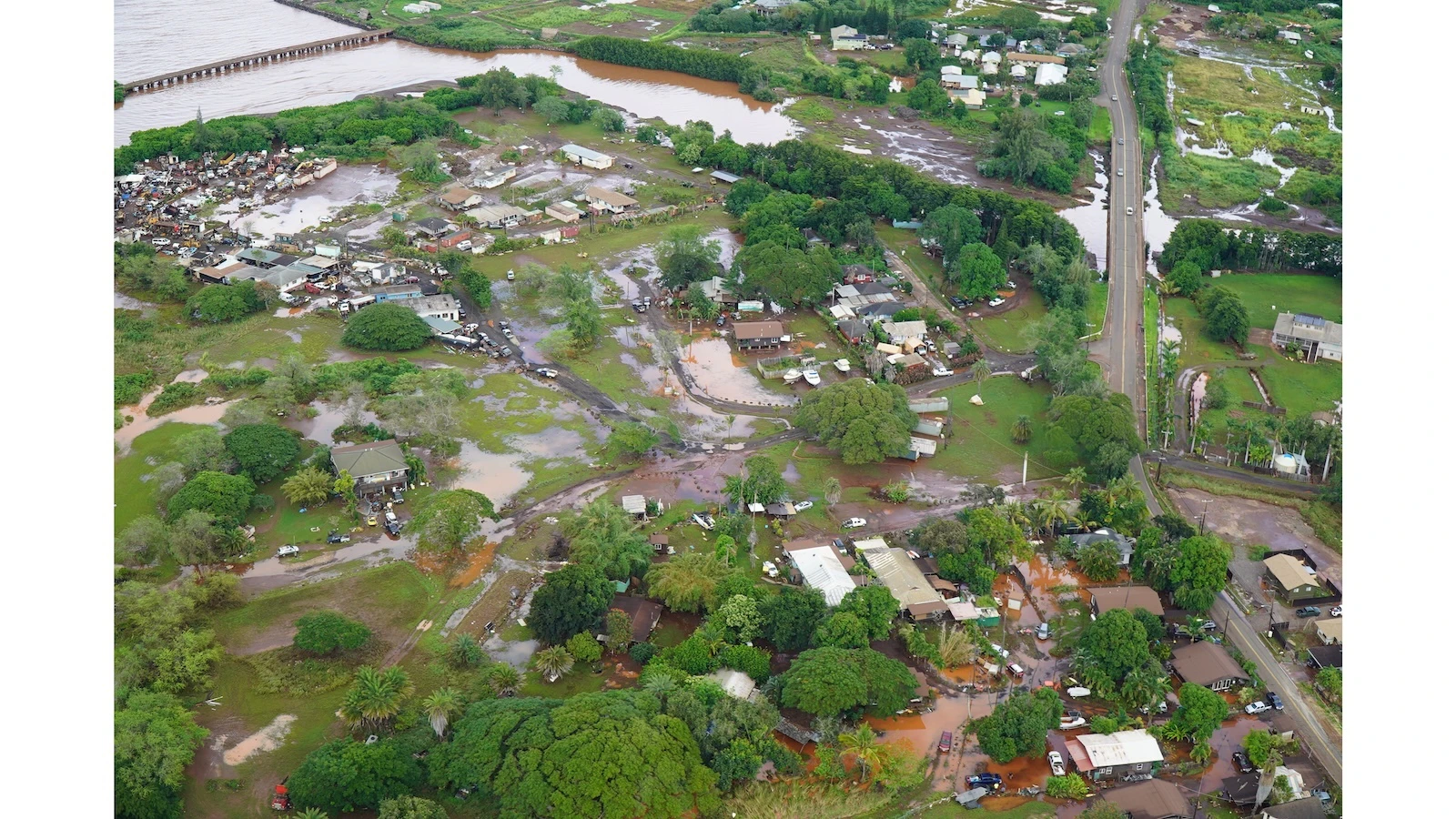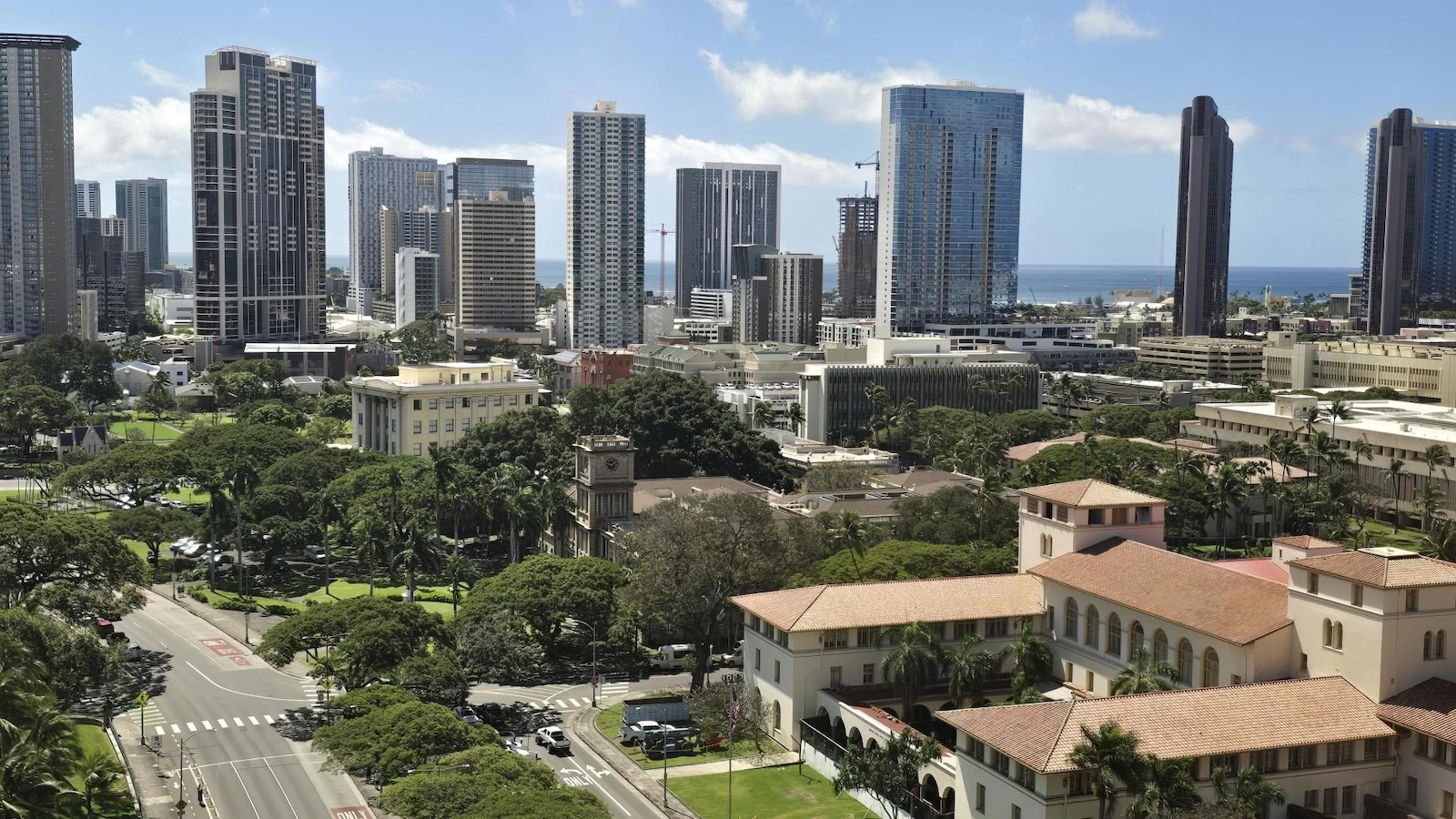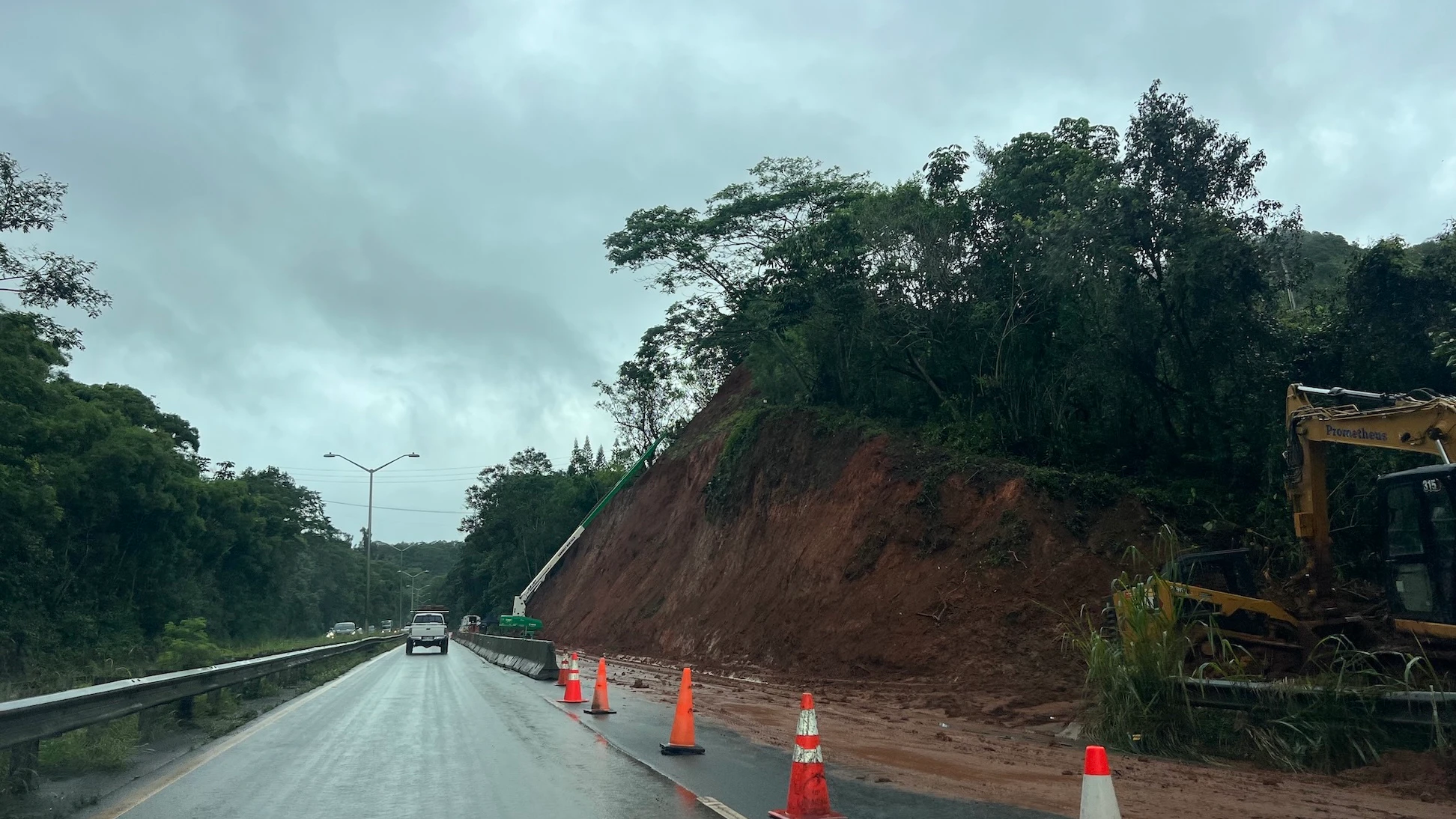
On Monday, floodwaters rushed through Mānoa Valley, turning school walkways into streams, submerging cars, and making roads impassable. Mānoa Stream jumped from about three feet to 12 feet. At Noelani Elementary, water surged through the campus, overwhelming the drainage system and flooding the cafeteria and offices. In the parking lot at the UH Mānoa Innovation Center, one man returned to find his car had floated away from where he parked it.
The flooding was still happening when the theories started popping on social media.
People said the floods were the result of weather modification, of government cloud-seeding, or that it was a planned effort to flood the island. The proof? "Too weird this weather!"
It was the same pattern that followed the Lahaina fire — directed energy weapons, fires started deliberately. Those Lahaina theories are so prevalent that Gov. Josh Green felt compelled to address them. The details of the theories change, but the structure doesn’t.
The people sharing these theories are not, on the whole, foolish. Some are frightened, and frightened people reach for answers. A world where the flood just happened—warm water, a slow storm, too much rain on already wet ground — is more terrifying than a world where someone did this on purpose.
Malice you can fight. You can expose it, resist it, vote it out. A universe that simply doesn’t care about your living room is harder to deal with. The conspiracy theorist and the climate activist have more in common than either would admit. Both need their disaster to have a human author. A human author can, in theory, be stopped.
What belief in the conspiracy requires, though, is a strange kind of faith. The theorist believes that some cabal has the tools to seed clouds over an entire island chain — and the discipline to keep it secret. That is not a description of a government agency. It is a picture of an all-powerful and hidden god. But the theorist doesn’t stop there. He claims something stranger still: that everyone else is fooled, and he alone can see it. The cabal is all-powerful, the masses are blind, and the theorist, scrolling through his feed, is the prophet. It would be easy to laugh at, and it is a little funny. This is what it looks like when the hunger for a sovereign is real but the theology is wrong.
The desire to find a will behind history is not wrong. There is a will behind history, but it is not a cabal. It does not need secrecy because it is not afraid of being stopped. Scripture is plain that God works all things by his will, which includes storms and floods.
The comfort faith offers is of a different kind than the conspiracy offers. It does not tell you who to blame or what petition to sign. It tells you that the suffering is not random. The one who holds the world has not lost control. The God who sent the flood can redeem it. Christians call this providence: God’s hand upholds all things so that without his will not a hair can fall from our head.
Across the Islands this past week, people have been in the streets with shovels and meals and dry clothes. Many of them are from local churches, and most of those churches would rather the help not be traced back to them—they’d prefer the credit go somewhere else. That preference is witness enough. They are not there to be seen. They are there because the God who sent the flood also sent them to love their neighbor. That belief produces a lot of volunteer hours.