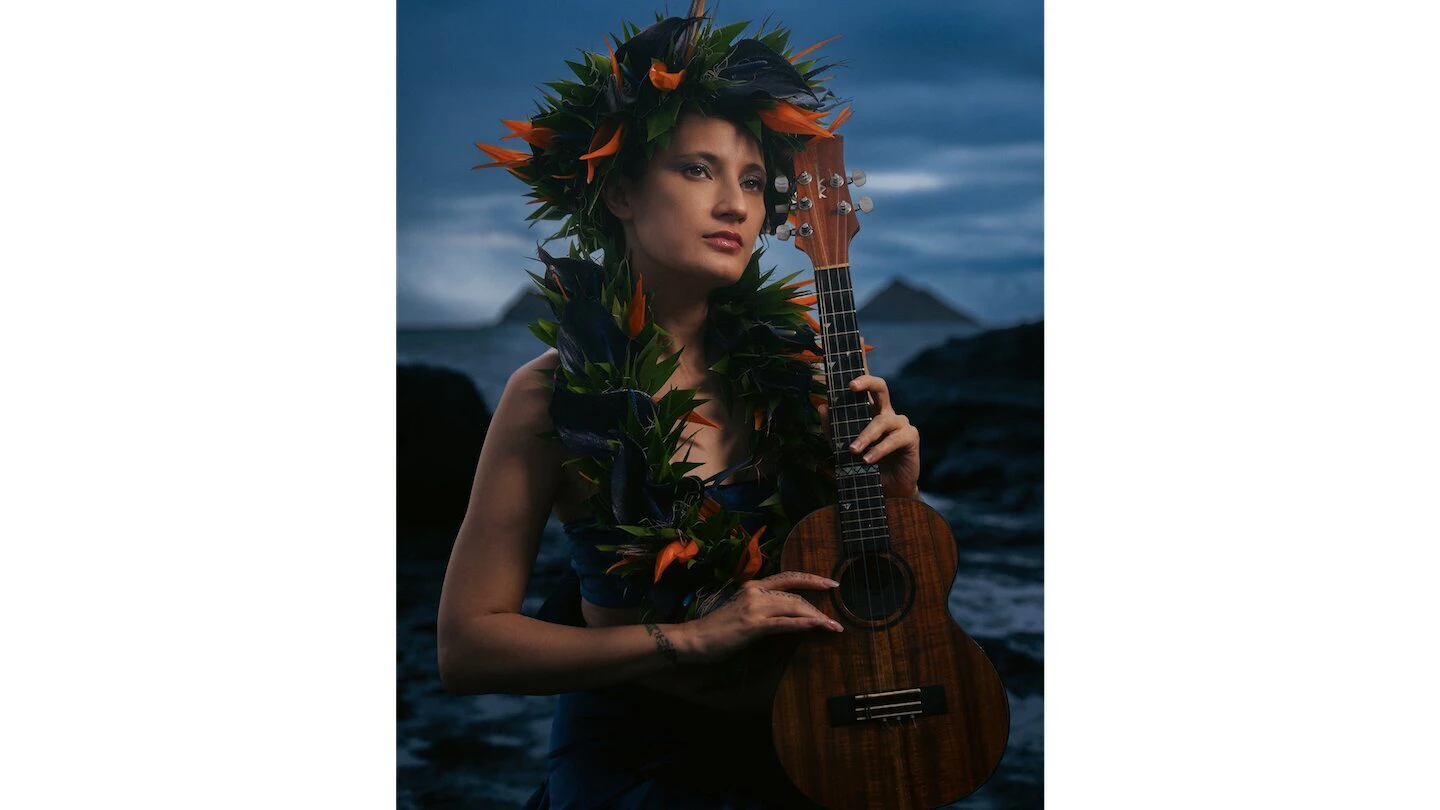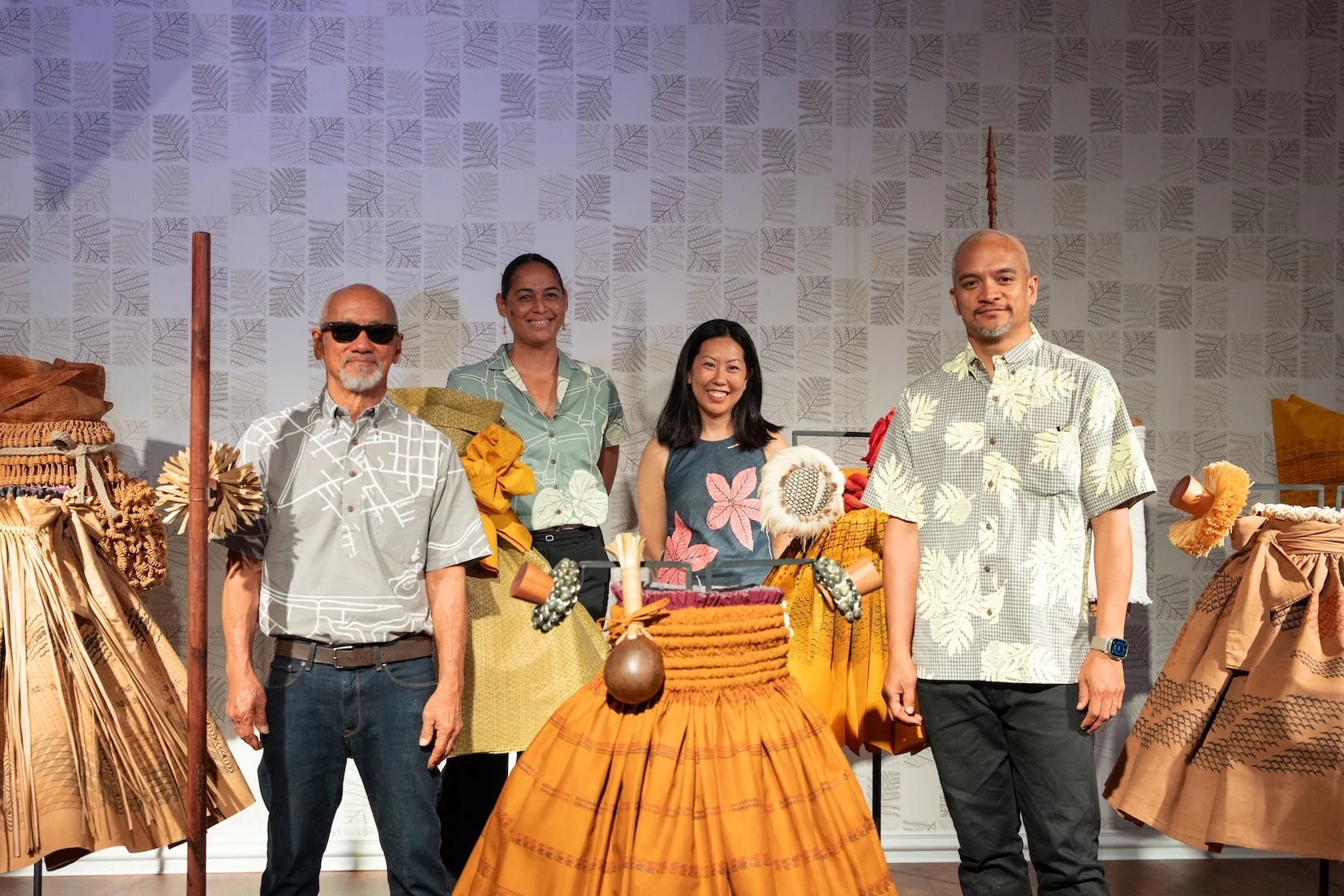
The Bernice Pauahi Bishop Museum will open a new exhibit honoring the work of a trio of Hilo-based artists: Nālani Kanakaʻole, her husband, Sig Zane, and their son, Kūhaʻoʻīmaikalani Zane. The exhibit, called "Ea Mai ʻEiwa: Patterns of Practice," opens to the public in the J.M. Long Gallery on Saturday, April 18.
Plans for the exhibit were in the works long before Kanakaʻole, a fifth-generation master hula teacher and the youngest daughter of Edith Kanakaʻole, died on Jan. 3. Kanakaʻole and her husband, Sig Zane, co-founded Sig Zane Designs in 1985. Their son, Kūhaʻoʻīmaikalani Zane, was recently named chief executive officer of the design firm, which creates clothing inspired by Hawaiian plants, moʻolelo and symbols that share Hawaiian stories across the world.
When asked to describe Kanakaʻole in three-to-five words, her niece Kumu Hula Kauʻi Kanakaʻole, who is one of the co-curators of the exhibit, did not pause.
“She's a vanguard,” Kanakaʻole told Aloha State Daily. “She's like our Native Hawaiian vanguard tita.”
Kanakaʻole laughed.
“She was genius in utilizing her foundation as hula practitioner, but pushing on in many different ways,” she said.
Soaring above the exhibit is Nālani Kanakaʻole’s installation, “Kūhaʻimoana,” her last large-scale work. It references “Kūhaʻimoana,” a chant that describes the migration of shark gods from the ancestral homeland of Kahiki to Hawaiʻi. The exhibit also features ʻaʻahu, or hula garments and implements designed by Kanakaʻole and made by students of Hālau o Kekuhi, which was founded by Edith Kanakaʻole, and continued by Nālani Kanakaʻole, her sister, Pualani Kanakaʻole Kanahele, and later her niece, Huihui Kanahele-Mossman.
“My favorite part is the display of nine different ʻaʻahu that were created by Nālani Kanakaʻole and executed by her haumāna, her students,” Kanakaʻole said. “But this collection spans her career and it's informed by so many different things — mostly hula and mele.”
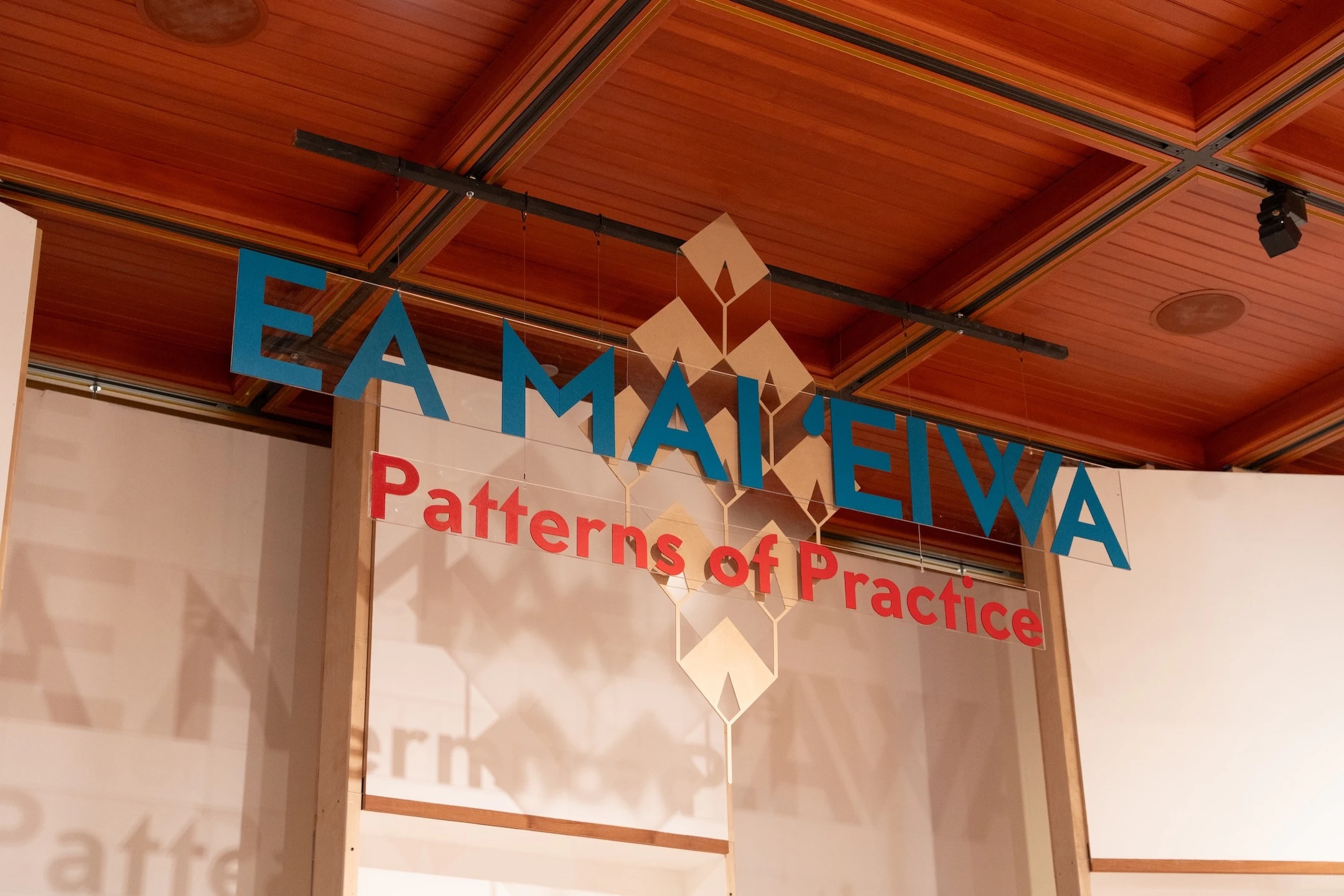
The special exhibit "Ea Mai ʻEiwa: Patterns of Practice" opened on Saturday, April 18. It runs through Sunday, Sept. 20. (Bishop Museum) 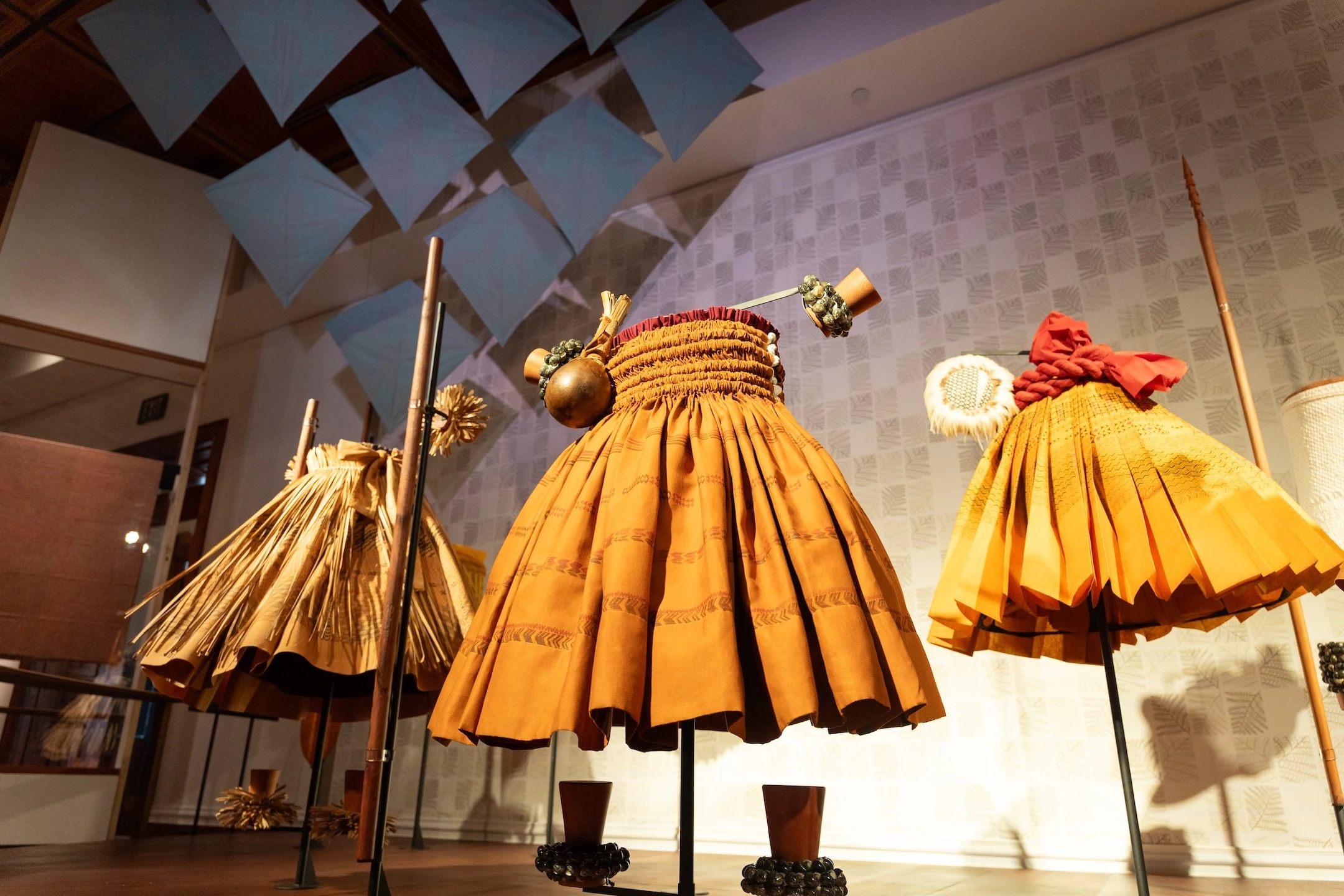
The exhibit includes archival hula ʻaʻahu, or hula garments, designed by Nālani Kanakaʻole and made by students of Hālau o Kekuhi. (Bishop Museum) 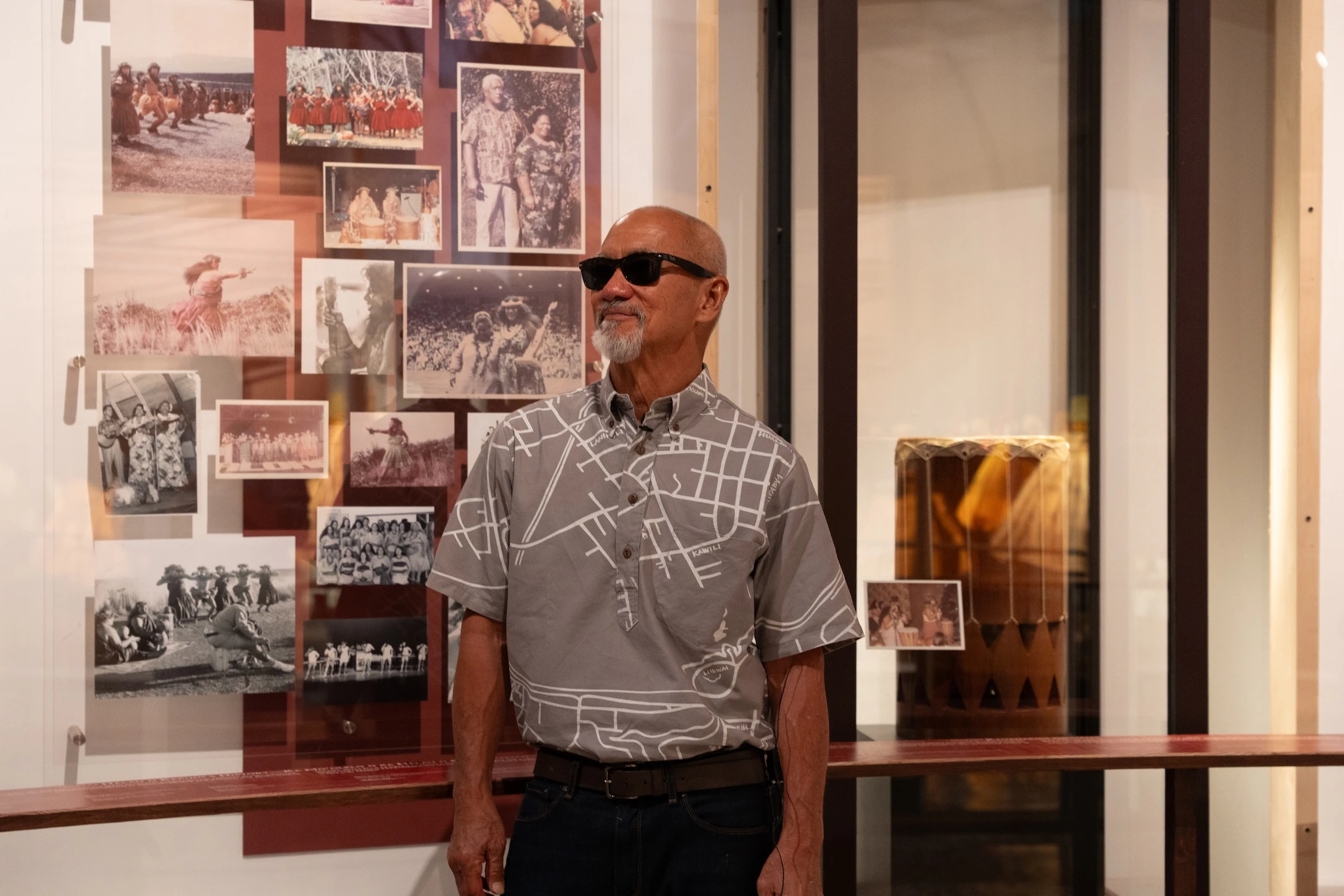
Sig Zane stands by photos, which are part of the special exhibit "Ea Mai ʻEiwa: Patterns of Practice." (Bishop Museum) 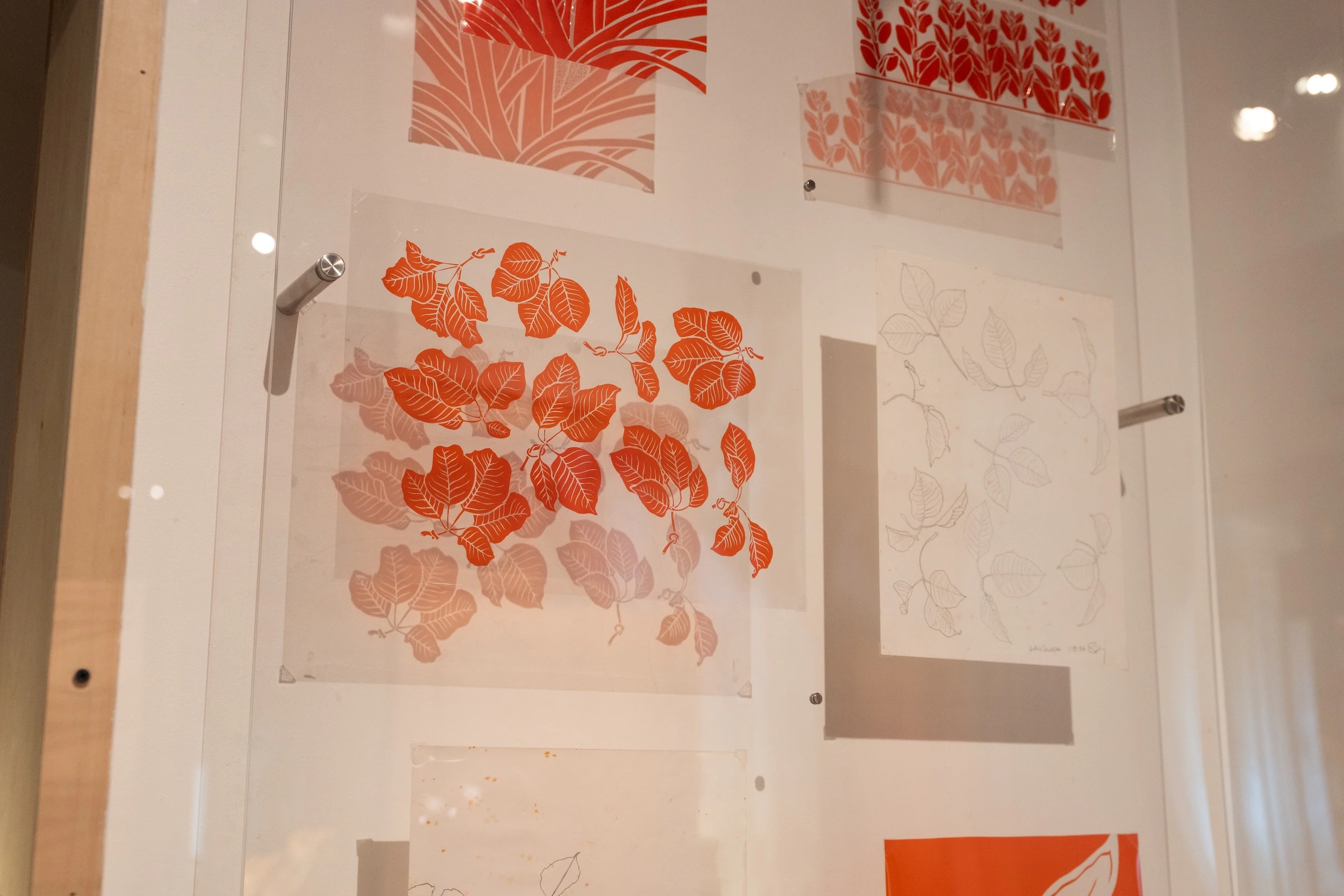
The exhibit features new and archival sketches and rubylith artworks by Sig Zane from 1990 to present. (Bishop Museum) 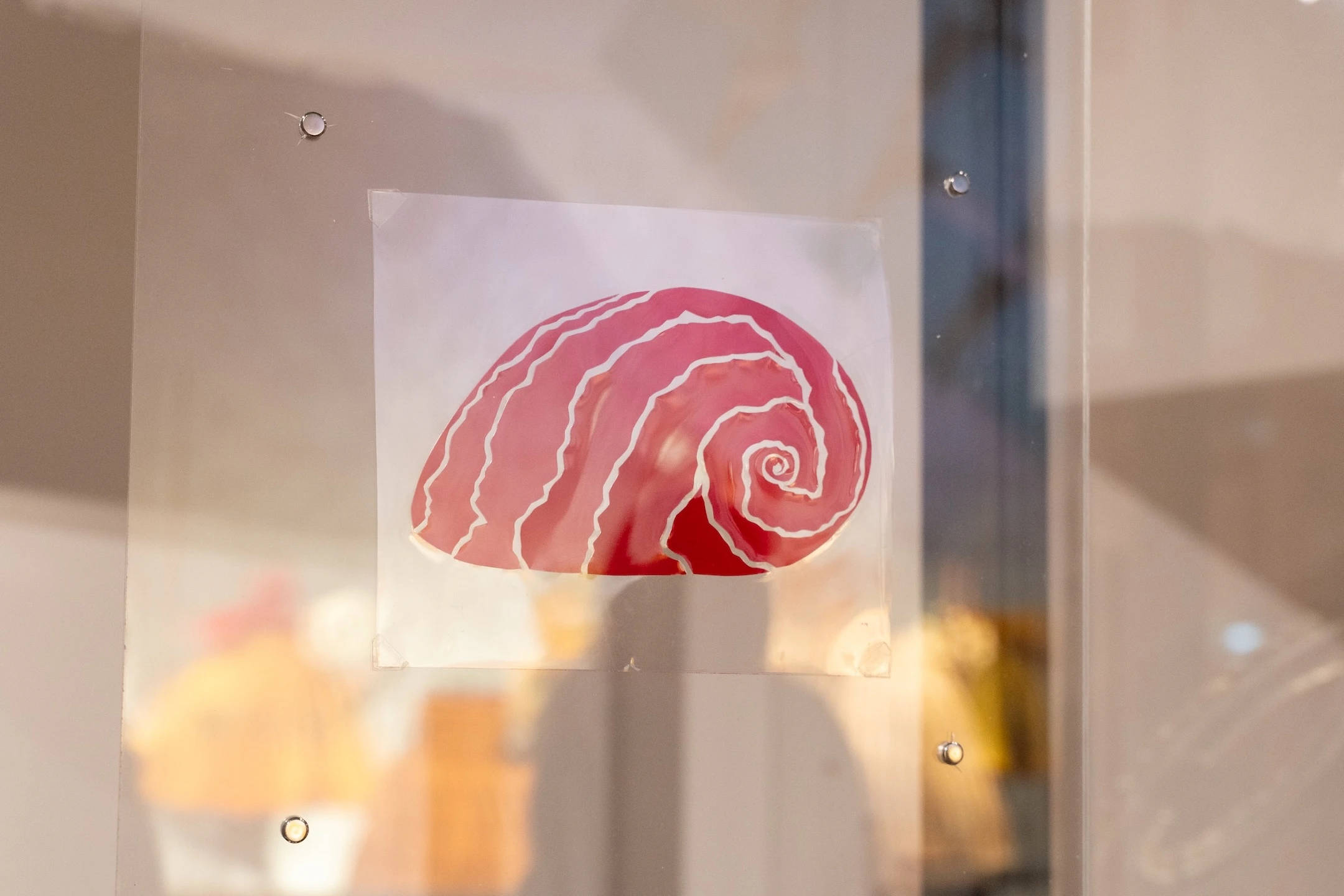
Rubylith artwork, like this design featuring a sea snail, are on display at the exhibit. (Bishop Museum) 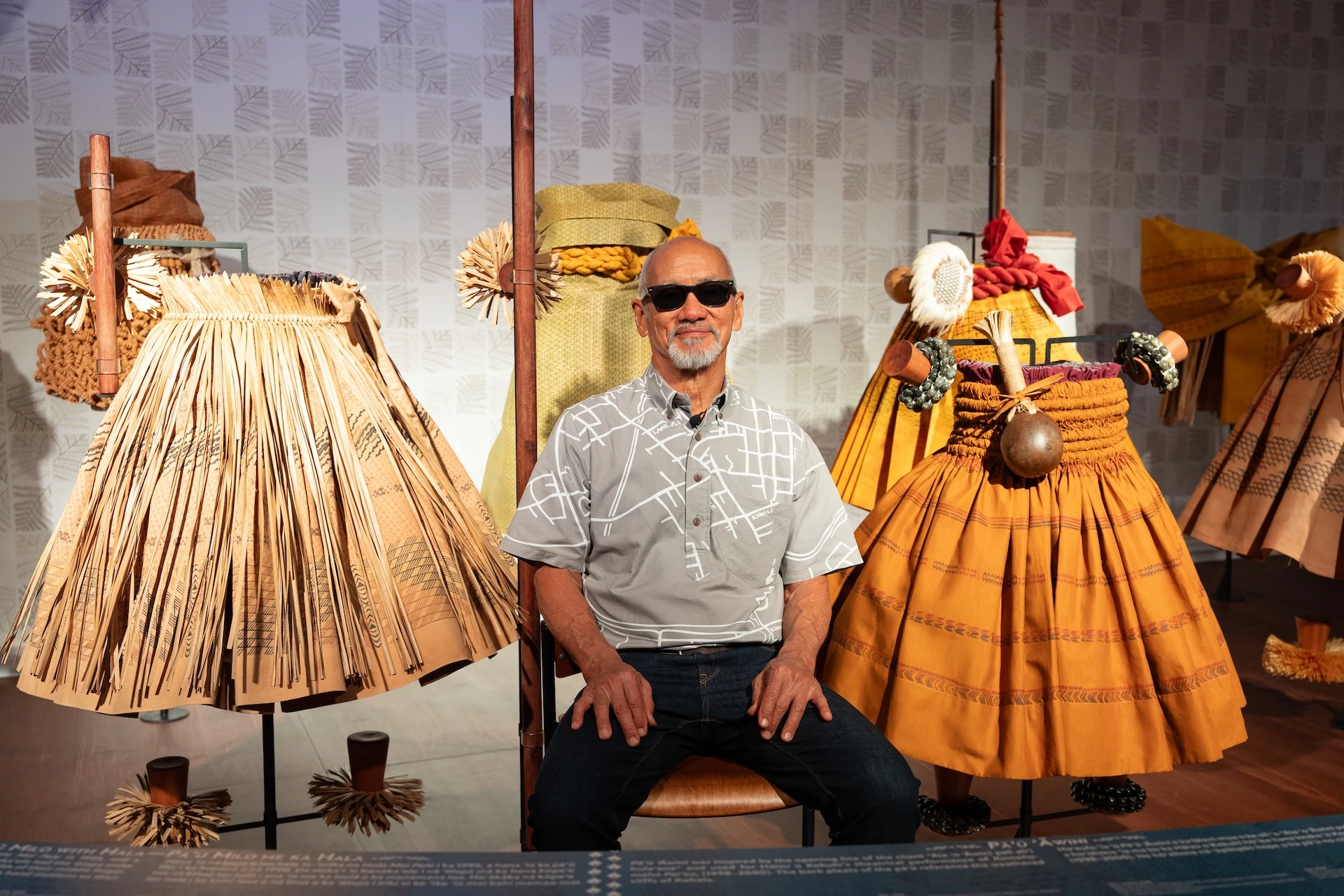
Sig Zane at the newly installed "Ea Mai ʻEiwa: Patterns of Practice" exhibit at Bishop Museum. (Bishop Museum) 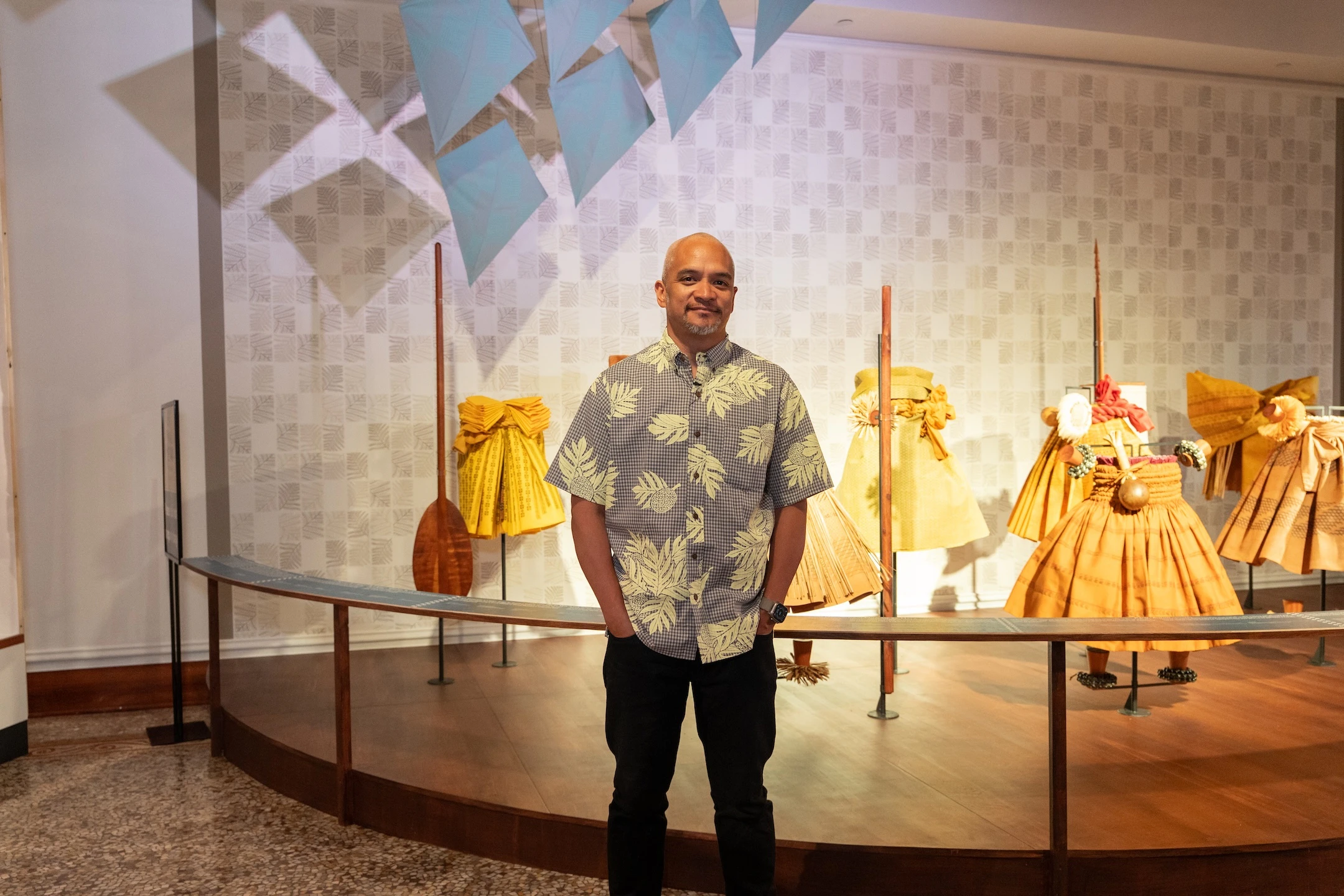
The exhibit features the graphic design and immersive installations of Kūhaʻoʻīmaikalani Zane. (Bishop Museum) 
Kumu Hula Kauʻi Kanakaʻole is a co-curator of the exhibit and the niece of Nālani Kanakaʻole. (Bishop Museum) 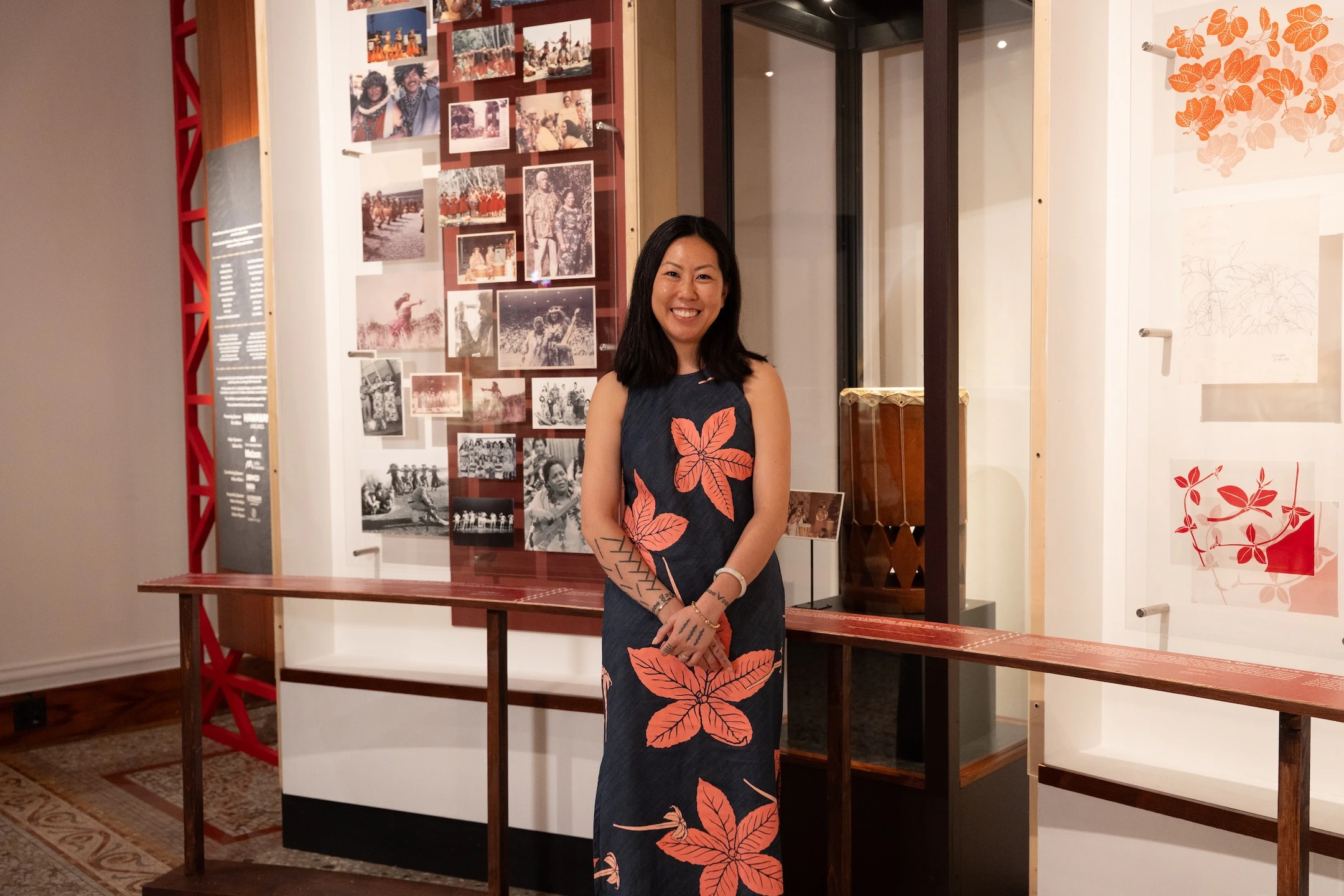
Sarah Kuaiwa is the co-curator of the exhibit and the Bishop Museum’s curator for Hawaiʻi and Pacific Cultural Resources. (Bishop Museum)
The exhibit includes kapa, or cloth made from bark, as well as new and archival sketches and rubylith artwork by Sig Zane from the past 35 years. It also features family photos of the Kanakaʻole ʻohana, plus memorabilia from the theatrical performance “Holo Mai Pele.”
The show was co-curated by Sarah Kuaiwa, who is also the museum’s curator for Hawaiʻi and Pacific Cultural Resources.
“I think in the gallery, my favorite thing so far is seeing how Bishop Museum objects interact with the pieces from artists,” she said. “In some early conversations, it was really made clear that the artists have been referencing Bishop Museum collections in their artwork for many years.”
The exhibit also includes sea snail shells.
“This case is our kūpeʻe from our collections,” said Kuaiwa, gesturing to a case with shells. “Kūpeʻe are a type of sea snail. And what's really cool about them is that they largely live under sand and in darkness for most of their lives, and so their colors are basically absorbed from the environment that they live in.”
The same case also included a few pieces of ivory shaped in the form of kūpeʻe, plus examples of how the shells could be fashioned into pieces worn by dancers.
“And then we have these kūpeʻe, which are examples of a style that Auntie Nālani helped to develop,” Kuaiwa said. “They are worn by the dancers in their practice.”
Conversations about the special exhibit started in fall of 2024 and continued in 2025 even as Kanakaʻole’s health declined, she said.
When asked to describe Kanakaʻole in a few words, Kuaiwa highlighted her enthusiasm for this exhibit.
“In relation to this show, she had the most tenacity of spirit,” she said. “She was the biggest supporter of this show and was very excited to be presenting works with objects from Bishop Museum, which have always inspired her and continued to influence her. I think that she had incredible discipline and vision. And we see that in the costuming that she does, but also in how many different forms of art she produced and made.”
The exhibit is presented in both ʻŌlelo Hawaiʻi and English. It will run through Sept. 20.
For more information, go to the exhibit’s website.
Bishop Museum serves more than 200,000 visitors each year, including 20,000 keiki who visit as part of school trips. The museum is open from 9 a.m. to 5 p.m. daily. Access to the special exhibit is included in general admission which is $33.95 to $38.95 for adults, $30.95 to $35.95 for seniors, $25.95 to $30.95 for youth and free for keiki 3 years old or younger. Details.
Katie Helland can be reached at katie@alohastatedaily.com.
For the latest news of Hawai‘i, sign up here for our free Daily Edition newsletter.