
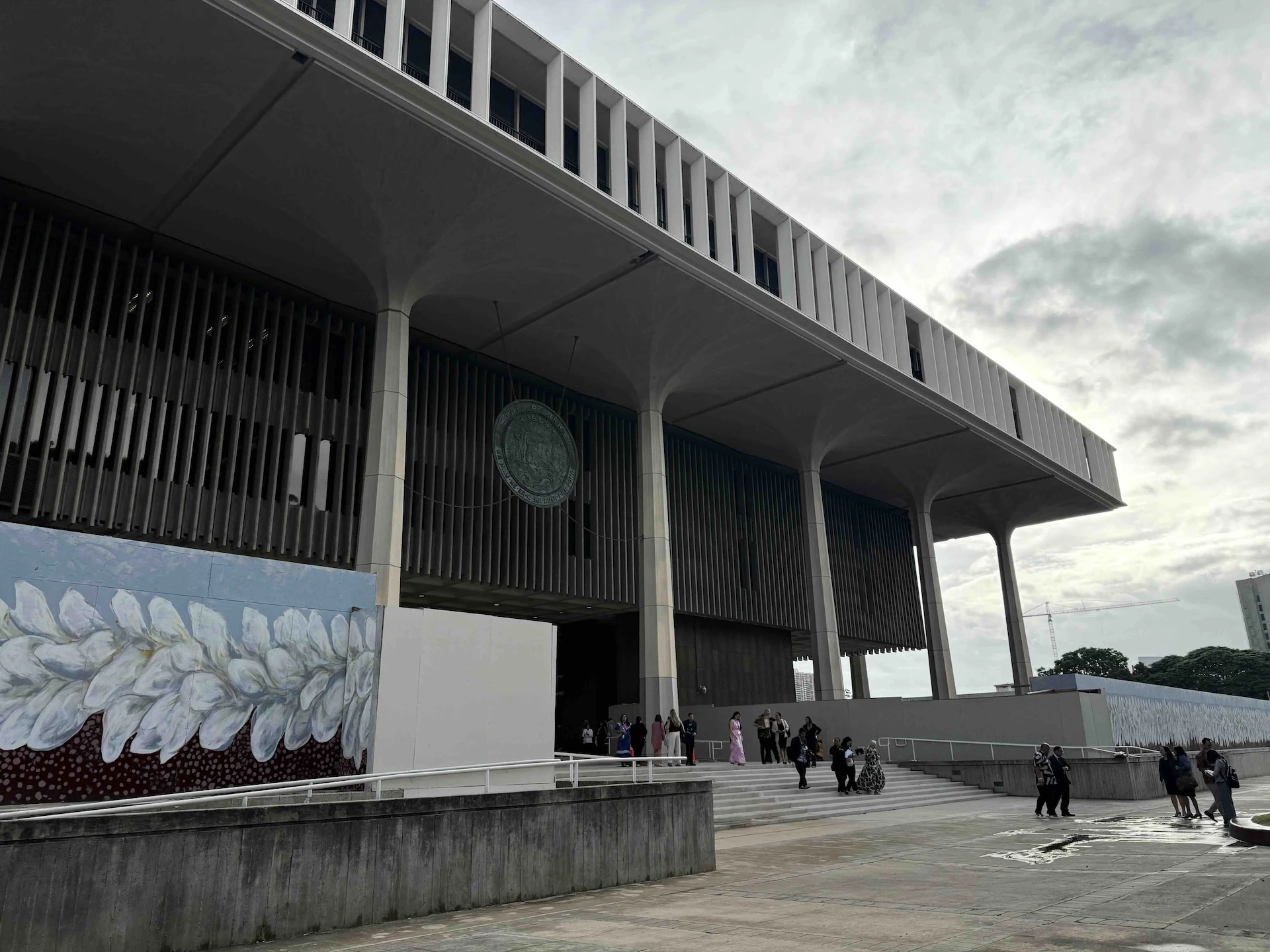
I spoke to you last week about the state legislative session and whether or not it mattered to you. Now that the 2026 session has come to a close, only you can answer that question.
Top of mind, besides the paper bag full of cash, was a great awareness that the personal income tax cuts passed in 2024 were in jeopardy leading up to this session. The 60-working-day calendar saw frenetic activity in both chambers and the fifth floor of the Big Square Building, each working their respective rooms. The media was equally frenetic keeping the issue top of mind as public feedback was expressed in online platforms, emails, and phone calls with actual impact in the offices of elected officials.
In the last days an agreement was struck. The tax cuts would remain.
This is where it becomes a bit murky.
Progressive taxation is based on government deciding if you're rich or poor.
Various income levels are either arbitrarily subjective or mathematically computed which defines who gets what and who doesn't.
In the case of the 2024 tax cuts which all were to enjoy, there is now a tax increase on higher wage earners.
The definition of highest wage earner or wealthiest taxpayer or just plain rich was set at $350,000 for joint filers and $175,000 for individuals. These numbers were preserved from the original Act 46 tax cuts of 2024. What has emerged is a new tax rate of 13% on those joint filing income of $1 million and above.
This is the key element in raising more money for the state. It's targeting the "rich" over and over again so the state can take care of those who can't take care of themselves.
Let's be very clear. This is not an assault on those who find it extremely difficult to make ends meet here at home.
But I submit the real issue isn't whether we redistribute wealth (we shouldn't) but why people feel it's necessary. Pointedly, why do so, so many fall short?
It's because Hawai‘i is the most expensive state in the United States, and it is not close. If you're researching the cost of living in Hawaii because you're thinking about moving here, retiring here, or just understanding what it would actually take — this is the honest 2026 breakdown. Real numbers, current as of April 2026, from two licensed O‘ahu realtors who budget in these numbers every month:
• Overall cost of living index: ~180–185 (national average = 100).
• Oahu median single-family home: ~$1.2 million (April 2026).
• Average Honolulu 2-bedroom rent: $2,500–$3,800/month.
• Electricity: ~43¢/kWh residential; average bill $200–$250/month, up to $500 with heavy AC.
• Groceries: ~53% above U.S. average. Gallon of milk $6–$8.
The eternal financial question that is asked is, "Why?"
I'll tell you why.
Because this state has been under complete, absolute control of the Democrat party and its union supporters for generations. This relationship is the key ingredient for explaining why we are perennially the most expensive place to live. Period.
And until that dynamic changes Hawai‘i will never change.
Most of these "rich" people are small businesses, entrepreneurs who take all the risk of starting and maintaining a business in the nation's worst state for doing exactly that. It's through their toil and sacrifices that these "rich" people can navigate the precarious waters of regulation, fees and, yes, taxation in Hawai‘i. The largest employer in our community are small businesses supporting the general public with first-time jobs, career paths, and the opportunity to provide for themselves and their loved ones.
And that's just the second-order benefits of their existence. Let's not forget the multitude of products and services they provide! Need help with tax prep? Plenty of local talent you can hire. Hungry for a cookie? Yeah, small business makes those, too, and they're delicious. Crack open a Yellow Pages — they still exist. Everything from crack seed to cyber security, all on offer from local businesses, not the State.
And that's where this issue of "rich," rich enough to tax harder, bites them.
Small businesses, sole-proprietorships, gigging-income workers and others will report their business revenues as income on tax filings. Not all, but a great deal. Small businesses in Hawai‘i operate on razor thin margins. The gross revenue reported is then subjected to the cost of doing business - overhead.
Revenue - hard cost = real income.
This is the ancillary impact on families who provide employment to others, engage in commerce supporting other businesses, generate sales, then collect the GET for the state and more. Where is the love for these people?
Rugged individualism is not a detriment. It is not selfishness and it should not be subjected to penalty. There seems to be an unshakeable conviction in our Democrat-dominated government that redistribution of wealth is a good, positive and uplifting concept. Government says you have enough and these folks do not. So, we're going to take from you and give to them. I mean, that's what is really going on and, no, I'm not trying to be Captain Obvious. But hardly anyone says it for what it is.
Instead, in the halls of government they extol the virtues of aloha, our sense of ‘ohana and that we're such a giving and loving people. We are all the same in life and we should support one another at all times.
Yes, the sentiment is ideal and theoretically embraced by all.
But there is a difference between giving and taking.
Hawai‘i is known for her generosity in charitable giving. However, this giving is a choice. You choose to give. You choose to support. And you have the right to choose the financial path that is best for you and your families.
When those who are successful and who earn more are singled out for increased taxes by government it ceases being a choice — it's a mandatory and statutory seizing your personal revenue to ensure others who make less than you are financially elevated. I would advance the notion that this rises to the definition of discrimination.
Am I wrong?
The 2024 tax cuts proposed, passed by the legislature and signed by Gov. Josh Green was a landmark moment in our state.
Why?
Because it had never happened before. The degrees of cuts contained within the original legislation were unprecedented and there was ecumenical support for such a dramatic change in Hawai‘i's taxation landscape. There would be degrees of relief at all levels, and there was tremendous positivity coursing through the state.
But then talks of "pausing" the tax cuts hit the coconut wireless and the reaction was visceral. Claims of revenue loss from the feds and the drying up of Covid money stoked concerns and in a short time we went from being flush with cash to facing a substantial and troubling shortfall.
A consequential battle ensued between factions in the House and the Senate, Republicans and Democrats and other interested parties with a plethora of proposals but no consensus. A bit of inertia coupled with some territorialism, a smattering of acrimony with the occasional obligatory grandstanding made for compelling theater.
However, in the last hours of this session an agreement in conference committee was reached, led by Senate Ways and Means Committee Chairman Donovan Delacruz. The final package will now go to Governor Josh for his approval.
According to the Hawai‘i Legislative Bureau here's what happens next:
- If the Governor signs the bill by July 15, 2026 (the 45th day after adjournment sine die), the bill becomes law and is given an Act number.
- If the Governor neither signs nor vetoes the bill by July 15, 2026 (the 45th day after adjournment sine die), the bill becomes law without the Governor’s signature and is given an Act number.
- If the Governor intends to veto the bill, the Governor must inform the Legislature by June 30, 2026 (the 35th day after adjournment sine die) and deliver the veto by July 15, 2026 (the 45th day after adjournment sine die). If the bill is vetoed, it will not become law unless the Legislature successfully overrides the veto in special session by a 2/3 vote in each chamber.* The Legislature must convene in special session at or before noon on July 15, 2026 to override the Governor’s veto.
(* The legislature may also amend a bill to answer the governor’s objections. For it to become law, a majority of the members in each chamber would be required to vote in favor of the amended bill, and the governor would then have 10 days to sign it.)
There may be some concerns expressed by Gov. Green, but look for a smooth ride to signing and for this refined Senate Bill 315 of 2026 to become law and issued an Act number.
But there are questions unanswered by the session.
How did such a monumental surplus dwindle down to a substantial deficit?
Why, during a budgetary upheaval, did the legislature approve another $50 million to a special fund?
Why, when facing such fiscal challenge, did the state budget increase from FY 2026 $10.38 billion to FY 2027 $10.69 billion? An increase instead of a decrease?
Finally, just answer this one question above all others:
Why do we have a state annual operating budget for 2027 of $10.69 billion and an overall budget for 2027 (federal funds, bond financing, etc..) of $20.4 billion when we have a state population of just 1.4 million?
Anybody?
Rick Hamada can be reached at rickhamada@aol.com.
For the latest news of Hawai‘i, sign up here for our free Daily Edition newsletter.


