
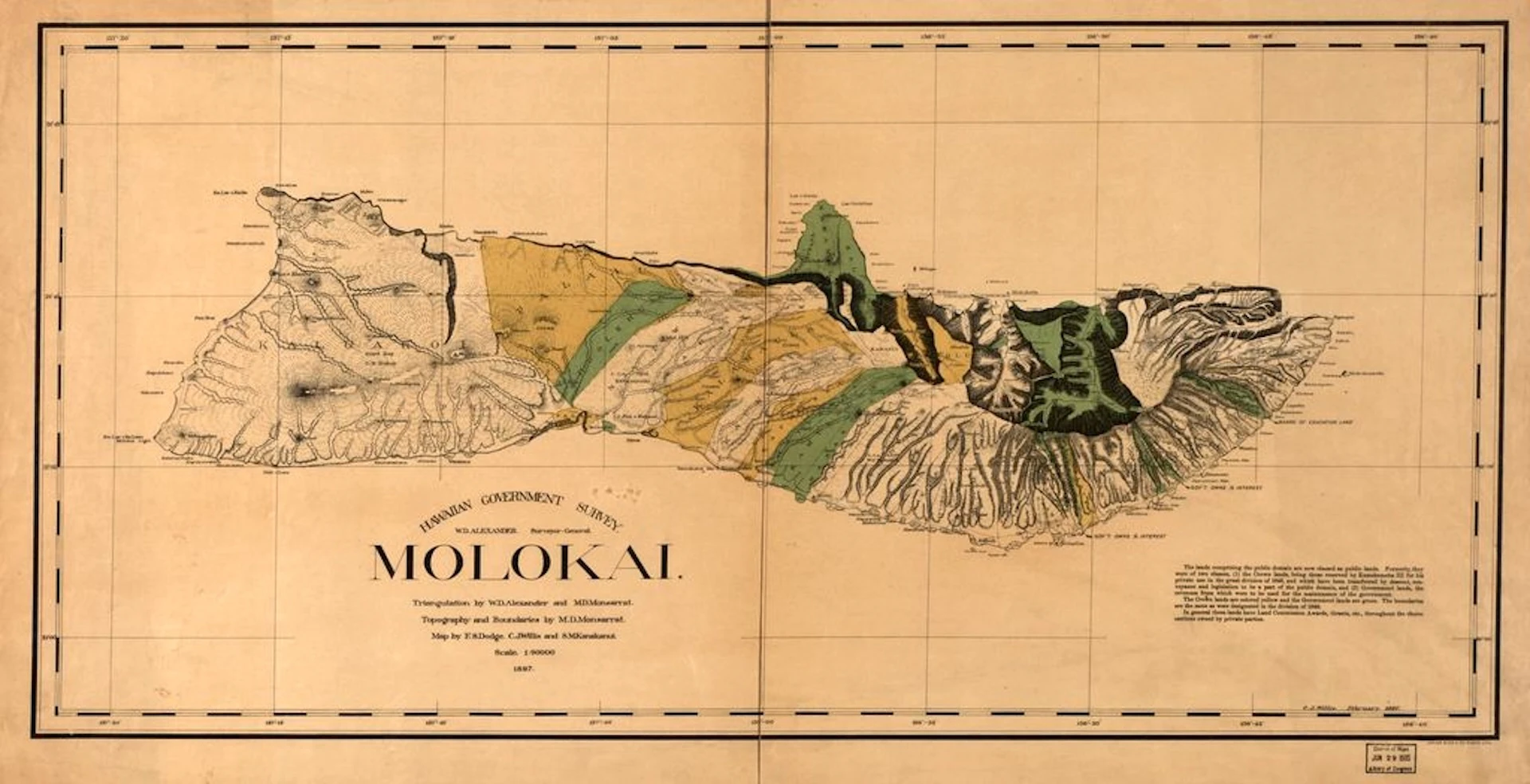
The debate between the spelling and pronunciation of Molokaʻi or Molokai (with or without the glottal stop, or ʻokina, between the “a” and “i”) has been ongoing for decades.
Shortly after Aloha State Daily launched in January 2025, we decided to use diacritics in our reporting and across our website, setting out to do so accurately and consistently. The house style agreed upon at the time was "Molokai," based on this article from The Molokai Dispatch.
We chose to use the ʻokina and kahakō because, one, because our Content Management System allowed for it (some donʻt). But mostly, to preserve the culture, history and meaning of the Native Hawaiian language, people and places we write about daily.
Among our earliest articles was ASD Reporter Stephanie Salmons' interview with Larry Kimura, a professor of Hawaiian language and Hawaiian studies at the University of Hawai‘i at Hilo, who is also known as “the godfather of the Hawaiian language revitalization movement” in the 1980s.
According to past reporting, Kimura also was a producer for Ka Leo Hawai‘i, a KCCN Radio show that ran from 1972 to 1988, where he interviewed native ʻŌlelo Hawaiʻi speakers. Those recordings can be heard at Kaniʻāina (ulukau.org/kaniaina). Naturally, he was one of our go-tos on the Molokai question.
“Those speakers, who were born and raised on Molokaʻi, all pronounced the name of their island as Molokaʻi with the ʻokina letter,” Kimura recently told ASD by email. “Also, all the Native Hawaiian speakers not from Molokaʻi who interacted in conversation with them pronounced Molokaʻi with the ʻokina. … It is too bad the missionary alphabet did not know how to deal with that phonetic letter for the Hawaiian spelling back then.”

For Hawaiian references, our newsroom primarily uses this site, wehewehe.org, or a physical copy of the revised Hawaiian Dictionary co-authored by Mary Kawena Puku’i and Samuel H. Elbert in 1961, along with the revised and expanded edition of “Place Names of Hawai’i” by Puku’i, Elbert and Esther T. Mookini.
Those resources list the island as “Molokaʻi,” the latter book defining it as being “38 miles long, 10 miles wide, 261 square-miles in area, and in 1970, a population of 5,261.” Today, its population is between 7,000 to 7,500 people, per the most recent census data.
Merriam-Webster cites the geographical name as "Molokai," varying as “Molokaʻi." UH Hilo’s online Hawaiian dictionary has entries both ways but lists “Molokaʻi” first and most often, followed by “Molokai,” citing the revised Hawaiian dictionary by Henry H. Parker from 1922.
Peter T. Young of local planning and consulting firm Hoʻokuleana LLC, opined that this debate dates back to 1778 when Captain Cook visited the Hawaiian Islands and attempted to turn an oral language into a written one, using Morotoi, or Morokoi (Molokai). See how the early writers spelled and pronounced certain words here.
What seems to be the biggest point of contention; however, is over its meaning.
Molokaʻi (pronunciation: Moh-loh-kah-ee) translates to twisting or turning (“mola”) leader (alakaʻi).
Molokai (pronunciation: Moh-loh-kye or (Moh-Kye) means “twisting waters (kai)” or "gathering of ocean waters.”
Molokai native Miki'ala Pescaia shared with the Office of Hawaiian Affairs’ Ka Wai Ola magazine in June 2021: “When you put them together, what makes more sense — ‘Moloka'i’, the twisting leader, or ‘Molokai’, the twisting ocean waters? The late Harriet Ne — a historian, hula master and one of my father's teachers — said it should be 'Molokai,' referring to the waterspouts often seen off the island. Old maps show spelling variations, including Molokai, Morotoi and Molotoi, but they all have three syllables, not four as there would be when you say those words with an 'okina."
Current KWO Editor Puanani Akamine told ASD, “At OHA, we use the ʻokina mainly because that is how it is spelled in UH Hilo's online Hawaiian dictionary, Wehewehe Wikiwiki. My grandmother was from Molokaʻi and a native speaker. She always pronounced it with an ʻokina, so that is my personal default, as well.”
A 2016 interview by Maui Now asked Hālawa Valley resident Anakala Pilipo Solatorio to share why he uses “Molokai,” which he learned from his grandparents and ʻohana from the island. In the interview he notes, “My kūpunahine Lilia Hale also told me the same thing and went on to say that ʻMoloka'iʻ would refer to ʻAlaka'i,ʻ the Hawaiian value of leadership, which would then change the meaning ... to ‘twisted leader.’”
One Oʻahu-based Hawaiian language teacher didn't want to go on record with their thoughts for fear of backlash from the community. Some of the folks we asked from the Friendly Isle sided with “Molokai.”
Molokai Arts Center Executive Director Alice J. Ka'ahanui told ASD, “Personally, I choose to use ʻMolokaiʻ without the ʻokina because I was born and raised on Molokai and that is the way I was taught by our kūpuna. (It almost sounds like there is an 'okina because the ‘ai’ sounds like ‘eye’ with a heavy accent on ‘i’)."
She added that during the mid-to-late ’80s, that generation of college students started learning to use the ʻokina.
“I remember one person saying they learned the term ʻMolokaiʻ was incorrect because they likened the twisting and turning in the ocean to the way a toilet bowl turns. That cast a negative view of the word, and thinking back was probably used to encourage more people to pronounce it with the ʻokina.” Ka'ahanui continued. “To me, Moloka‘i just became a more contemporary pronunciation.”
“I also remember someone saying that when Mary Kawena Pukui was working on the dictionary, she didn't ask someone from Molokai for the pronunciation. It was someone on Hawaiʻi island that gave her the pronunciation.”
Kumu Pa’a Nui Lawrence Kalainia Kamani Aki of Mana O Molokai is a 50th generation Hawaiian cultural practitioner, who teaches online and in-person workshops on the island.
“I live by the oral teaching of Na Kūpuna O Hālawa Valley, Molokai,” she told ASD by email. “I understand the University of Hawaiʻi standardizing the language. I have heard all the points of views of the younger generation and Na Kūpuna agreeing with the University of Hawaiʻi due to their degrees they have received from these Western education institutions.”
In a 2025 Hawaiʻi News Now video, Kumu Earl Kawaʻa, also from Hālawa Valley, said that the pronunciation is not as important as the meaning, which he acknowledged references the ocean currents surrounding the island's southern shores.
This brings us to a third option — which is that both pronunciations are correct and depends on which ʻohana you are speaking with.
Keldin Calairo-Nakagawa, lead singer of Hawaiian-reggae group High Watah, who was born and raised on Molokaʻi, told ASD this week that he uses both and that either way works.
ASD ghost stories columnist Lopaka Kapanui weighed in, saying, “According to natives of the island, and our dear friend whose ʻohana is from there, it's ‘Molokai,’ or 'rolling waters due to the Ka'iwi channel.'”
But after reading this article from the Mary Kawena Pukui Cultural Preservation Society, his answer broadened to, “Guess it depends.”
While “guess it depends” seems like the best answer for colloquial conversations, as a news organization where words are the backbone of our business and meaning matters not only to us but our readers, our inclination is to stick with Molokai.
What’s yours?
Kelsey Kukaua Medeiros can be reached at kelsey@alohastatedaily.com.
For the latest news of Hawai‘i, sign up here for our free Daily Edition newsletter.


