

Six Kānaka Maoli artists gathered beneath a tiger shark and ‘ulua in Hawaiian Hall at the Bishop Museum for the Wehiwehi Artist Showcase on Friday, June 19. Artists danced up and down the aisles, a musician shared a trombone solo and a poet spoke from the heart, while images of Hawaiʻi played on a screen behind them.
Wehiwehi, an artist residency program for Native Hawaiians now in its second cohort, is supported by the Doris Duke Foundation’s Technologies and Performing Arts initiative. The residency runs from June 17 to June 27 and takes place at Shangri La, a Center for Cultures & Ideas and Museum of Islamic Art, which was previously the oceanside Kāhala home of heiress Doris Duke.
The artists will give one more public performance at 5 p.m. on Saturday, June 27, at Shangri La. While the event is already sold out, it will be the first of up to two larger evening events per year at Shangri La, after an expanded conditional use permit went into effect this year.
Under the permit, Shangri La — which sits on 4.92-acre property in a residential area — can expand some of its event offerings. Among other things, the permit will allow evening events with up to 200 people twice a year.
Guests will be brought in via 24-passenger vans. The new permit allows up to 34,450 visitors to travel to Shangri La per year, a 12.5% increase from 30,624 visitors previously. The annual number of 24-passenger van trips allowed to Shangri La also increased to 1,378 trips, an 8% percent increase from the previous limit of 1,276 trips.
Shangri La has a total assessed value for its land and buildings of $35.8 million — including $27.5 million in assessed land value — according to City and County of Honolulu public records.
Access to Shangri La is limited because it is in a residential neighborhood. For regular tours and special events at Shangri La, buses pick up visitors from partner institutions, such as Bishop Museum and the Honolulu Museum of Art. In turn, Shangri La donates proceeds from ticket sales, after costs are met, to those nonprofits.
“Whenever we have residencies, whenever we have artists, we always try to partner with institutions like Bishop Museum, Honolulu Museum — other venues that are mission aligned — where we can create opportunities for more accessibility to the artists,” Navid Najafi, the associate director of programs and social practice at Shangri La, told Aloha State Daily Friday during a rehearsal for the Bishop Museum showcase. “That's why we do these public programs outside of the doors of Shangri La.”
The showcase of Wehiwehi artists at Bishop Museum included six performances and a panel discussion as part of Creative Labor, Creative Conditions 2026, an artist-led national campaign led by the Doris Duke Foundation. The performing artists included Sean-Joseph Takeo Kahāokalani Choo in theater, Kealoha Ferreira in dance, Kalikopuanoheaokalani Aiu in dance/movement art, Nāwāhineokalaʻi Lanzilotti and Kalia Vandever in music, Jamaica Heolimeleikalani Osorio in poetry and music.

Jamaica Heolimeleikalani Osorio (Poetry/Music) is another one of the Wehiwehi artist residency program participants and is an associate professor of Indigenous and Native Hawaiian politics at the University of Hawaiʻi at Mānoa and a three-time national poetry champion. Her work has been the subject of award-winning film and VR documentary projects that have premiered at Sundance and SXSW. (Lyz Soto) 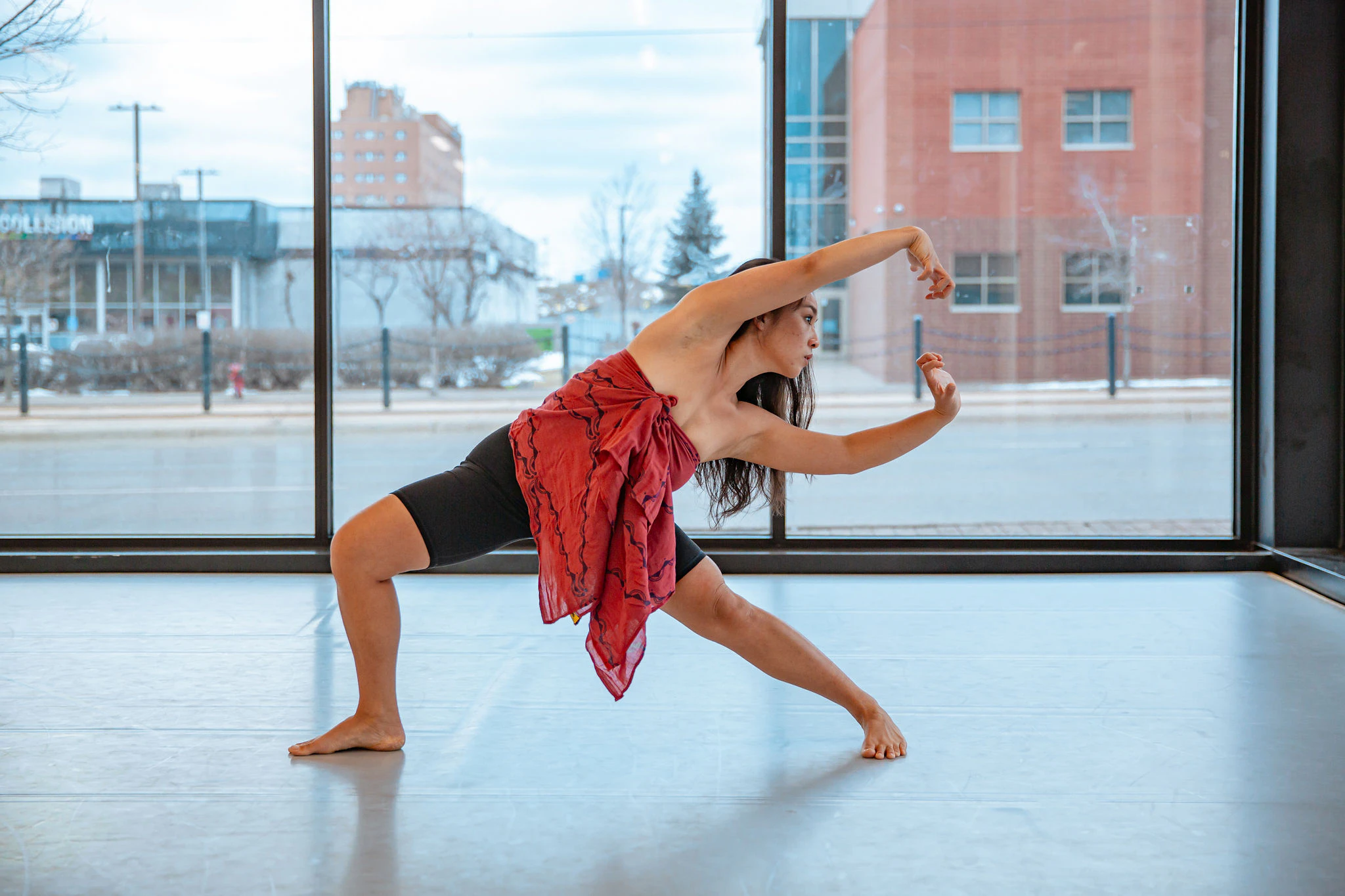
Kealoha Ferreira (Dance) is a Kanaka Maoli, Filipino, Chinese dance artist and the artistic associate of Ananya Dance Theatre in St. Paul, Minnesota. She is also a 2024 McKnight Dancer Fellow. Her practice draws on transnational feminist technique, oli and hula. (Laichee Yang) 
Kalia Vandever (Music) is a Grammy Award-winning trombonist and composer based in Brooklyn, New York. A Juilliard graduate and 2022 Next Jazz Legacy awardee, Vandever is on faculty at the New England Conservatory and has released critically acclaimed recordings including, "Another View." (Lesley Mok) 
Kalikopuanoheaokalani Aiu (Dance/Movement Art) is a māhū/bakla dancer, choreographer, multi-media artist and community organizer based on Oʻahu, whose practice centers ʻāina-based storytelling, Indigenous queer community building and land protection. (Be Ho Castle) 
Sean-Joseph Takeo Kahāokalani Choo (Theater) is a Honolulu-based playwright, performer, director and composer and lead steward of Kamamo House. (Judy Nguyen) 
Nāwāhineokalaʻi Lanzilotti (Music) is a kanaka ʻōiwi multidisciplinary artist, sound practitioner and educator from lower Mānoa, Oʻahu. In 2023 she founded Pulse Oceania, an initiative advancing Pacific sovereignty through Indigenous creative exchange. (Nawahine Lanzilotti)
“We’re just trying to use our resources, the space, the collection, all the stories that are there to activate creative work, connect with community — just bring people together,” Najafi said. “That's really the power of events like this. The creative process is the best way to bring different people together with differing opinions, different backgrounds because creativity, art — that's our universal language that we all speak in different ways.”
Kumu Hula Vicky Holt Takamine, cultural adviser for Shangri La, opened the evening at Bishop Museum. Ben Weitz, executive director at Shangri La, and Kristofer Helgen, president and CEO of the Bishop Museum, also addressed attendees. Several artists from the first cohort of Wehiwehi were present, including Christopher Kaui Morgan, who is the founder and project director of the program, and Moses Goods, who shared a mele inoa, or name chant, honoring John Blossom and reflected on what Juneteenth means in Hawai’i.
Artists participating in the Wehiwehi program receive a total of $10,000 in direct financial support, including $2,500 for a residency in Hawaiʻi and $2,500 for one in the Mainland, as well as a $5,000 creative development grant. Travel and per diem expenses are also covered by the program.
Najafi’s favorite parts of the Wehiwehi program are multifaceted and include that Shangri La becomes a creative campus for Native Hawaiian artists and puts them in connection with its historic collection and in conversation with each other, he said.
“It's living contemporary artists in dialogue with historic artworks and objects from around the world, and finding the synchronicities, the similarities, the connections across sometimes almost 2,000 years of history,” he said.
Learn more about Wehiwehi.
Katie Helland can be reached at katie@alohastatedaily.com.
For the latest news of Hawai‘i, sign up here for our free Daily Edition newsletter.


