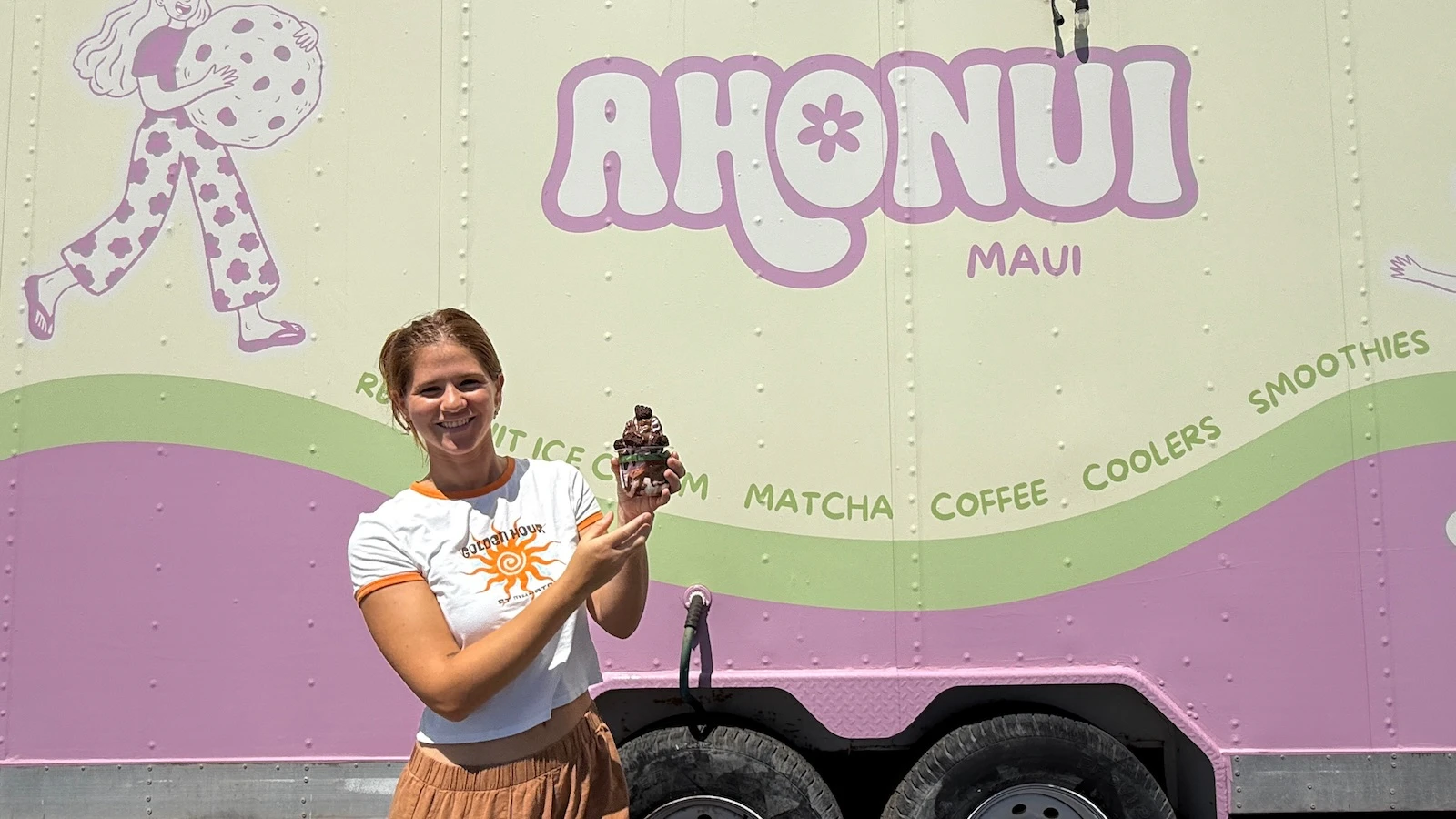
The 32nd annual Made in Hawai‘i Festival drew thousands to the Hawai‘i Convention Center last week.
"While final numbers are still being tallied, we estimate that approximately 70,000 guests attended this year's festival, matching last year's impressive turnout," festival spokesperson Olena Heu told Aloha State Daily in an email this week. "Revenue totals will take a few more weeks to determine as vendors complete their post-event reporting."
The largest-ever MIHF — which took place Aug. 20 to 23 — spanned more than 300,000 square feet across two floors and showcased more than 800 local artisans, makers and entrepreneurs.
The days and times of the festival changed from past years due to construction at the Hawai‘i Convention Center. The expanded days included a VIP Access Night presented by Huaka‘i by Hawaiian on Thursday and a preview night on Friday — and both weeknights drew large crowds.
"Given the addition of two nighttime events, we did not know exactly what to expect," Heu says. "To help create balance throughout the weekend, we extended hours on the other festival days, as well. We are thrilled by the incredible support from our community and grateful to everyone who participated. Attendance remained steady all weekend, making this year's festival a success."
While each day of the festival was unique, Lauren Zirbel, executive director of the Hawaiʻi Food Industry Association, which produces the annual event, said in a statement provided to ASD by Heu that guests on Thursday were the first to shop all of the MIHF vendors and had first access to festival exclusives and limited-edition products — many of which sold out — along with a limited-edition complimentary Hawaiian Airlines cooler bag and other vendor giveaways.
"With more than 800 local vendor booths participating, strong attendance is also important to making the festival successful for the vendors who invest so much in being there," she says. "We sold 7,000 tickets for Thursday and reserved another 750 for qualified and vetted retail and wholesale buyers.
"We’re listening to all the feedback from all our Made in Hawai'i Festival attendees and vendors and taking it seriously. We’ll continue to use what we learn from this year to work to make the Festival the best it can be.”
Heu says that organizers are "extremely pleased" with the event overall.
"It was inspiring to see so many people travel from around the world to support the festival," she told ASD. "I had the opportunity to meet visitors from Italy, Tahiti, and many other places who made the journey specifically to attend, and many of them were returning guests. Of course, our island 'ohana truly showed up and we are incredibly grateful for their support. It was also wonderful to see so many guests from the Neighbor Islands come out to support local businesses and vendors. We are deeply honored by the support shown to our vendor community."
Although there were a few challenges with the entry process on Thursday, Heu says that the festival team adapted and implemented a plan by Friday, and as a result, entry operations improved and the entry process ran "smoothly and successfully" throughout the weekend.
"All four days seemed to pass by quickly, despite the long hours and late nights," she told ASD. "As we begin planning for next year, we will work closely with our vendors to review this year's experience and identify opportunities to further enhance the vendor management process and overall festival operations."
Heu says, too, that this year, the festival tried to provide more transparency about where businesses and their products come from by introducing specific vendor designations and corresponding badges noting the island they came from and were Wahine-owned, Native Hawaiian-owned, designed in Hawai‘i and manufactured in Hawai‘i businesses.
According to Heu, vendors self-selected the applicable designations during the application process, which were reflected online and through physical badges — stickers that vendors could place on their booth signage, at their register or on their tables — provided to participating vendors onsite. However, Heu says that while the system provided "an additional way for guests to understand and distinguish participating businesses, adoption of the physical badges was limited. Only a small fraction of vendors displayed the badges prominently at their booths, which meant the initiative was not as visible to guests as we had hoped."
"For future festivals, we should consider ways to make these designations more prominent and consistent across the event, rather than relying primarily on individual vendors to display the badges themselves."
Also new this year was Kilo Summit, an installation founded by Zak Noyle and Kuha‘o Zane that brought together a curated collection of local artists, designers, musicians, brands and storytellers.
Noyle previously told ASD that a big piece of the experience was a locally created app that unlocked when you were on the convention center property. It allowed shoppers to buy items from Kilo Summit collaborators online and pick up later. It also proved to be popular.
Heu says the Kilo Summit organizers "did not anticipate the tremendous turnout and overwhelming demand for their offerings."
"The experience was immersive, energetic and thoughtfully executed, representing countless hours of planning and hard work," she says. "Following the first evening, the team quickly adapted to accommodate the unexpectedly high demand. The response was remarkable, with more than 500 orders placed within the first 10 minutes. The volume of activity created challenges, but the team responded swiftly by evaluating operations and implementing improvements to support both front-of-house and back-of-house efficiencies."
"We reorganized the next day, and thanks to Keola Kelia and Kuhaʻo's teams coming in and helping, it became a well-oiled machine," Noyle said in a statement provided to ASD.
On the last day of the festival, $40,000 was donated to the Hawai‘i Foodbank and The Food Basket on Hawai‘i Island, thanks in part to donations from attendees and support from the Hawai‘i Food Industry Association and Servco.
A record-breaking MIHF drew approximately 70,000 attendees and generated approximately $10 million in sales in 2024. The festival saw about 70,000 visitors over three days last year and vendors reported sales just under $10 million, Heu previously told ASD.
Stephanie Salmons can be reached at stephanie@alohastatedaily.com.
For the latest news of Hawai‘i, sign up here for our free Daily Edition newsletter.