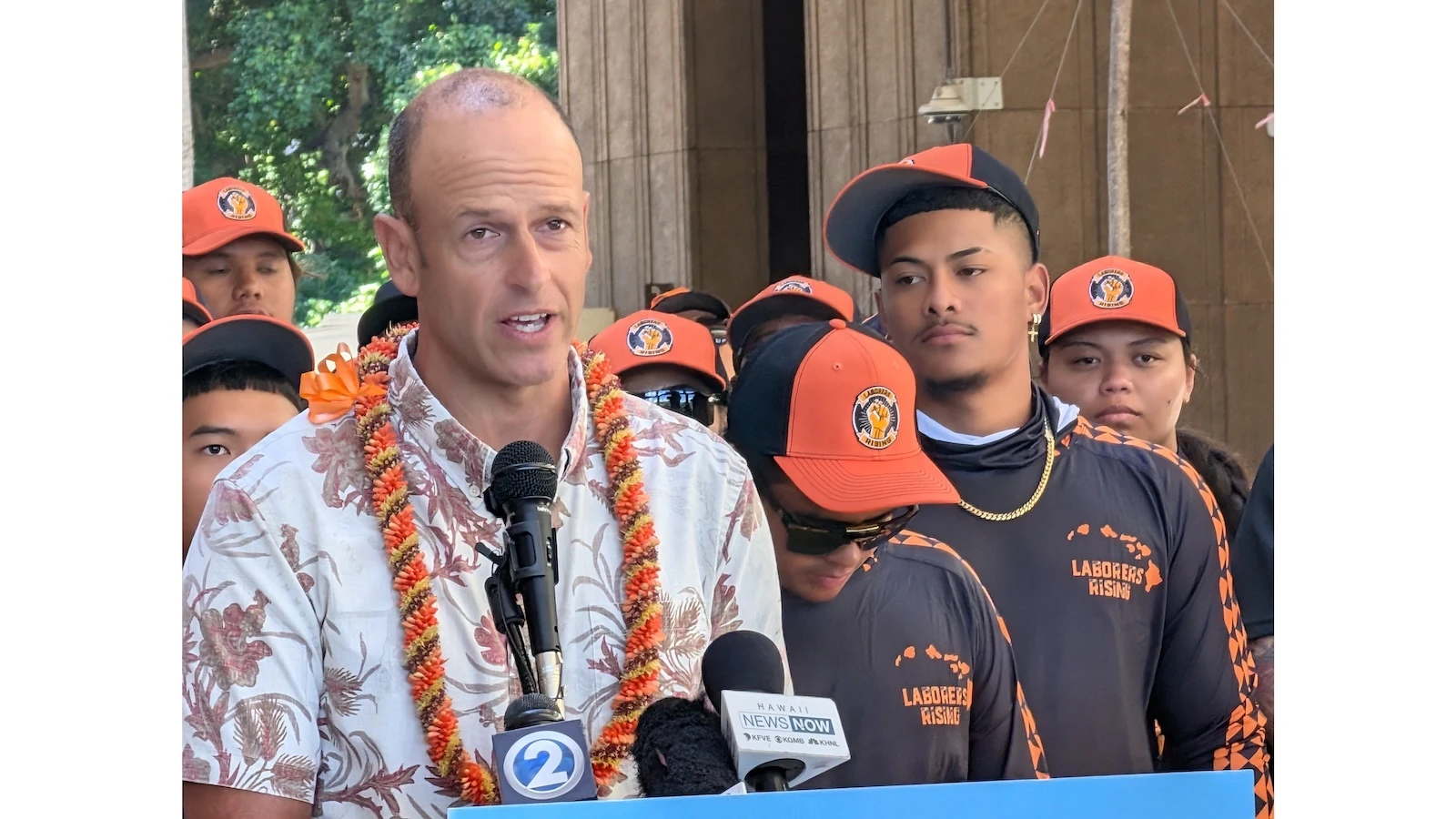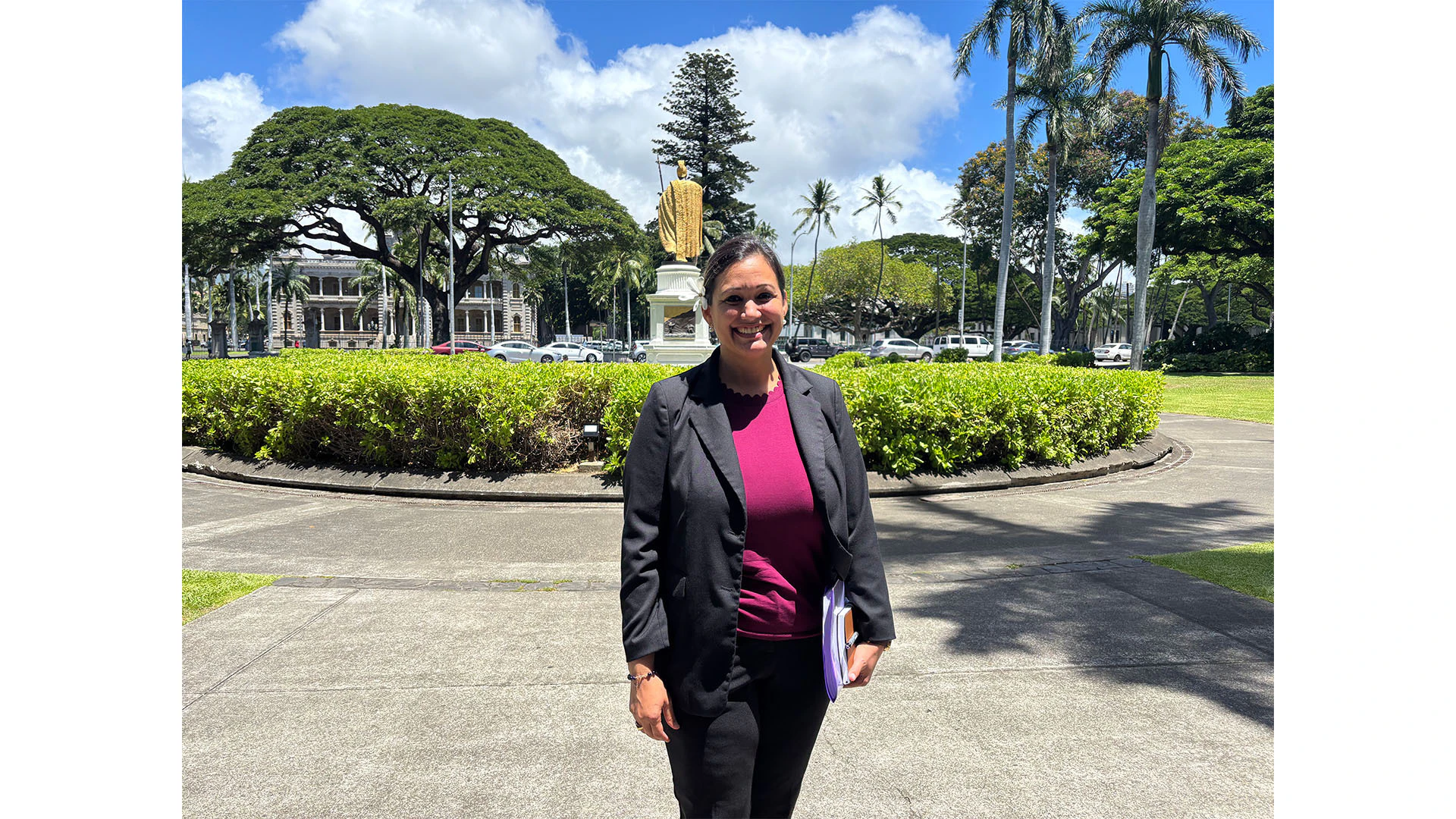
The Hawaiʻi Supreme Court will rule by Friday on the future of state House District 43 after incumbent Kanani Souza challenged the tiebreaker in the Republican primary election.
Candidates Kristen “Kanani” Souza and Sheila Medeiros, both Republicans, tied with 842 votes in the August primary. Hawaiʻi law says that if a race ends in a tie, the chief election officer in a state race, or the clerk in a county race, will decide the tie "by lot."
Election officials put Souza and Medeiros’ names in plastic eggs, placed those eggs in a lauhala basket and selected Medeiros in a drawing on Aug. 15. Since Souza and Medeiros were the only candidates in the election and from the same political party, Medeiros was named the representative-elect for House District 43.
Souza is challenging the tiebreaker in court, suing Hawaiʻi Chief Election Officer Scott Nago, Acting Honolulu City Clerk Chadd Kadota and Honolulu Elections Administrator Rex Quidilla and asking the justices to invalidate the tiebreaker method.
Quidilla testified Wednesday that two District 40, precinct three voters were mistakenly given ballots to vote in District 43, precinct 3 on election day at Kapolei Hale. That created two overages for House District 43-03 and two underages at House District 40-03 in which there was a discrepancy between envelopes received and the ballots counted. Quidilla called this an “isolated error” based on his review of the investigation.
Once ballots are in the machine, election officials cannot tie ballots back to individual voters to ensure every voter’s right to secrecy.
While state law requires election offices to decide ties by lot, there is no rule or policy that dictates the method.
Nago said that the tiebreaker method mimics how the Office of Elections decides the order that political parties show up on the primary election ballot, and that the office has been using that method since prior to 2020.
The overage/underage report for Oʻahu was compiled on Aug. 20, five days after the drawing, according to Nago. He said that the overage/underage report is not part of the initial tabulation but the post election audit, and does not impact the results of the election.
Associate Justices Todd Eddins and Lisa Ginoza grilled Nago, Kadota and Quidilla, and their attorneys, Wednesday morning at Aliʻiōlani Hale.
“Leave it to the voters”
Souza’s attorney, Thomas Otake, argued that the justices should order a new primary election.
Hawaiʻi statute says that candidates or political parties can file a complaint in the supreme court when there are “provable fraud, overages, or underages, that could cause a difference in the election results.”
“We now know that there were two illegal ballots that were cast and that could have affected the outcome,” Otake said. “The question is not whether or not something needs to be done, but what.”
Otake suggested that a new primary election could take place at the same time as the general election or at a later date.
“Essentially what we’re suggesting is that if there was no other way to decide on who the winner was, then we should leave it to the voters,” he said. “We don’t just throw our hands up in the air and say ‘we can’t do anything so we’re just going to let it stand.’”
Otake also took issue with the lack of a formal rule determining how a tie is broken, and argued that the state should provide a plan, hear public input and decide on a rule.
“I cannot imagine that if it went through that process, that an Easter egg in a lauhala basket would’ve been the rule,” he said.
Justice Eddins asked, “even if it wasn’t the Easter egg and lauhala basket for a tie in the general election, say it was a flip of a coin, don’t you still need a rule for that anyway?” Otake said that was his point exactly: “there needs to be a rule. It needs to be promulgated.”
State stands by the statute
Deputy Attorney General Kendall Moser, representing the state, stood by state statutes that dictate that the chief elections officer decides a tie by lot.
“We assume that the statutes that govern the Office of Elections are constitutional and that the chief elections officer and the office generally follow those statutes," he said. “We simply have a set of statutes as written as the Office of Elections, we follow them.”
If something does need to change in how a tie is broken, that’s “for someone else to decide.”
Ginoza asked, “is it the state’s position that the most important thing is to declare a winner, even if the votes cannot be accurately counted?”
Moser said that it was the state’s position that a winner has been declared, and Souza has to prove that Nago’s decision on how to break the tie was incorrect.
The justices challenged Moser with multiple hypotheticals, like what the court should do if there was fraud that caused a tie, what should happen if the same situation involving the two voters at Kapolei Hale impacted the senate district and what the remedy would be if they declared the tiebreaker method improper.
What happens next?
Associate Justice Sabrina McKenna said the court will rule in the case by Friday.
Justices brought Nago back to the stand near the end of the hearing and asked what a second primary election would look like if they did rule in Souza’s favor. Nago said that the Office of Election could place a second primary race between Medeiros and Souza on the general election ballot, but those ballots would be sent to all District 43 voters, not just residents who identify as Republican voters in a primary. The office could also call for a special primary election after the general election.
Ballots for the general election will be printed by Sept. 11.
Medeiros told the court that she did not object to the tiebreaker method in August.
“I respectfully request that the certified results remain in place unless the court determines that the law requires otherwise,” she said.
Souza told reporters after the hearing that she believes the justice’s questioning was a sign that they will call for a new election.
“I’m very pleased today that truth came to light, transparency prevailed and that’s ultimately what matters to me,” she said. “I do think that I’m not here fighting for myself, I’m here fighting for the voters of House District 43 who deserve a representative that they’re actually electing.”
Haley Lehman can be reached at haley@alohastatedaily.com.
For the latest news of Hawai‘i, sign up here for our free Daily Edition newsletter.