Changing Kaka‘ako: Remembering Ward Warehouse

Ward Warehouse was never meant to last — even the previous owners who built it, Victoria Ward Ltd, always intended for offices and high-rises to take its place. But it had a four-decade run from its 1975 opening to its 2017 demolition, featuring such businesses as Old Spaghetti Factory, Orson's, The Liquor Collection, Nohea Gallery and more. Here's a look back at the shopping center, including a glimpse of the neighborhood before Ward Warehouse came along and fishing, rather than shopping, was the area's industry.

DB
DeSoto Brown

October 02, 20268 min read

Ward Warehouse 1974 logo
The original 1974-1975 logo of Ward Warehouse, emphasizing its natural wood exterior. (DeSoto Brown Collection)

Do you remember Ward Warehouse? It was something of a landmark in Kaka‘ako once, but after being demolished nearly 10 years ago it’s now on its way to being forgotten.

The Ward family is foundational to the history of Kaka‘ako. Back in the 19th century, the clan came to own a large tract of land stretching from their private home that was just across King Street from Thomas Square, all the way down to what is now Kewalo Basin. This ownership, of course, is the origin of the name Ward Avenue for the street that formed most of the boundary of the property on its ‘Ewa side.

Ala Moana Boulevard in Ward area 1940
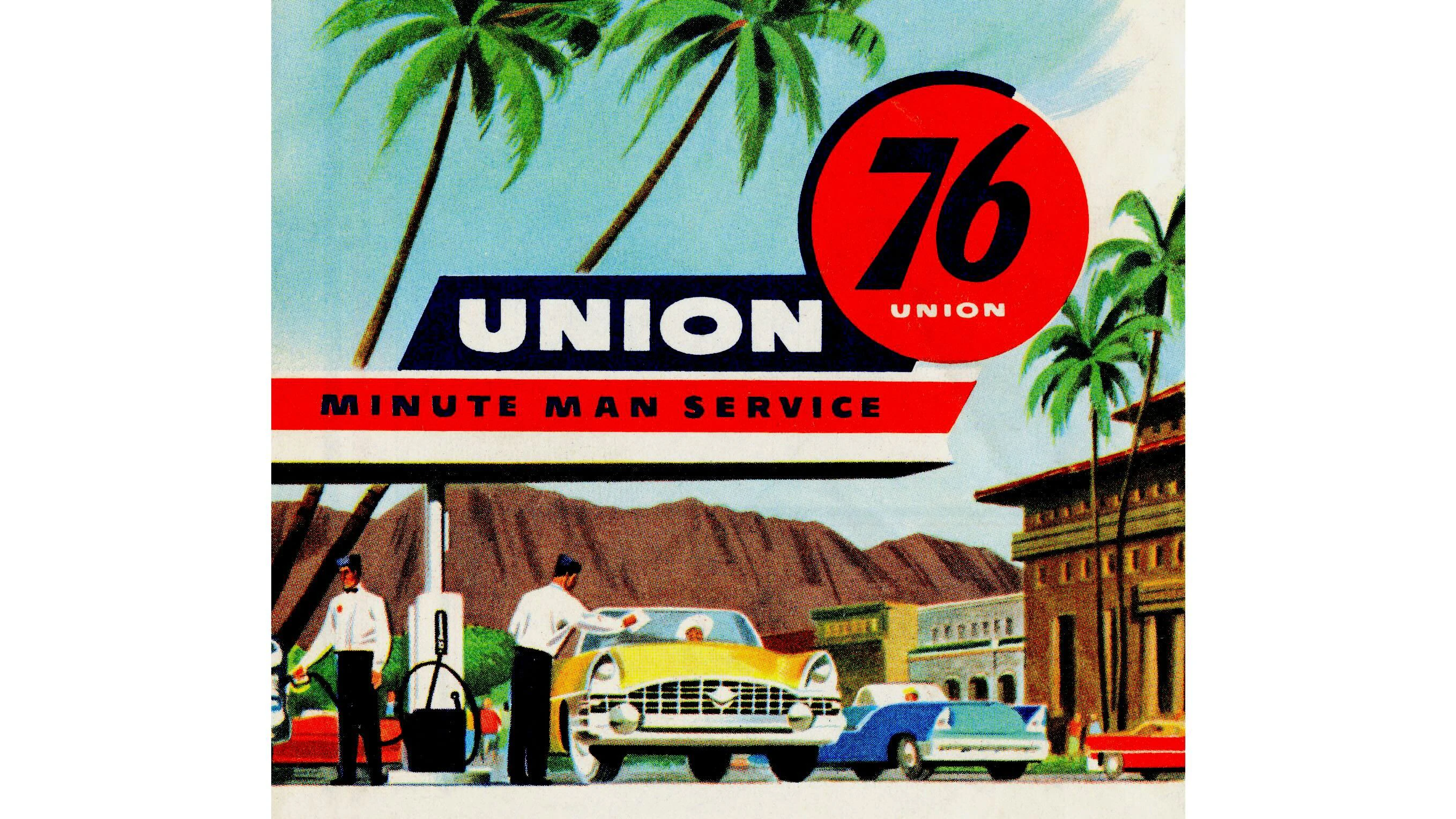
A 1940 view of Ala Moana Boulevard (with parked cars) at the Ward Avenue intersection (far left, at the 76 gas station). Small commercial buildings occupy the site where Ward Warehouse will be constructed 30+ years later. (DeSoto Brown Collection)

By the middle of the 20th century, the Ward land contained a mix of private homes and a variety of business tenants. The family-owned corporation that managed the property, Victoria Ward Ltd., started taking small steps towards more lucrative tenants in the 1950s but ramped up its redevelopment goals in the early 1960s by constructing a series of modern, low-rise structures.

Ward Avenue (right) at Auahi Street (left) in 1970
Ward Avenue (right) at Auahi Street (left) in 1970. Older wooden structures house Cost Less Imports, with a car dealership to the left; all this would be replaced by Ward Warehouse not long afterwards. (Alan L. Brown)

A major new commitment came in early 1974 with the start of construction of Ward Warehouse on a 4.1 acre site between Ala Moana Boulevard, Ward Avenue and Auahi Street. The location had some special considerations in that it was covered by two very different types of zoning: one was for retail while the other was strictly for wholesale and industrial uses. The latter category was slightly problematic for what was intended as, essentially, a shopping center open to the public, and initially required a careful selection of tenants.

Ward Warehouse’s original site plan
Ward Warehouse’s site plan from its first promotional brochure. Buildings A, A-1 and B-1 were zoned for retail and restaurant use. Buildings B-2, C and D were for manufacturers and wholesalers. (DeSoto Brown Collection)
Ward Warehouse in 1975
The newly-opened Ward Warehouse in 1975, seen from the entrance to Kewalo Basin, is the low-rise wooden complex stretching from left to right behind the docked boats. Only a few touches of bright geometric patterns decorate the wood façade. (DeSoto Brown Collection)
1976 aerial photo of Kewalo Basin
This 1976 aerial view shows Kewalo Basin with Kakaako inland of that. Ward Warehouse fronts onto Ala Moana Boulevard, and mauka of that (from left) is the GEM store followed by the five silvery-colored warehouses of the Ward Farmer’s Market. These blocks, moving all the way to the IBM Building partially visible on the right edge of this photo, have all been entirely cleared of these structures today. This constitutes the Howard Hughes Corporation’s master-planned Ward Village community. (DeSoto Brown Collection)

Designed by architect Steve Au, Ward Warehouse had a notably 1970s appearance. The hippie movement in the USA by this time had popularized more earthy, natural materials, so the complex’s exteriors were dark-stained wood, inspired in particular by a trend-setting development called Sea Ranch in California from the late 1960s. The only outside decorations were sections of bold painted “supergraphics” in geometric patterns. Industrial elements were not covered up but were openly displayed; on the outside, pipes and fittings were painted in bright colors to show them off, along with some oversized machine parts that were installed purely as decor. Inside the rental spaces, high ceilings showed undisguised conduits, light fixtures and air-conditioning ducts. Floors were concrete and walls were mostly unpainted wood. The effect was “honesty” in materials vs shiny synthetic surfaces.

Ward Warehouse 1979
Ward Warehouse was laid out with wooden structures facing each other with parking in between them, with more parking along the mauka / Auahi Street side to the left in this photo. (DeSoto Brown Collection)
Ward Warehouse 1979
Seen here in 1979 is part of Ward Warehouse’s second floor. The brightly painted machinery on the walkway is purely decorative. The overall feeling of this shopping complex was appealingly walkable. (DeSoto Brown Collection)
Ward Warehouse 1979
The 1970s look was very strong in Ward Warehouse’s early years, as this photo clearly shows. (DeSoto Brown Collection)

Ward Warehouse opened with 87 tenant spaces; some interiors had the potential for the construction of mezzanines. Parking on the ground level accommodated 250 vehicles while the four-level concrete garage had 400 more spots. A soft opening for some businesses took place in time for Christmas 1974. By April 1975 the complex was placing large display ads in the Honolulu newspapers.

Ward Warehouse first brochure
This is Ward Warehouse’s first brochure. The map on the left shows that this location was initially considered something of a gamble for a new shopping center, being in a neighborhood previously not known for such things. The gamble was a success. (DeSoto Brown Collection)
detail of Ward Warehouse
What usually constitutes the inner workings of a building for the public, kept out of sight in most cases, was left in open view at Ward Warehouse – pipes, wires, etc. (DeSoto Brown)
more architectural details of Ward Warehouse
No dropped ceilings covered up air-conditioning conduits or light fixtures here. (DeSoto Brown)

Those who are old enough to have patronized Ward Warehouse will undoubtedly remember particular stores or restaurants they regularly visited. For many people, the Old Spaghetti Factory at the far ‘Ewa end, with its two-story interior spaces, was surely a favorite (it has since moved to Aloha Tower). Embellished by numerous antique light fixtures and other old-time props which the company had been able to accumulate when such items were mostly inexpensive salvage goods from the demolition of 80- or 90-year-old structures in the USA, the low-cost restaurant had a unique feeling in its diverse seating areas.

Old Spaghetti Factory, Ward Warehouse
The eclectic décor of The Old Spaghetti Factory is on view here. That’s an old streetcar at left center. (DeSoto Brown)
Old Spaghetti Factory, Ward Warehouse
Large stained-glass windows and massive hanging light fixtures from the past were among the salvaged treasures adorning the Spaghetti Factory. (DeSoto Brown)

Of course many other businesses came and went through Ward Warehouse over the years. There was the Liquor Collection which was filled with limited-edition figural ceramic specialty bottles, stores just for outdoor furniture, kitchenware, and flags, and the Nohea Gallery for local artwork of all kinds.

Ward Warehouse after 1990s/2000s refresh
At some point in the 1990s or early 2000s, Ward Warehouse was “refreshed” with a new paint job in a more trendy combination of teal and beige. Its attractive human scale remained intact. (DeSoto Brown)

Ward Warehouse was never intended to last throughout the ages. A 1969 newspaper article quoted a statement from Victoria Ward Ltd that said offices and high-rise structures were eventually planned along Ala Moana Boulevard. Closure of the shopping center came on July 31, 2017 followed by demolition that began in November.

Ward Warehouse in 2017
In 2017 Ward Warehouse’s end was announced. These low-rise structures facing Ala Moana Boulevard were doomed. (DeSoto Brown)
Ward Warehouse 2017
The view along Auahi Street in 2017 was inviting to passing motorists. Kaka‘ako’s redevelopment into a high-rise enclave has lost this sense. (DeSoto Brown)
Detail of Ward Warehouse
These massive wooden beams bolted together with strong iron braces were a memorable aspect of Ward Warehouse. (DeSoto Brown)
Ward Warehouse demolition
A great deal of the materials of Ward Warehouse were saved to be resold for new uses, but not all of the beams and braces were salvaged. Some are visible here in the demolition debris in January 2018. (DeSoto Brown)

Howard Hughes Corporation, by then the owner of the site, first announced that two “ultraluxury” towers would soon rise here, the Ward Village Gateway. One of these was to be the Gateway Cylinder with units offered for prices ranging from $1.3 million to $23 million; these were first put on sale in 2015. But in 2018 the entire project was dropped, even after Howard Hughes had spent $29 million on it, and 28 of the 125 apartments in the Cylinder had been sold. In 2019 Victoria Place was approved for construction on the Waikīkī end of the property. Next to it was the start of the new Victoria Ward Park which would eventually occupy what had been the center part of Ward Warehouse.

Former site of Ward Warehouse, 2019
The initial plans for the two towers of the Ward Village Gateway were dropped in 2018 and the site then remained mostly undeveloped. In this view from December 2019, the lawn in the foreground is the start of the Victoria Ward Park. In the center is Ward Warehouse’s concrete parking garage which was left in place for years. (DeSoto Brown)

However, it wouldn’t be until 2025 that one of the familiar construction cranes would finally be erected on the rest of the former Ward Warehouse, signaling yet another of the Kaka‘ako condominiums to come: Kalae.

Jan 2026 construction at site of Ward Warehouse
The nearer red crane marks the former ‘Ewa end of the Ward Warehouse site, at the corner of Ala Moana Boulevard and Ward Avenue in January 2026. Another condo tower is underway. (DeSoto Brown)
Ward Warehouse, 2016
Sunset over Ward Warehouse in its final days, November 2016. (DeSoto Brown)


For the latest news of Hawai‘i, sign up here for our free Daily Edition newsletter.
Authors

DB

DeSoto Brown

DeSoto Brown is the historian and the curator for the Archives at Bishop Museum, where he's been employed for 40 years. In addition to working closely with the numerous treasures in Bishop Museum Archives, he's also accumulated a very large collection of Hawai‘i paper ephemera since the 1970s. DeSoto has authored a variety of books and articles for different publications; his titles include "Hawai‘i Recalls: Selling Romance to America," "Aloha Waikīkī," "Hawai‘i Goes To War: Life In Hawai‘i From Pearl Harbor to Peace," "Hawai‘i at Play: Images of a Bygone Era," "The Art of the Aloha Shirt," and "Surfing: Images From Bishop Museum Archives." He has also participated in exhibits for Bishop Museum and other institutions. He has been a regular commentator on ThinkTech Hawai‘i's online programs for 10 years, and even hosted his own radio show, "Melodies of Paradise", from 1975 to 1980.