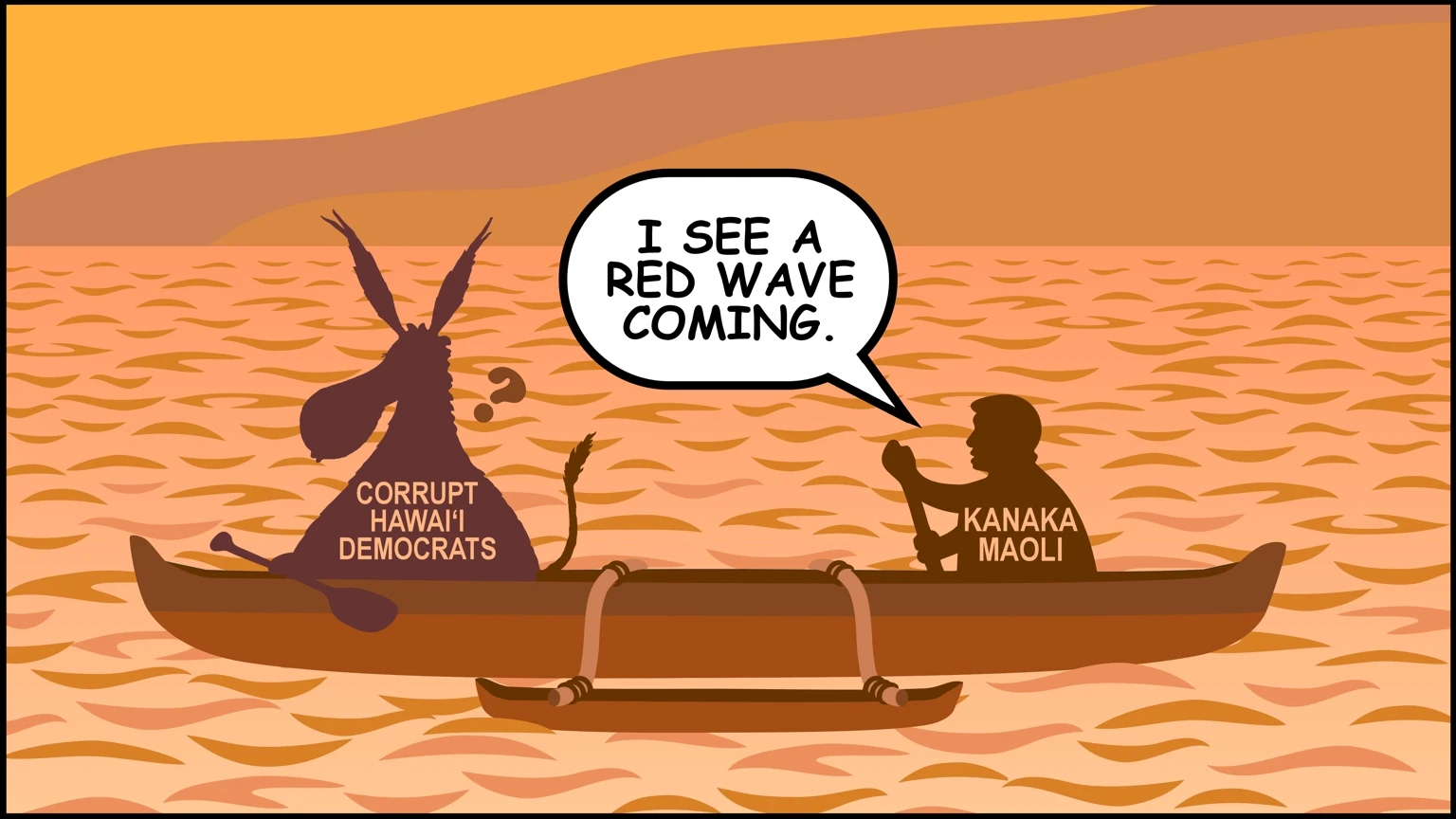
A state audit of Gov. Josh Green’s Kauhale homelessness support initiative found $13.7 million of mismanagement, including sex toys bought on the state’s dime.
The Kauhale Initiative, which Green proposed during his 2022 gubernatorial campaign, establishes small communities and shared spaces for homeless people in an effort to reduce homelessness statewide. As of June, the state lists 26 Kauhale projects throughout the state, offering more than 900 units.
However, a report by the State Auditor released Wednesday found that the Statewide Office on Homelessness and Housing Solutions, which administers the project, did not properly oversee the public funds it spent, neglecting to implement basic accountability measures such as signed agreements with contractors.
In some cases, the audit found that SOHHS allowed work on projects to begin before contracts were signed; in at least two cases, a 20-home project in Kalihi Valley and a now-closed medical respite unit, no contracts were signed at all.
The audit highlights SOHHS’ relationship with HomeAid Hawai‘i, a contractor selected to develop plans for many of the Kauhale communities. In actuality, SOHHS awarded HomeAid several no-bid agreements before those plans were even developed, thus committing the state to paying for work before the scope of that work was ever made clear.
For example, on two contracts — for the Ka Malu Ko‘olau Kauhale near Windward Community College, and the Ho‘okahi Leo project in Kalihi, both HomeAid projects — SOHHS paid out more than $1 million more than was approved in budgets, the audit states.
These budget overruns were possible because SOHHS did not require proper accountability for project changes. The audit notes that at one project, the Alana Ola Pono development in Iwilei, HomeAid replaced a planned $500,000 communal facility with imported South Korean units that cost about $1.23 million. Despite this cost increase, the project only constructed 45 units instead of the 75 units specified in the agreement.
Furthermore, HomeAid reportedly included “10% indirect costs” in its development agreements, for which the state paid out more than $3.3 million across the nine HomeAid contracts the audit reviewed. But SOHHS records reportedly do not reflect how that 10% figure was derived or what those indirect costs were.
Ultimately, the audit identified $7.7 million in unauthorized expenditures that SOHHS paid out: for example, for the Alana Ola Pono project, SOHHS paid a $2.5 million advance to HomeAid before a contract was ever signed, and the subsequent agreement did not document that advance.
In other cases, SOHHS paid more than $110,000 for expenses that were explicitly given zero-dollar budgets in its development agreements. A HomeAid contract that budgeted $0 for vehicle rentals nonetheless paid out more than $3,000 for the HomeAid CEO — potentially current CEO Kimo Carvalho, although the audit does not specify — to rent a vehicle for two months.
Other HomeAid expenses on the state’s dime include a $5,020 bill for an unnamed HomeAid CEO to attend a conference in Las Vegas in 2024. That bill included two $54 charges for an “intimacy kit,” which the audit confimed included “condoms, lubricant, vibrators, restraints, an eye mask and a feather tickler.” Carvalho previously told the Honolulu Star-Advertiser that those charges were mistakenly incurred when he inadvertently moved the kit in his Vegas hotel room's minibar, which he believed triggered an automatic charge.
On top of the unauthorized $7.7 million was another $5 million the audit deemed “questionable,” as SOHHS could not establish whether those expenses were directly related to the contracted work. Some of those expenses included a $78,000 bill for a condo rental in Wailuku, whose purpose for the Kauhale project was never confirmed.
And SOHHS never documented work done to justify another $1 million in HomeAid personnel costs.
While the audit notes that HomeAid “had little experience as a planner or developer” when it was first selected for the Kauhale project, it does not identify who at the state is responsible for placing such heavy reliance on the company — coordinators and state officials variously pointed fingers at each other, the report found.
In the face of this mismanagement, the audit issued recommendations for SOHHS, including the establishment of written policies and controls for the Kauhale projects that require fully executed contracts before work begins, procedures for reviewing payment requests, a comprehensive review of all HomeAid payments, and more. It also recommends that the department “recover from HomeAid amounts that the comprehensive review determines were not reimbursable under the applicable agreements.”
Green’s office announced Wednesday that SOHHS has accepted all recommendations within the audit, but asserted that the report contains “significant factual errors.”
Among those errors, according to Green’s office, were several of the “unauthorized payments” identified in the audit. Green’s office stated that the $2.5 million Alana Ola Pono advance, along with another $2.4 million to HomeAid for a pre-development agreement, were authorized.
Green’s office also reported that SOHHS has “aggressively taken steps” to recover improper expenses, including more than $16,000 in unauthorized travel expenses.
“We welcome accountability and will continue strengthening the program,” Green stated. “But we will not lose sight of what matters most: kauhale are working, they are changing lives — and we are going to keep building on that progress because the people of our state deserve a real solution to this generational problem.”
Green’s office stated that, since 2024, the number of homeless people statewide dropped by 13.1%.
HomeAid released its own response to the audit Wednesday, stating that the audit “misses the full value” of the company’s approach to deeply affordable housing.
“We believe the audit gave insufficient attention to how the Kauhale Initiative can deliver safe, affordable homes to those most in need,” read HomeAid’s statement.
The statement argued that many of the suspect $13.7 million have already been reconciled, and that “fewer than 5%” of those reconciled transactions have required correction in favor of the state. In fact, the statement goes further, and claims that HomeAid has not been reimbursed for an additional $1.7 million.
The statement went on to note that the audit only investigated nine HomeAid contracts, less than half of the Kauhale Initiative’s total $88.2 million budget.
“We believe that concentration leaves the public without a complete evaluation of program outcomes and value,” HomeAid’s statement read.
For the latest news of Hawai‘i, sign up here for our free Daily Edition newsletter.