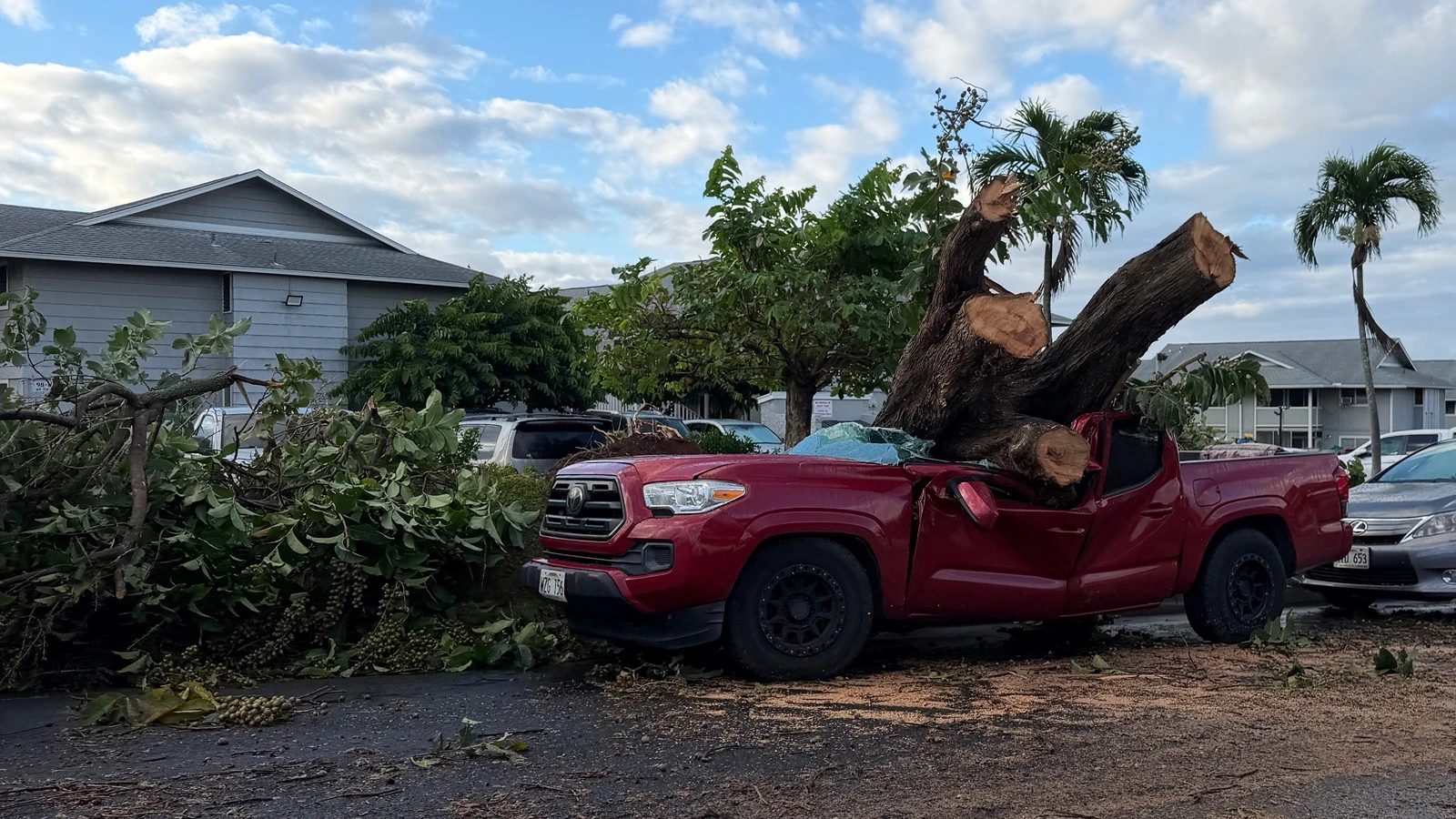
As Hawai‘i weathers a stronger-than-average hurricane season, the state’s emergency management apparatus says its disaster response plans remain reliable.
Among the many duties of the Hawai‘i Emergency Management Agency, or HIEMA, is the maintenance of various emergency response plans for the state and its agencies. And after two hurricane impacts this year so far in Lala and Lowell, HIEMA Administrator David Lopez told Aloha State Daily those plans are holding up.
“There’s always room for improvement,” Lopez said. “Right on the front end from our team, communication is always a place of improvement … Mutually supporting plans, the ability to try to anticipate what’s going to happen, having things set up preemptively so that we can move material and equipment … the better we are at writing the detailed plans, then we understand our capabilities and then, of course, our gaps or where we need to improve those plans.”
HIEMA's hazard mitigation plan includes a vulnerabilities assessment for each type of major disaster that could impact the state, including earthquakes, tsunamis, wildfires, terrorist attacks and, pertinently for Hawai‘i's summer of 2026, hurricanes. That assessment predicted that, based on the historical record, "the state may expect to experience a hurricane event that lead s to a [Federal Emergency Management Agency] declaration once every 11 years."
If that data remains accurate, Hawai‘i has had a hard 11 years, as FEMA has issued major disaster declarations for three hurricanes that impacted Hawai‘i since 2015, two of which were issued this week for Hurricanes Lowell and Lala — the third was for Hurricane Lane in 2018.
The plan also includes estimates of potential damage to facilities and infrastructure within storm surge inundation areas for up to a Category 4 hurricane, which can bring winds of up to 156 mph. Statewide, the total replacement cost of all state buildings within a Category 4 storm surge is about $26 billion, $17 billion of which is on O‘ahu alone. Broadening the scope of that assessment to general building stock, the total replacement cost rises to more than $58 billion, with $51 billion on O‘ahu.
Lives threatened by a Category 4 hurricane — that is, the estimated population within a Category 4 storm surge — were estimated to be about 142,000 in 2023, about 10% of the total state population, although the hazard mitigation plan notes that, ultimately, the entire population is vulnerable to hurricanes in some way.
While a direct impact Category 4 hurricane is among the worst possible hurricane scenarios for the state, the plans for responding to the disaster largely follow the same principles irrespective of scope, Lopez said.
HIEMA’s plans establish an order of operations for addressing critical infrastructure following a disaster. In the case of a serious hurricane striking O‘ahu, Lopez said the first priority would be port restoration, clearing debris and making repairs to get the ports operational again as soon as possible.
After the ports, Lopez said debris clearance work expands to “every place that’s affected,” opening up ingress and egress routes for people who may be trapped.
“Generally speaking, the utilities follow the roads, and so then your utility repair starts branching out from there,” Lopez said. “So you’re thinking about critical infrastructure, hospitals, what are you trying to get open again to help people, and then power and utilities coming in behind that. So it’s a huge, huge coordinated effort.”
While this is happening, Lopez said shelters will open, as well as associated food distribution plans, and potentially search and rescue operations.
Lopez emphasized that the core of the state’s emergency response efforts rely on “mutually supporting plans,” where each state or county agency has its own plan developed and implemented in tandem with each others’.
“For instance, the airports by federal law have to do a certain level of planning, disaster planning and recovery planning,” Lopez said. “So we incorporate how they do things into our dealing with them … each of the state facilities are required to have what’s called a COOP plan, or a continuity of operations plan … and HIEMA help develop, manage them and ensure they’re updated.”
Each of those plans is part of a nested hierarchy of additional plans: Lopez said a hospital will have its own emergency response plan, along with a refueling plan, and a plan for sourcing alternate power, and likely more besides.
The decision on when to activate plans is just as important as the plans themselves. In the case of impending hurricanes, Lopez said HIEMA and other agencies start monitoring storms closely once they pass the 140th meridian west — also called the 140th parallel — about 1,000 miles east of the state.
Once a storm passes that longitude, HIEMA and other agencies make daily calls, including daily briefings from the National Weather Service, to determine how to respond.
“We talk to our state partners on the same call, our county partners, and each of their administrators, civil defense or emergency management administrators on the call,” Lopez said. “We listen to what they have to say, what they’re doing, do they need anything and if so how much, of what kind, and then what do we do to get it in place before they need it, or is it best to put it in place before or after? Because, you know, if you put something in place before, you run the risk of losing it.”
But once the storm passes, HIEMA’s work doesn’t end. In fact, Hawai‘i’s busy storm season has put tremendous strain on the agency’s resources, Lopez said: “We’ve had Kona Lows, the threat of [Hurricane] Fausto, and then we had Lala which beat up the Big Island … and now we have Lowell.
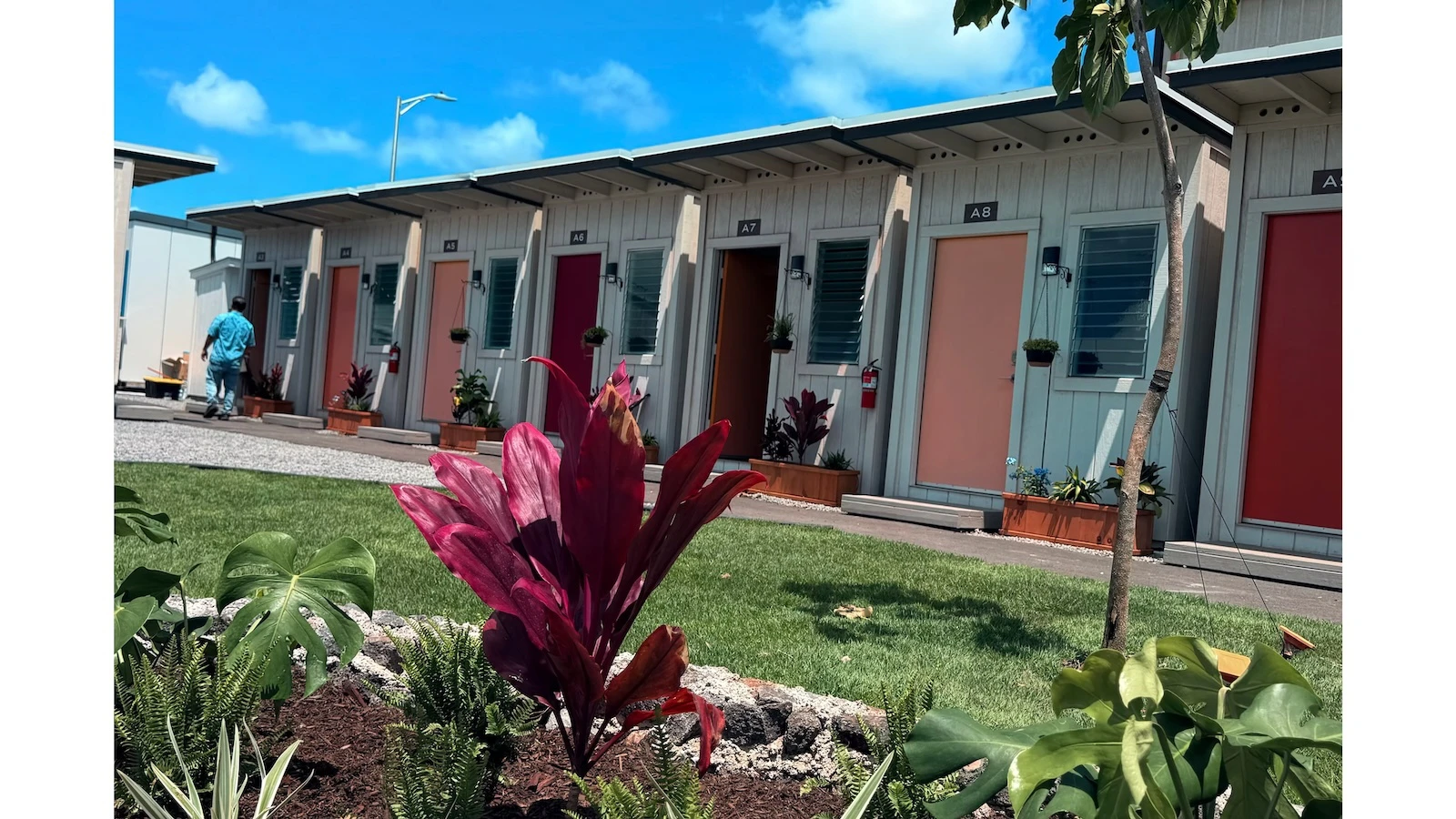
“And also, too, Maui still has some residual effect from the fires with housing and taking care of people, so now we have just about the whole state in some type of response or recovery,” Lopez said.
Lopez noted that HIEMA has been working on developing an updated vulnerabilities assessment for the state, analyzing the resilience of the state’s various systems — the most recent such assessment was made in 2016. However, he said HIEMA is a “small agency,” and probably won’t have the time or resources to work on that for the rest of the year as crises pile up.
In cases where resources are tight, Lopez said it’s the responsibility of the “unified coordination group” — a collection of state leaders and potentially federal officers — to allocate those resources most effectively.
“The general principle is ‘how can we use the resources to take care of the most amount of people and get the greatest amount of help for the most amount of time,’” Lopez said.
And, of course, Lopez said HIEMA’s work doesn’t stop with the storm season.
“We can be hit by anything anytime, from a tsunami to a volcano eruption, or even a man-made type disaster,” Lopez said. “Although the impacts of any of these storms is over, the recovery piece goes on for years … We’re three years after Lahaina and still trying to improve the position of those people. Probably a year or so more from now, we’ll probably see those people who were damaged the most [during the Kona Lows] getting back into some type of home close to what was pre-disaster.”
For the latest news of Hawai‘i, sign up here for our free Daily Edition newsletter.