
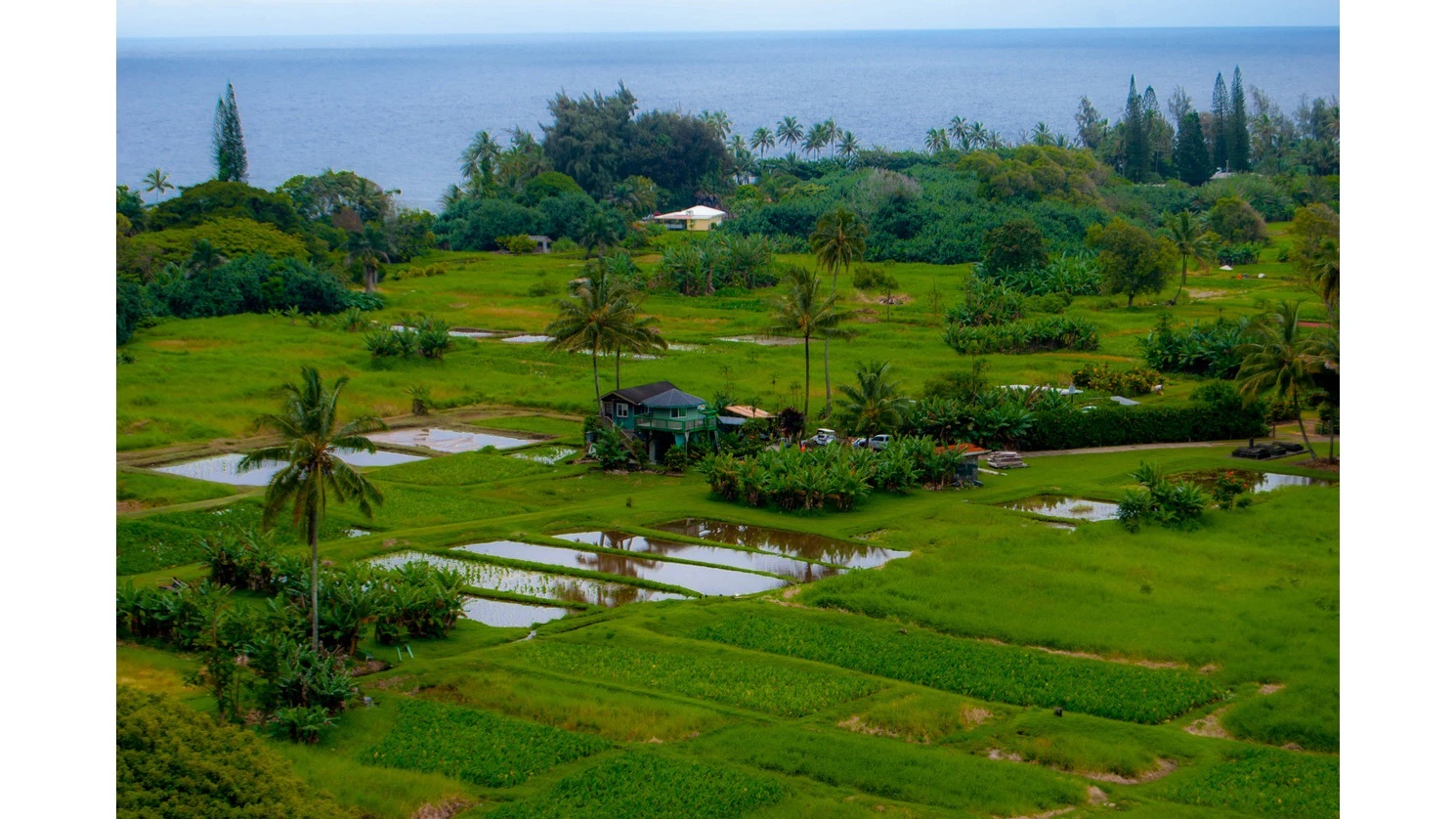
When my colleagues and I advised on the County of Maui Department of Agriculture’s 2024–2028 strategic plan, we spent many hours listening to farmers describe their pain points: marketing and distribution, food hubs and commercial kitchens, access to capital, water, and farm labor housing. The plan reflects what they asked for, and it was meticulous, necessary work.
Reading it again, I see room for the next edition to do more, especially in agritourism, defined as a “commercial or educational enterprise that links agricultural production or processing with tourism, inviting visitors onto working farms, ranches, or agricultural businesses to entertain, educate, or engage them while generating supplemental income for the owner.”
Sitting where agriculture, tourism, and zoning meet, agritourism is the new multibillion-dollar visitor industry “sweet spot” – but do we “see” the opportunity at the Hawai‘i farm gate?
Three Agencies, Room for a Bridge
In 2026, Hawai‘i’s agricultural policy and tourism management still work in parallel. The state and county agriculture departments look at leases, irrigation, and pests. The Hawai‘i Tourism Authority markets the destination. County planning departments regulate what can happen on a farm or more significantly, define what a “farm” is – which has tax, water, and land use (e.g., housing) implications.
Hawai‘i state law has allowed agritourism on agricultural land since 2006, but with strings. The activity must be accessory and secondary to a working farm, and it is permitted only in counties that have adopted their own ordinances. Overnight stays of up to 21 days are allowed only in a county with at least three islands that have its own ordinance, which in practice means Maui County. The Maui County Council did not make agritourism a permitted accessory use in its agricultural districts until July 2025, excluding Molokai.
The result is a patchwork. A farmer who wants to host tours, run a tasting or open a farm stand faces different rules, and different waits, depending on the county. And it is not just farms growing taro or papayas: Hawai‘i's agritourism footprint has grown to include wineries, craft distilleries, and boutique family farms.
The Legislature has noticed. Bills in 2025 and 2026 proposed statewide standards, and this year's version, House Bill 2585, drew a lively split. Farmers who depend on visitor income feared a rule requiring farming revenue to exceed tourism revenue would shut down operations that already exist. Others insisted that growing food must remain the main activity. A Senate committee turned the bill into a task force study, and it did not become law. Kona farmer Krista Olson, owner of Ola Mahina Gardens, told state senators that diversified non-crop income (i.e., agritourism) was "do-or-die" for farms like hers.
The Demand Is Already Here
Visitors are not waiting for permission. In each of the two most recent state Data Books, the Hawai‘i Tourism Authority’s visitor surveys show that about 13 percent of U.S. visitors, about one in eight, participated in agritourism. However, the state Department of Business, Economic Development and Tourism estimated that only 9.4 percent of Hawai‘i's agricultural sales in 2019 came from tourism.
The last statewide count of farms with agritourism income that I could find dates to 2006, when about 2 percent of farms took part and the activity was valued at $38.8 million. We are planning without current data.
What Other Regions Do Differently (A Range of Activities)
Globally agritourism ranges from “U-Pick” where visitors harvest their own fruits, vegetables, or flowers, to “Entertainment,” like Halloween pumpkin patch rides, to “Tours & Tastings” where vineyard, tea or coffee plantation tours end at “tasting rooms” to “Farm Stays” where tourists “experience” farm life at bed-and-breakfast inns, to “Animal & Educational Experiences:” children’s petting zoos and school field trips. All these activities provide both produce (such as pineapple sales) and “other” income (tour tickets, accommodations) to farm owners.
Regions with scarce land and small farms have built agritourism into rural policy rather than leaving farmers to fend for themselves:
· Japan. Starting in 1993 Japan has now 1,200 government-registered rural roadside stations, the “michi-no-eki.” The lesson for Hawai‘i is not the buildings but the concept that the farm gate can be a destination.
· South Tyrol, Italy. In 1998 the regional farmers association, the Südtiroler Bauernbund, launched the "Roter Hahn" (Red Rooster) quality seal certification. Today it covers 1,600 holiday farms.
· France. "Bienvenue à la ferme" was created in 1988 by the Chambers of Agriculture. The network cites 10,000 farms who sell products and welcome visitors.
· Taiwan. The national government began promoting “leisure farming” (agritourism) in 1989. As of 2021 Taiwan had 507 registered leisure farms (including bamboo, fish, and carnivorous plants) and 104 designated leisure agriculture areas.
Rewriting the Agriculture + Visitor Blueprint
Fixing this blueprint does not mean turning working farms into theme parks. Kualoa Ranch (4,000 acres in Windward O‘ahu) is an exception; most Hawai‘i farms are two-to-four-acre family operations. It means updating how plans and rules treat the visitor economy:
1. Write the chapter. The next county’s agricultural plan, or a mid-term amendment to the current ones, should include a dedicated agritourism chapter, with simpler permits for value-added processing, farm tours, and direct sales.
2. Bridge the agencies. Agriculture, tourism, and county planning should work from one table, with agritourism built into the HTA's island-level Destination Management Action Plans.
3. Finish the statewide job. Use the task-force approach to settle what "accessory" means, with a working-farm test that screens out speculative "gentleman farms" without penalizing farms that earn income from visitors.
4. Let farmers run the brand. A Hawai‘i farm-visit certification seal, run with the Farm Bureau and farmers' organizations on the Roter Hahn and Bienvenue à la ferme model, would give visitors a trusted way to find authentic Hawai‘i farms and experiences.
5. Count what we want to grow. Update the 2006 numbers for a State-wide dashboard, so we know how many farms host visitors, what they earn and where permits stall.
The Missing Chapter
An agricultural plan that ignores the visitor economy is not protecting our land. It is starving it of the tools it needs to survive. I helped write one such plan, and I hope the next ones build on it.
Ray Tsuchiyama’s series explores one central question: How does Hawai‘i use the wealth and land it already has to create its next economic future? He can be reached at ray@guild.im
For the latest news of Hawai‘i, sign up here for our free Daily Edition newsletter.


