
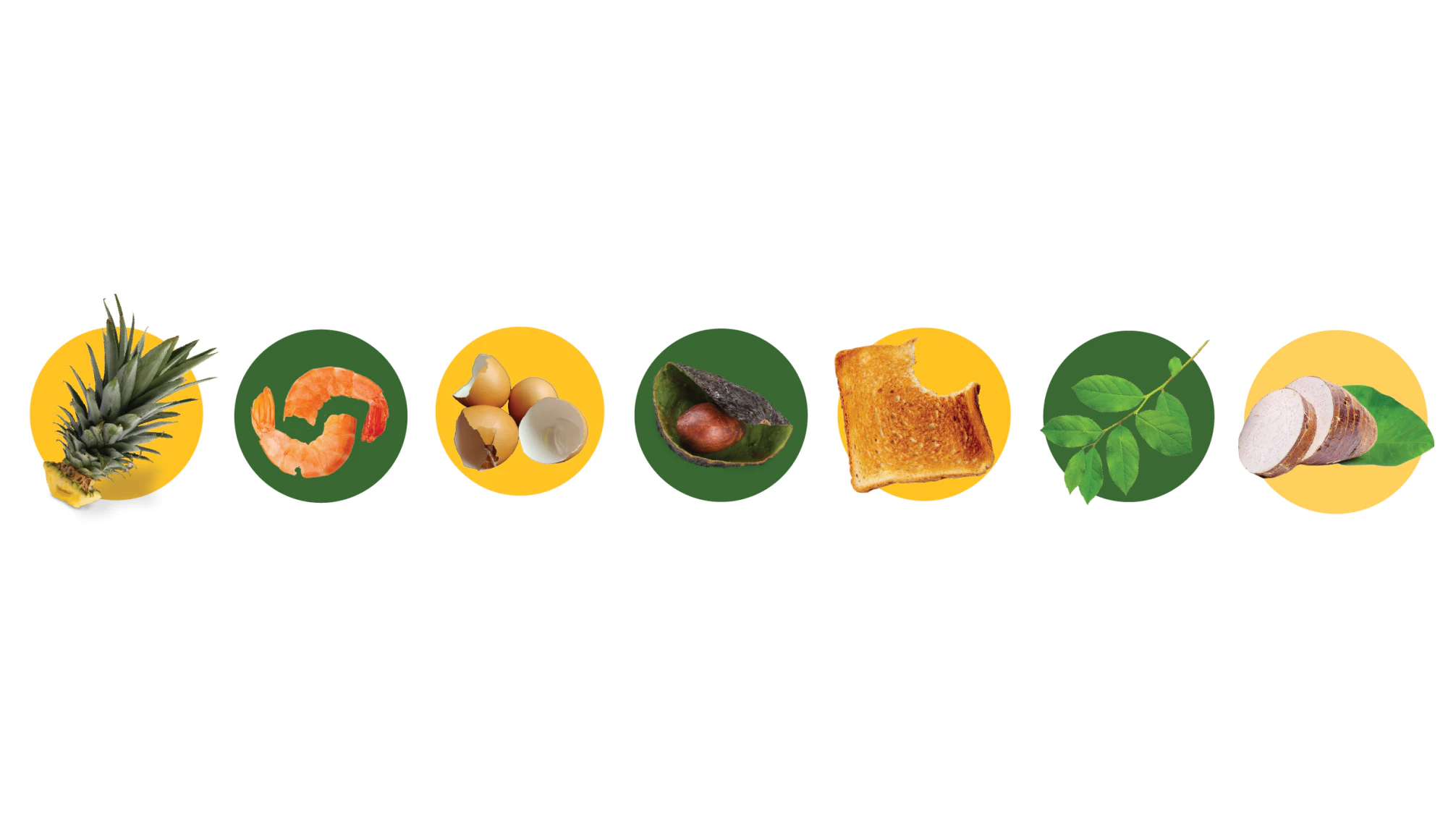
Soon, banana peels, coffee grounds and leftovers from thousands of Oʻahu residents will no longer head to the island’s waste stream.
Beginning April 1, the City and County of Honolulu will launch a pilot food scrap composting program allowing households in six communities to place food waste directly into their green compost carts. The Department of Environmental Services’ Green Recycling Organic Waste, or GROW, pilot will be available to residents in Waipahu, Nānākuli, Hawaiʻi Kai, Mililani, Kailua and Kalihi, who receive automated curbside collection services. City officials say the program is expected to expand islandwide later this year.
The initiative targets one of the largest contributors to Oʻahu’s waste stream. A City waste characterization study conducted in 2017 found organic material accounted for roughly 36% of all discarded waste with food waste alone making up about 20%, Henry Gabriel, Department of Environmental Services Recycling Program Branch Chief, told Aloha State Daily.
Composting food waste is part of the City’s broader strategy to reduce landfill use and move closer to its goal of diverting 95% of waste from landfills by 2030. Rather than focusing on a single neighborhood, the City selected six communities to capture a range of participation patterns and operational conditions. ENV will track participation rates, contamination levels, compost volume and diversion outcomes to guide resident education and potential expansion.
“I support ENV’s GROW Program as a strategy to reduce waste and move Oʻahu away from landfill dependency,” Councilwoman Andria Tupola, who recently introduced a resolution to create a new End Landfills Task Force, told ASD.
Operating the pilot is expected to cost between $15 million and $21 million annually depending on the amount of food and green waste collected. “The City has never operated a program that collects and composts food waste so we had to invest in the infrastructure to do that,” Gabriel said.
The composting system includes odor control measures and specialized processing equipment designed for food waste. Diverting scraps will reduce the amount of material sent to H-POWER and landfills but will not change how the City’s waste-to-energy plant operates. While all curbside garbage currently goes to H-POWER, waste can be diverted to the landfill if the facility is down or undergoing repairs. Ash from H-POWER is always taken to the landfill.
Because food waste has a higher moisture content than other trash, it requires more energy to process at waste-to-energy facilities. Composting helps conserve landfill space and reduce greenhouse gas emissions from decomposing food. Source reduction remains the top priority.
“Success would be a reduction of food waste discarded from residential homes participating in the pilot program,” Gabriel said.
Green bins, which are currently used for yard waste such as tree trimmings and weeds and turned into compost by Hawaiian Earth Recycling, will now also collect food scraps in the six pilot areas. Pickup frequency will remain every other week during the program.
To encourage participation and reduce contamination, ENV will host public workshops across Oʻahu in February and March including Feb. 19 at Koko Head Elementary School and Feb. 23 at Mililani High School, both beginning at 7 p.m. Residents are not required to freeze food scraps before placing them in green carts though the City recommends steps to manage odors and pests such as sprinkling baking soda on scraps.
Residents will also be able to drop off food scraps and wasted food at the Hawaiian Earth Recycling composting facility in Wahiawā at no charge beginning April 1, with a limit of two self‑drop‑off loads per day. Participation in the pilot is voluntary but City officials are encouraging households in the selected communities to join.
For the latest news of Hawai‘i, sign up here for our free Daily Edition newsletter.


