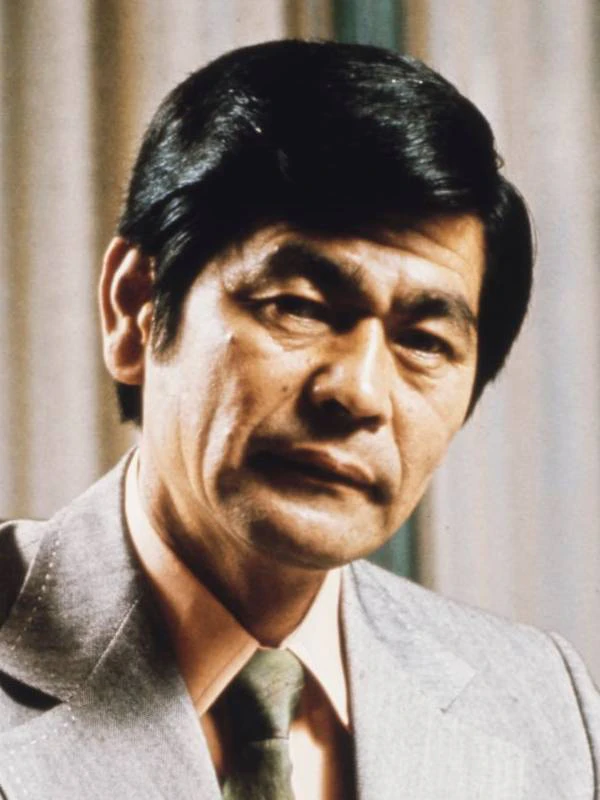
Preparations are currently underway for former Governor George Ariyoshi’s funeral service. On April 19, 2026, he passed away at the age of 100.
When he was born on March 12, 1926, Hawai‘i’s population stood at less than 368,000 people. By the time he passed, an additional million people lived in the Islands.
Besides population, Hawai‘i’s transition in his century of life was dramatic across economic, political, environmental, and socio-cultural bounds. In that time, Ariyoshi served three full terms as Governor between 1973 and 1986. With his predecessor, he was also the second part of a Democratic consensus that ruled Hawai‘i for nearly one-quarter of a century.
To be clear, he was controversial. That’s only natural when you govern the State of Hawai‘i for more than a decade. He was quiet and distant, methodical and consistent. His politics were backdoor and incremental, neither immediate nor explosive. An independent with a penchant for irritating opponents, his stoic and steady style does not fit today's politics.
Many readers don’t know Ariyoshi, or they’ve never heard of him. That’s honestly too bad. You won’t understand contemporary Hawai‘i if you don’t know George Ariyoshi.
Ariyoshi’s Territorial Hawai‘i
Raised in Honolulu, Ariyoshi graduated from McKinley High School. He was part of a generation trained in public schools to be citizens of a better society. Kids learned to debate the importance of elections and local political institutions and were members of clubs and other social organizations. There was a sense of societal responsibility tied into this identity.
While still a student, he bore witness to the suspicion borne against Americans of Japanese Ancestry (AJAs) following Imperial Japan’s attacks on the United States in December 1941. After serving in the U.S. Army as an interpreter, he ventured off to school in Michigan before returning home to Hawai‘i in the final decades of its territorial period.
The young lawyer was recruited by Jack Burns to run as a Democratic candidate for the Territorial House in the 1954 elections. In the following year, he married Jean Hayashi. Hayashi became his political partner for the next three decades of his public service. Her influence over Ariyoshi was a model of a political partner, as outlined in her own 2004 memoir.
He was part of the Democratic coalition that overthrew the Republican Party’s control over the Territorial Legislature for the first time in the Territory’s history. As a member of the Democratic majority, Ariyoshi served as a check on Gov. Sam King, a Republican appointed by U.S. President Dwight D. Eisenhower. Within the Territorial Legislature, he served alongside such rising leaders as Daniel K. Inouye, Patsy Mink, Nelson K. Doi, Frank Fasi, Nadao Yoshinaga, and Oren E. Long — several became his political enemies.
From that entire bloc, he was also the last member of that generation of leaders to pass away.
The Fresh New State Smell
When Hawai‘i was admitted into the Union in August 1959, State Senator-elect Aryoshi was thrown into the minority when Republicans briefly retook the Legislature’s upper chamber. However, the Republican majority was slim (a margin of 14 to 11), and Ariyoshi had a chance to cast some pivotal votes.
Ariyoshi, for instance, recalled a 1961 vote for the confirmation of Sam P. King to the state’s First Circuit Court. At least one Republican planned to kill King’s nomination in a bid to stymie Republican Gov. William Quinn. Ariyoshi provided a Democratic vote and showed that he would readily proceed as an independent within the Democratic faction.
Democrats were back in control by 1962. With Democrats in power, Ariyoshi ascended up the leadership ladder.
He once again emerged as a critical vote during a debate over land reform in 1963. During this period, a major piece of the Democratic Party’s agenda was the forced conversion of leasehold land managed by major landowners (often plantation owners) to small, fee-simple parcels for residential land ownership. A bill to do that looked poised for passage that year.
Many of these leasehold properties were held by residents without access to opportunities to purchase property in fee-simple. Ariyoshi believed such forced conversions would be disastrous in Hawai‘i, and his stance benefitted the pro-market inclinations of then-Gov. John A. Burns.
Burns took note of Ariyoshi’s independence. With three Democrats, he joined 10 Republicans to kill the bill. A Land Reform Act eventually passed in 1967, but Governor John Burns avoided its enforcement. When Ariyoshi became Governor, he began to enforce the law in 1975.
During a later leadership fight between two major Democrats in the Senate, Nadao Yoshinaga and Nelson K. Doi, Ariyoshi also stayed neutral in 1966. The act alienated many Democrats. The move temporarily cast Ariyoshi into the political wilderness, but he still remained part of the Democratic establishment.
By the late ’60s, he had served as Senate Majority Leader and Chair of the Committee on Ways and Means. In the meantime, he also served as a delegate to the 1968 Constitutional Convention.
The Rise of the Executive
In the 1970 gubernatorial election, Ariyoshi ran for lieutenant governor as the Burns-backed candidate. During his campaign, the young journalist Tom Coffman followed around Ariyoshi, capturing a speech whose legacy followed Ariyoshi for the rest of his career.
As part of the Burns administration, Ariyoshi outlined a grand vision for Hawai‘i, one for “a Hawaii that will lead the Pacific basin in medicine, law, research, technology, oceanography, the humanities, culture and the arts and in the way we treat people in this community.”
It was here that the haole Coffman heard a particular Japanese phrase: okage sama de. “Properly translated,” Ariyoshi explained in 1970, “it means, ‘I am what I am because of you.’”
The phrase, bounded by a sense of obligation to previous generations and the general community, framed the thinking of a new generation of eager Americans of Japanese Ancestry (AJAs) whose political influence over the islands was rapidly emerging.
This generation was grateful for a new Hawai‘i where economic opportunity was more readily available to the sons and daughters of stevedores and plantation workers. Ariyoshi was one of their emerging leaders.
A Hawai‘i Divided Against Itself
George Ariyoshi’s Hawai‘i was never fixed or stable. It was always dynamic and subject to evolutionary forces floating inward from beyond its shores. Its people were also changing, with automobiles, car-choked highways, and massive suburbs replacing railroads, tight-knit villages, and walkable towns. The luna and the plantation were becoming the stuff of nostalgia.
Ariyoshi was finding these problems before he even served his first term. While Gov. Jack Burns had angled for Ariyoshi to serve as his successor, a cancer diagnosis in his last term meant he needed to step down earlier than planned in October 1973. Ariyoshi, as Lieutenant Governor, became the Acting Governor of Hawai‘i.
Ariyoshi was immediately saddled with navigating Hawai‘i’s first recession. Caused by the 1973 OPEC crisis, the resulting shortage of oil discouraged travel to Hawai‘i and raised shipping and transportation costs among residents.
With an emerging budget shortfall caused by falling tax revenues, Ariyoshi was charged with implementing austerity measures that froze the size of state government. Through it all, managing good relationships with public-sector labor helped avert strikes.
While reckoning with this crisis, Ariyoshi recalled the need to avoid madatsukai, or wasteful spending. It became a mark of his political brand of fiscal conservatism. Such a brand, according to his foundation, resulted in a massive budget surplus of nearly half a billion dollars by the time he left office in 1987.
Like later governors such as Benjamin Cayetano and David Ige, Ariyoshi's stint as Chair of the Senate Committee on Ways and Means alerted him to the importance of strong fiscal constraints. It's among the most important committees in Hawai‘i and serves as a pragmatic check on all other committees.
Maintaining solvency, studying financial plans, and quizzing bureaucrats on spreadsheets is not the stuff of social media posts, but it's the stuff of true governance. For later governors, Ariyoshi articulated that template.
Vestiges of his Japanese culture influenced his leadership style. “When I became Governor, I was very conscious of the obligation that I had to the citizens of this community to do the best I can as Governor,” he explained to Leslie Wilcox in 2012. “But I was very mindful of something that my father used to talk about. The word is a Japanese word; it’s haji, shame. Don’t bring shame on your friends, your family, to anybody. Be honorable in everything that you do.”
Beyond a sense of avoiding haji, Ariyoshi further believed in a sense of on, which is sometimes understood as a sense of obligation. In his context, it was a sense of civic, or societal obligation.
He was obligated to govern a society in a state of economic transition. Hawai‘i’s agricultural sector was in a state of collapse.
Attempts to bail out struggling agricultural industries in regions like Kohala on Hawai‘i Island, Kaua‘i, and Molokai proved additionally meddlesome. Ariyoshi’s values informed his approach to the pressures of these crises. Many were international in scope, caused by falling crop prices and emerging foreign supplies of pineapple and sugar.
Other notable efforts included his decision to acquire the communities of Waiāhole Valley on O‘ahu, where 888 acres remain under state ownership today. He also sought to control urban growth with the establishment of the Hawai‘i Community Development Authority (HCDA) in 1976, setting the stage for the emergence of Kaka‘ako and other designated districts.
These crises required close cooperation with local corporations and businesses, many of whom who still maintained their headquarters in the Islands. His close ties to financial institutions like First Hawaiian Bank and leaders like Walter Dods harken to an era where such businesses were organic, aggressive, and attentive bastions of civic activity.
Time and time again, Ariyoshi hoped that Hawai‘i could truly diversify its economy away from agriculture because its post-statehood economic paradigm was not sustainable. “Federal dollars and tourist dollars came into the State. But our economy is very fragile. We have little control over those Federal and tourist dollars.”
“Consequently,” he explained, “I feel the need to create an economy over which we have a greater degree of control, and one which will better reflect the environmental needs of our community. We need to create jobs, but I feel that we should create them in the right areas – for example, agriculture, oceanography, international trade.”
One resulting effort was the formation of the Hawai‘i Natural Energy Institute and the Natural Energy Laboratory of Hawai‘i (NELH) in the summer of 1974. The NELH was the precursor to the Natural Energy Laboratory of Hawai‘i Authority (NELHA), which still exists today on the Kona side of Hawai‘i Island.
Regardless of these efforts, his position remained politically tenuous. Ariyoshi was subject to fraught relationships with most of his lieutenant governors. He ended up engaged in a bitter three-way primary with former Lt. Gov. Tom Gill and Honolulu Mayor Frank Fasi in 1974.
Another one, Nelson Doi, quit in 1978 and became a major critic of the administration. Ariyoshi himself then won in a rematch against Fasi by less than one percentage point. In 1982, Lieutenant Governor Jean King once again challenged Ariyoshi in the primary.
He won every time.
While Burns was there in the prosperous ’60s, it was Ariyoshi who navigated the ascendance of the Hawaiian Renaissance, the rise of the environmental movement, the clash between 'locals' and recent transplants, a growing hostility towards development, and a general desire for a more explicit identity among residents in Hawai‘i.
He desired a sustainable path for navigating these conflicts. Grand projects like the State Plan, even if impossible to implement, were so promising. Finalized as Act 100 in the 1978 Legislative Session, the effort influenced many of the delegates who were later called to serve at a Constitutional Convention that convened just a few months later.
The resulting 1978 Constitution created a political mandate that Ariyoshi needed to implement, largely at the behest of the state legislature. In 1979 alone, Ariyoshi oversaw the establishment of the Office of Hawaiian Affairs and the recognition of ‘Ōlelo Hawai‘i as an official language.
A State of Natural Controversy
At times, his approach was naturally contradictory and controversial, simply because no route was without contradiction or controversy.
Ariyoshi, for instance, favored population control measures in the Hawaiian Islands that barred migrants from both the continental United States, Asia, and the Pacific. This came despite the fact that Ariyoshi’s father was an immigrant who jumped ship at Honolulu in 1919.
Hawai‘i, if it was still a single society, was dividing against itself. Non-Hawaiian locals, kama‘āina haole, and Kanaka Maoli were facing migration from Southeast Asia, the Philippines, and the Continental United States. The demographic face of Hawai‘i was changing. Hawai‘i needed a cohesive identity to tie everyone together.
There was also a reckoning with land and power in the Hawaiian Islands. Towards the end of Ariyoshi’s time in office, George Cooper and Gavan Daws published Land and Power in Hawai‘i, an investigation of how the Democratic Revolution of 1954 had enabled a new era of development led by locally-based Chinese, white, and Japanese Americans.
An entire chapter of the book was dedicated to Ariysohi, who sat for an interview with the authors. Communities in poorly located areas like the Royal Gardens subdivision of Puna, which had retained Ariyoshi as an attorney while Ariyoshi served in the State Senate, were later largely destroyed by volcanic eruptions in 1983 while Ariyoshi was Governor.
Coopers and Daws did not write the book to criticize directly Ariyoshi. Neither did many critics write their pieces to directly condemn Ariyoshi as a person. Instead, they were framed as investigations into a new generational establishment and Hawai‘i’s new political environment. Ariyoshi, naturally, became a symbol of both this establishment and environment.
Despite these criticisms, Ariyoshi still tried to fit all the pieces of a ‘New Hawai‘i’ together. He became a political symbol of a murky and unrealized consensus, even if detractors perceived some attempts at planning Hawai‘i’s future as shallow and nebulous. Ariyoshi knew this work was not concrete. He was always trying to subject the evolving consensus to stable definitions.
The era’s chaotic nature was suited for his patience and temperament. He did not rise to points of fiery anger. He avoided alcohol and worked the long hours of a diligent administrator. He did not lash out at opponents.
A Clear Anxiety for the Future
Ariyoshi, it seems, lived to preside over the evaporation of the early post-statehood consensus that had unified the Democrats of 1954 and presaged an 'end of history.'
By 1986, Ariyoshi was term-limited due to a two-term limit instituted by the 1978 Constitutional Convention. He stepped down, with his last lieutenant governor (John D. Waihe‘e III) rising to become Hawai‘i’s first elected Native Hawaiian governor.
It's in that domain where reform parties stagnate. Hawai‘i's Democratic Party looked lost by 1986. Then-Lieutenant Governor Waihe‘e, U.S. Representative Cecil Heftel, and former U.S. Representative Patsy Mink fought a bruising primary for the soul of that party in 1986. Republicans nearly took back the governorship.
Through documents like the 1978 Constitution, the ‘Palaka Power’ generation led by Waihe‘e inaugurated a new wave of Democratic leadership.
Following his time as Governor, Ariysohi became an elder statesman for regional affairs. The East-West Center, which had been constituted as a corporate non-profit organization under Ariyoshi’s leadership in 1975, became a vehicle for such efforts.
As Governor, Ariyoshi worked with regional leaders, including Fijian Prime Minister Kamisese Mara, to create the Pacific Islands Conference of Leaders (PICL). He also created the Pacific Basin Development Council (PBDC). He built on these efforts in the following decades.
A Fixation on the Future
I never met Governor Ariyoshi, but I met people who believed in him. Alongside the late Tom Coffman, Ariyoshi invested a lot of time in trying to create a unique philosophy for the people of the contemporary Hawaiian State.
More than any other Hawai‘i governor, Ariyoshi worked hard to formulate his political legacy. An exhaustive effort at the University of Hawai‘i’s Center for Oral History (and its long-time Executive Director, Warren Nishimoto) resulted in the George Ariyoshi Oral History, a major tome records the history of his administration.
A memoir, which in my opinion is far too short and selective, was released in 1997. A far longer and more exhaustive historical overview of Ariyoshi and his times is overdue, although it is unlikely to ever happen.
Later works like his political essay on the evolution of Hawai‘i reached tens of thousands of public school students in elementary and secondary school across the State, including myself. It’s a work that made me think a lot about my own role in society. "Hawai‘i’s Future," his final work published in 2020, tried to further refine these ideas for a general audience.
As a planner, much of Ariyoshi’s agenda was left unfinished by the end of his term. By design, that was deliberate. In his own estimation, Ariyoshi was always focused on the future. His work focused on building out policies that would outlast his own life.
To his own political detriment, Ariyoshi was defiant on that point in one interview. “I have to answer the question: Do I do things to make myself look good? Or am I here to do the things that make it possible for our state to be good? And do I want our state to be good only now? Or do I want a long-term commitment and a future for the citizens of our community?
“And I have to opt for the future.”
Perry Arrasmith can be reached at hello@perryarrasmith.com.
For the latest news of Hawai‘i, sign up here for our free Daily Edition newsletter.