Most don’t think twice about the garbage thrown out throughout the day and then hauled away once a week by city refuse.
“It’s just regular language, ʻthrow it away,’” said Allison Fraley, Solid Waste Division chief, County of Kauaʻi. “There is no ʻaway’ here on the island.”
With a population close to 74,000 and roughly 1.3 million visitors annually, Kauaʻi produces over 90,000 tons of trash every year. For the last 73 years, its landfill has been in Kekaha and is now close to reaching capacity.
“Finding landfills is never easy. We’ve been trying to do it on Kauaʻi for more than 20 years. We’ve been studying it and it’s been difficult,” Fraley said. “We’re at the point where we’re kind of in a crisis. We don’t have any more capacity unless we expand, so we’re pursuing that.”
Similarly, Oʻahu is facing its own landfill capacity crisis and difficulty finding another site. The “Gathering Place” of the state has a population of nearly one million and receives up to six million visitors annually — all of whom collectively generate roughly 1.2 to 1.7 million tons of residential, commercial, and industrial waste per year.
The search for a new landfill was an issue that Honolulu Mayor Rick Blangiardi was told not to deal with. “These are people in elected office who said, ʻYou just leave it alone if you are smart. Let somebody else deal with it,’ which all the more incentivizes me to say, ʻNo. That’s not who we’re going to be.’”
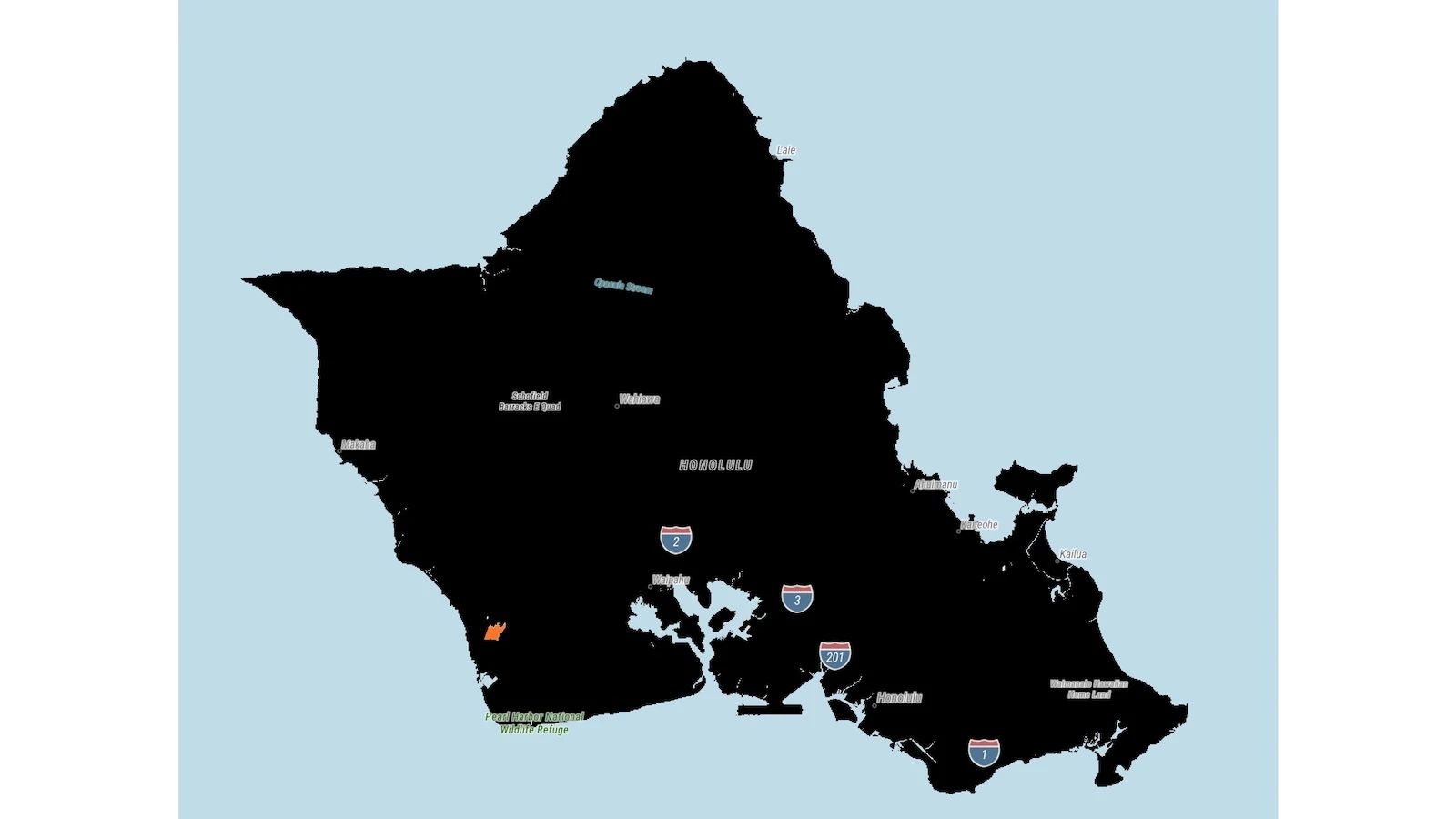
In his first term, Blangiardi created a Landfill Advisory Committee (LAC) to help the city identify and evaluate potential sites for Oʻahu’s next landfill before the current Waimānalo Gulch Sanitary Landfill is required to close in March 2028.
In his 2026 State of the City address, Blangiardi underscored the urgent need for a new Oʻahu landfill, describing it as one of the city’s most pressing infrastructure challenges. He reiterated his opposition to placing another landfill on the Waiʻanae Coast, but noted that other sites face significant legal, environmental, and land-use constraints, and called on the state legislature to help address the issue.
In 2020, the Hawaiʻi State Legislature passed Act 73, establishing strict landfill siting restrictions, including buffer requirements from homes, schools, and hospitals and prohibiting landfills in conservation districts.
This is in addition to the fact that there is limited available land in Hawaiʻi, the cost of land is extremely high, and Hawaiʻi is geographically isolated.
“Like if we were on the mainland, we could just haul it out, you know, just take it somewhere else, drive it out of our community. It would just be the shipping cost,”Fraley said. “But [here] we have to buy land and make sure it complies with all of these criteria.”
The proposed vertical expansion is intended to extend the life of the Kekaha Landfill, which is otherwise expected to reach capacity around 2030.
In response to heightened public concern over aquifer protection following the Red Hill fuel spill, the state legislature enacted additional restrictions in 2025 aimed at preventing new landfills from being sited above sensitive aquifer areas on Oʻahu.
That restriction has made an already difficult situation on Oʻahu even more challenging; in 2022, the LAC rejected all proposed alternative sites due to concerns that included risks to Oʻahu’s aquifers.
“We’re convinced if they were to drill a hole in the ground and spend a million dollars, it’s probably over an aquifer,” said Blangiardi, who referred to other development taking place on the island, including high rises.
All counties have implemented programs to reduce the amount of waste going into landfills.
“Each person on Oʻahu generates a little over five pounds of trash every day,” said Josh Nagashima, City and County of Honolulu refuse chief. “It’s kind of wild when you think about it.”
Through incineration, H-POWER produces up to 10% of Oʻahu’s electricity and reduces the volume of waste requiring landfill disposal by 90%, with the remaining 10% in the form of ash. Recycled waste is taken to local recycling facilities.
“Because of H-POWER, we’re already recycling or beneficially using over 70% of our waste,” noted Nagashima. “That doesn’t mean that we can’t do more. There’s a lot of food waste that was identified in what’s going to H-POWER in the waste stream, so we’re trying to remove a lot of that before it gets there.”
In April 2026, Honolulu County launched the G.R.O.W. (Green Recycling Organic Waste) pilot program in select households within Kailua, Hawaiʻi Kai, Mililani, Nānākuli, Waipahu, and Kalihi. G.R.O.W. allows those residents to add food scraps and food waste to their existing green compost carts.
“There’s lots of opportunities to reduce, reuse and recycle. But once that’s done, we still have this massive amount of material that needs to be landfilled,” said Fraley, whose department recently held a community informational meeting on the proposed vertical expansion of the Kekaha Landfill, which would increase the landfill’s height to 85 feet. While there has been discussion over a potential new landfill site, there has been environmental and community opposition.
Meanwhile in Honolulu, Blangiardi continues to fight an uphill battle of opposition in the fruitless search for a new landfill site outside of West Oʻahu.
All counties have investigated new technologies, which is an argument often raised by community voices at meetings. However, investments into those technologies are in the billions of dollars. “Everybody forgets about that,” said Blangiardi, who has sat through meetings to learn about waste solutions from gasification to plasma vitrification.
However, as with most major development projects in Hawaiʻi, delays in identifying a landfill site result in rising costs.
“I am really concerned we’re gonna run out of time because this is not one of those things that you can say, ʻWell, let’s just squeeze another couple more years in here,’ Blangiardi said. “We’re pushing it as it is.”
On May 13, the Honolulu City Council voted unanimously to pass a resolution introduced by Councilwoman Andria Tupola that would establish an “End Landfills Task Force” to develop alternatives to landfill disposal. The task force will have until November 2027 to evaluate strategies for ending landfill dependency and develop a plan to enact them. The task force will include county and state representatives plus subject matter experts from the recycling, waste management and energy sectors.
This article is reprinted with permission from OHA's Ka Wai Ola newspaper: "There is No “Away” in Hawaiʻi: Counties face growing landfill challenges" by Donalyn Dela Cruz, in its June 2026 issue, Vol. 43 No. 6. Read more at kawaiola.news.
For the latest news of Hawai‘i, sign up here for our free Daily Edition newsletter.