Hawaiʻi's amended Act 205, which aims to clarify standards and safeguards in online crowdfunding, will go into effect on July 1.
Earlier this month, GoFundMe began its outreach to educate nonprofits about the new law, as well as the company’s efforts to be compliant, according to Amanda Brown Lierman, GoFundMe vice president of impact, policy and engagement.
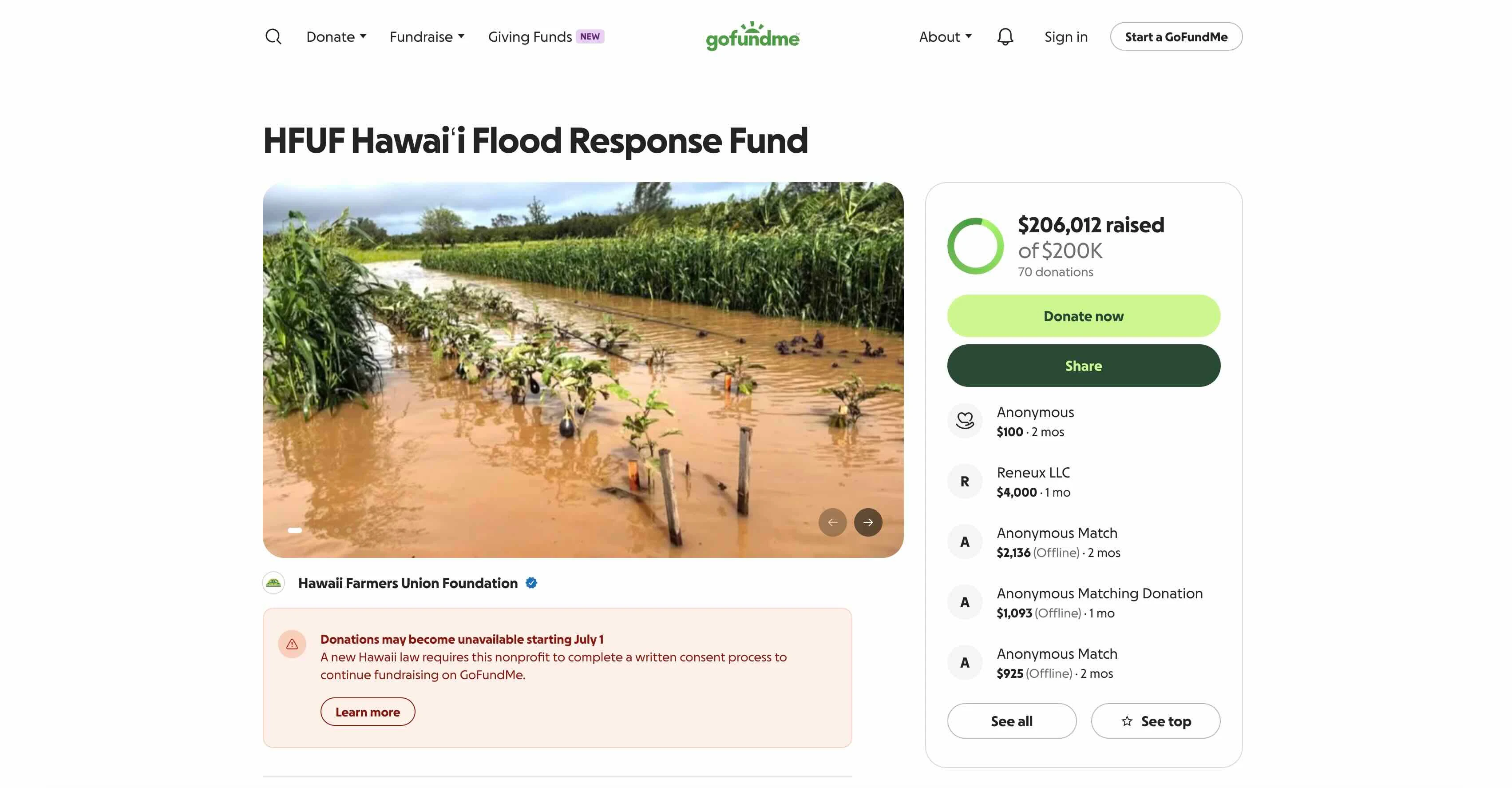
Under the law, Hawaiʻi nonprofits are required to provide consent from an authorized representative to remain visible and active on the GoFundMe platform. Failure to complete a new consent form could jeopardize organizations’ ability to receive donations.
“We didn’t want nonprofits to be surprised by the implementation efforts and the direct impact of potential disrupted support to these organizations,” she told Aloha State Daily. “The goal is uninterrupted fundraising across the board, and that requires awareness on multiple fronts.”
However, for many organizations, this was “the first they'd heard of this requirement at all,” Lierman said, adding, “We are working to comply, and simultaneously care for the nonprofits and donors who will be impacted.”
Act 205 is affecting GoFundMe's processes more broadly, she said, noting, “The law requires us to obtain written consent from nonprofits before enabling donations or supporter-led fundraisers on their behalf. It also requires us to verify that nonprofits are in good standing under Hawaiʻi law before enabling fundraising. Both are changes to how we operate in Hawaiʻi specifically.”
GoFundMe has been in close contact with the Hawaiʻi Attorney General's office throughout this process, she added, to make sure its approach is aligned and the consent process is more straightforward.
So far, the crowdfunding platform has focused its outreach to nonprofits already established with GoFundMe, where roughly 8,500 Hawaiʻi-based nonprofits could be impacted.
“Among that group, we've seen nearly half already consent. That reflects strong engagement ahead of the July 1 implementation date, particularly given the resource constraints we know many nonprofits are navigating right now,” Lierman said. “After July 1, we'll be expanding outreach to the broader universe of affected organizations. And we will continue that outreach well into the future, so there is always an opportunity for a nonprofit to submit the consent necessary to be visible on the GoFundMe platform.”
Several states across the U.S. have laws related to charitable solicitation, she noted. “California, for example, was the first state to pass a law specifically regulating online fundraising platforms, which served as a model for Hawaiʻi's Act 205. The principles behind this law — transparency, donor protection and nonprofit accountability — among others, are ones that GoFundMe already supports.”
Lierman added: “One thing we want Hawaiʻi nonprofits to understand is that GoFundMe is one platform among many, and other crowdfunding platforms may respond to this law differently regarding how they execute on their compliance. We can speak to our own process and timeline, but we'd encourage organizations to check in with any other platforms they use to understand how those platforms are handling compliance.”
More information about what’s needed for those utilizing GoFundMe can be found here.
Once a consent form is submitted, the crowdfunding platform also requires organizations to formally enroll with PayPal Giving Fund (PPGF) to avoid interrupted grant payouts.
“This enrollment requirement is part of PPGF’s compliance response to the new Hawaiʻi law, per Lierman. “Because GoFundMe works in partnership with PPGF to facilitate nonprofit donations in many situations, nonprofits must be enrolled with PPGF to ensure that donations may still be processed for them on GoFundMe."
Read more about other new laws that go into effect come July 1.
Kelsey Kukaua Medeiros can be reached at kelsey@alohastatedaily.com.
For the latest news of Hawai‘i, sign up here for our free Daily Edition newsletter.